Micro-macro linkage, Trade

Research notes · Jun 30, 2010

Case study: A gender-focused macro-micro analysis of the poverty impacts of trade liberalization in south africa

Margaret Chitiga, John Cockburn, Bernard Decaluwé, Ismael Fofana, Ramos Mabugu

University of Pretoria, South Africa; Université Laval, Canada; Research and Policy Director, Financial and Fiscal Commission, South Africa

Volume 3(1) Spring 2010

Cite as: M. Chitiga, J. Cockburn, B. Decaluwé, I. Fofana, R. Mabugu; 2010; Case study: A gender-focused macro-micro analysis of the poverty impacts of trade liberalization in south africa; International Journal of Microsimulation; 3(1); 104–108. doi: 10.34196/ijm.00028

Abstract

This case study examines the impacts on poverty and equality of the extended trade liberalisation strategy that South Africa has been following since 1994. The paper features an integrated CGE microsimulation model with explicit incorporation of non-market activities and gender decomposition. This makes it possible to assess the effects of trade liberalization on between and within-group poverty, as well as on gender-disaggregated household production and leisure. The findings reveal that trade liberalization is strongly gender biased against women.

This article contains 2 figures and 3 tables.

Figures

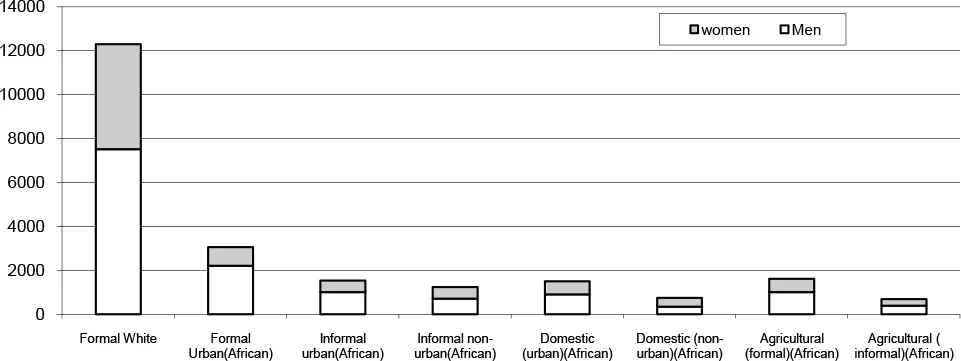
Figure 1. Mean monthly income by gender (1999).
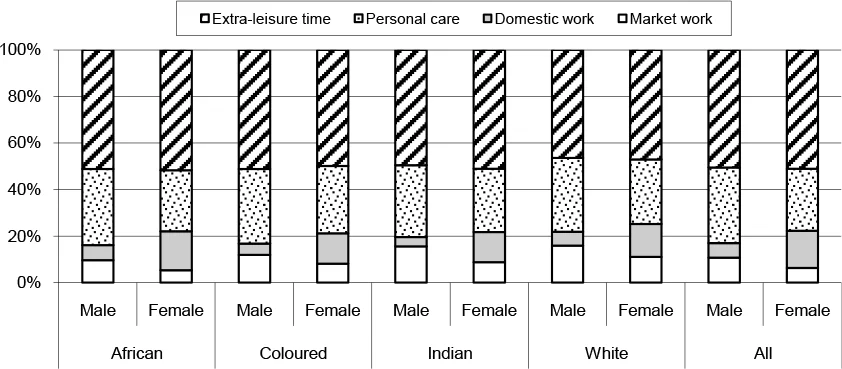
Figure 2. Household and gender time allocation.

Tables

Table 1. Household income and expenditure effects (in percent).
South Africa Residential area Head of household Population group
Urban Rural Male head Female head Black Colored Asian White Unspecified
All incomes 0.04 0.09 −0.27 0.06 −0.04 0.04 0.05 0.16 0.00 0.46
Income taxes −0.21 −0.21 −0.16 −0.23 0.00 0.04 0.08 0.05 −0.29 0.12
Transfers out 0.00 0.00 0.00 0.00 0.00 0.00 0.00 0.00 0.00 0.00
Savings 0.22 0.44 −1.22 0.40 −0.10 0.07 0.02 0.23 2.67 1.68
Consumption 0.05 0.09 −0.13 0.07 −0.02 0.04 0.07 0.12 0.05 0.05
Consumer price index 0.92 0.89 1.05 0.90 0.99 0.86 0.79 1.19 0.99 0.72
EV/Initial income −0.23 −0.21 −0.35 −0.24 −0.15 −0.17 −0.11 −0.17 −0.31 −0.33
Table 2. Poverty and inequality indexes (in percent).
Initial values Variation
P0 P1 P2 Theil index P0 P1 P2 Theil index
South Africa 53.0 25.3 15.0 1.6 0.29 0.26 0.20 0.06
Residential area
Urban 42.4 18.4 10.2 1.6 0.23 0.21 0.14 −0.01
Rural 68.3 35.4 22.1 1.0 0.37 0.34 0.27 0.07
Head of household
Male 43.6 19.5 11.1 1.6 0.19 0.22 0.15 0.03
Female 65.8 33.4 20.5 0.8 0.43 0.32 0.26 0.03
Population group
Black household 61.0 29.5 17.6 1.1 0.31 0.30 0.23 0.07
Colored household 36.2 14.7 7.8 0.8 0.45 0.19 0.12 0.01
Asian household 6.4 2.3 0.8 0.3 0.00 0.04 0.03 0.01
White household 0.1 0.0 0.0 1.0 0.00 0.00 0.00 0.06
Unspecified household 11.4 3.1 0.8 1.7 0.00 0.08 0.04 −0.06
Table 3. Poverty indexes by gender and age.
Category Men Women Children
P0 P1 P2 P0 P1 P2 P0 P1 P2
Base Year Values (in percent)
South Africa 43.8 19.9 11.5 50.8 23.9 14.0 62.7 31.2 19.0
Urban area 35.1 14.9 8.1 41.6 18.1 10.0 51.7 22.8 12.8
Rural area 61.5 30.2 18.5 65.9 33.4 20.5 73.7 39.7 25.4
Male-headed 36.6 15.6 8.7 41.9 18.7 10.6 53.6 24.9 14.6
Female-headed 66.0 33.2 20.3 59.4 28.9 17.3 72.6 38.1 23.9
Black 51.8 23.8 13.9 60.1 28.5 16.8 68.9 34.7 21.3
Colored 30.8 11.9 6.1 34.6 14.3 7.7 43.0 17.6 9.3
Asian 5.5 2.0 0.8 2.9 1.0 0.3 12.3 4.3 1.6
White 0.0 0.0 0.0 0.2 0.1 0.1 0.0 0.0 0.0
Unspecified 0.0 0.0 0.0 7.9 2.1 0.6 21.8 5.8 1.6
Variations after simulation (in percent)
South Africa 0.22 0.22 0.16 0.31 0.26 0.19 0.32 0.30 0.23
Urban area 0.26 0.17 0.11 0.26 0.21 0.15 0.15 0.25 0.17
Rural area 0.13 0.32 0.24 0.39 0.34 0.27 0.50 0.35 0.29
Male-headed 0.19 0.19 0.13 0.23 0.21 0.15 0.14 0.26 0.19
Female-headed 0.30 0.31 0.25 0.38 0.31 0.23 0.53 0.35 0.28
Black 0.23 0.26 0.19 0.35 0.31 0.23 0.33 0.33 0.26
Colored 0.42 0.17 0.10 0.37 0.18 0.12 0.55 0.22 0.15
Asian 0.00 0.03 0.02 0.00 0.02 0.01 0.00 0.07 0.05
White 0.00 0.00 0.00 0.00 0.00 0.00 0.00 0.00 0.00
Unspecified 0.00 0.00 0.00 0.00 0.05 0.03 0.00 0.15 0.08