Cite as: A. Walker, S. Colagiuri; 2011; Cost-benefit model system of chronic diseases in Australia to assess and rank prevention and treatment options; International Journal of Microsimulation; 4(3); 57–70. doi: 10.34196/ijm.00061
Abstract
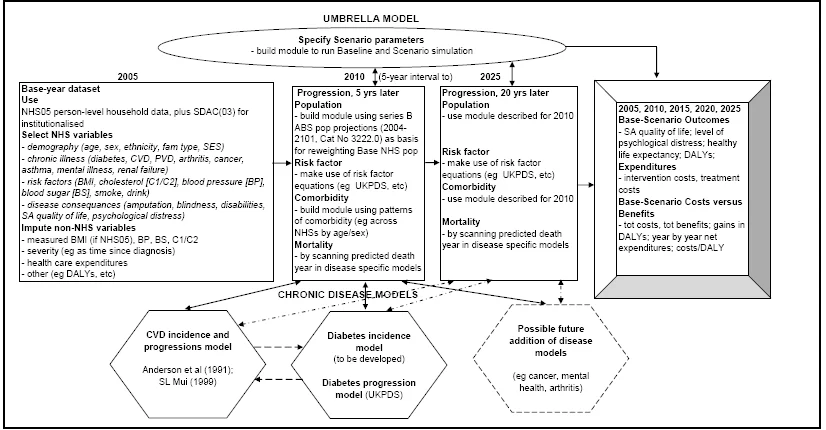
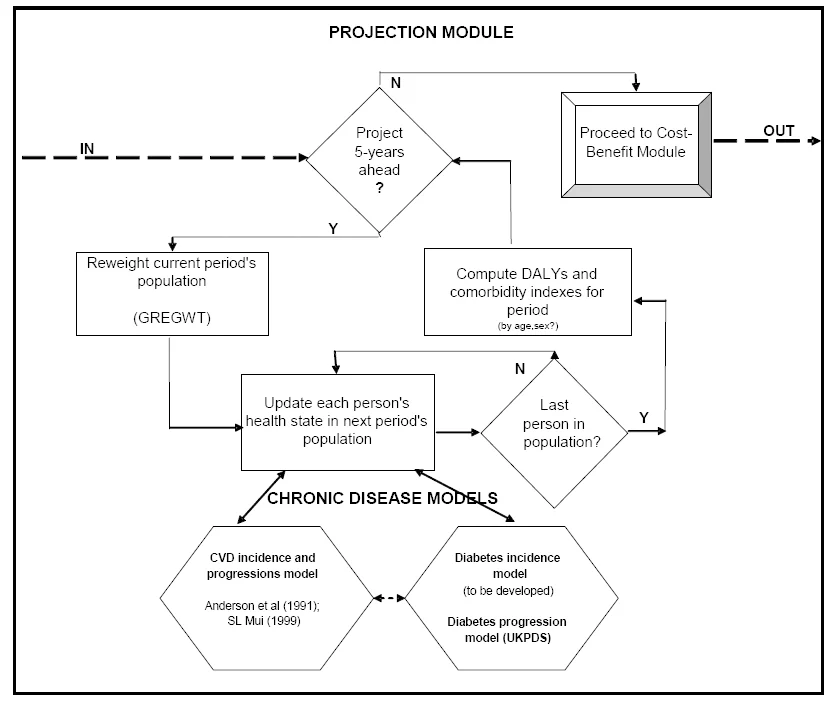
Chronic diseases – eg heart disease, cancer, diabetes, mental disorders – affect around 80% of older Australians, are the main causes of disability and premature death, and account for 70% of total health expenditures. Because lifestyle patterns are major risk factors, chronic disease prevention and treatment are not only of medical concern, but also of considerable social, family-level and personal interest. While this makes microsimulation approaches particularly suitable for assessing intervention costs and benefits, such approaches will need to be combined with disease-progression models if health status and treatment choices are also to be simulated. Aims: Describe methodological and technical proposals for the development of a cost-benefit model-system. Methods: Several chronic disease progression models are to be linked to an ‘Umbrella’ microsimulation model representing the Australian population. To project 20 years ahead, use of reweighting techniques are proposed for population projections, disease-specific predictions and for health-related projections. The model-system is to account simultaneously for Australians’ demographic, socioeconomic and health-risk-factor characteristics; progression of their health status; the number of chronic diseases (comorbidities) they accumulate over time; health-related expenditures; and changes in quality of life. Standard methods are proposed to estimate costs versus benefits of simulated policy interventions and related quality of life improvements. Key outcome: Proposal of novel methods for modelling comorbidities – a task rarely attempted, although quality of life is known to decline and health expenditures to increase well above what a linear addition of the effects of individual chronic diseases would predict.