
This article contains 4 figures.
Figures
Research articles · Dec 31, 2013
Germany Institute for Economic Research (DIW Berlin), Berlin
Cite as: S. Bach, P. Haan, R. Ochmann; 2013; Taxation of married couples in Germany and the UK: One-Earner Couples Make the Difference; International Journal of Microsimulation; 6(3); 2–20. doi: 10.34196/ijm.00086
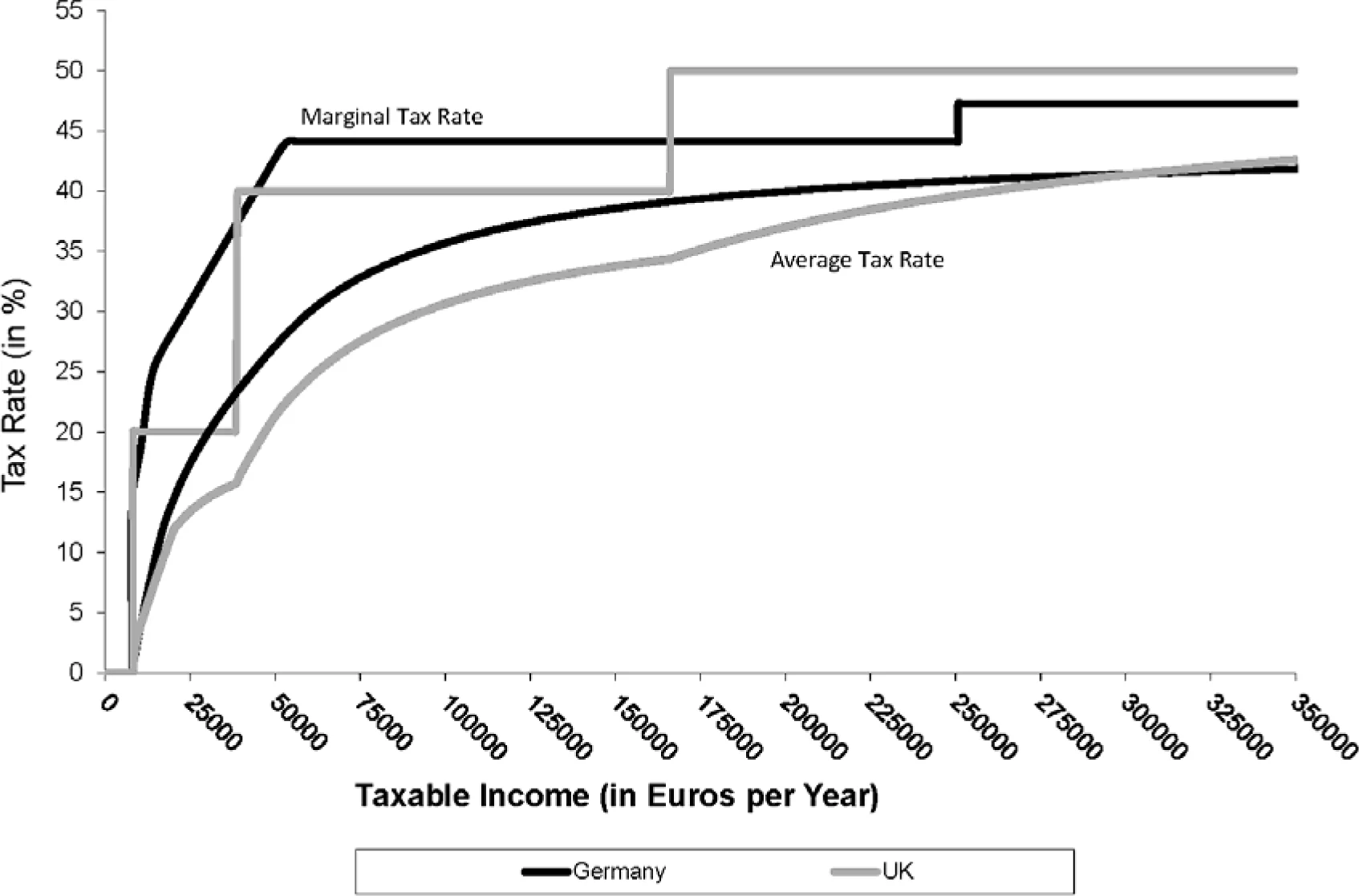
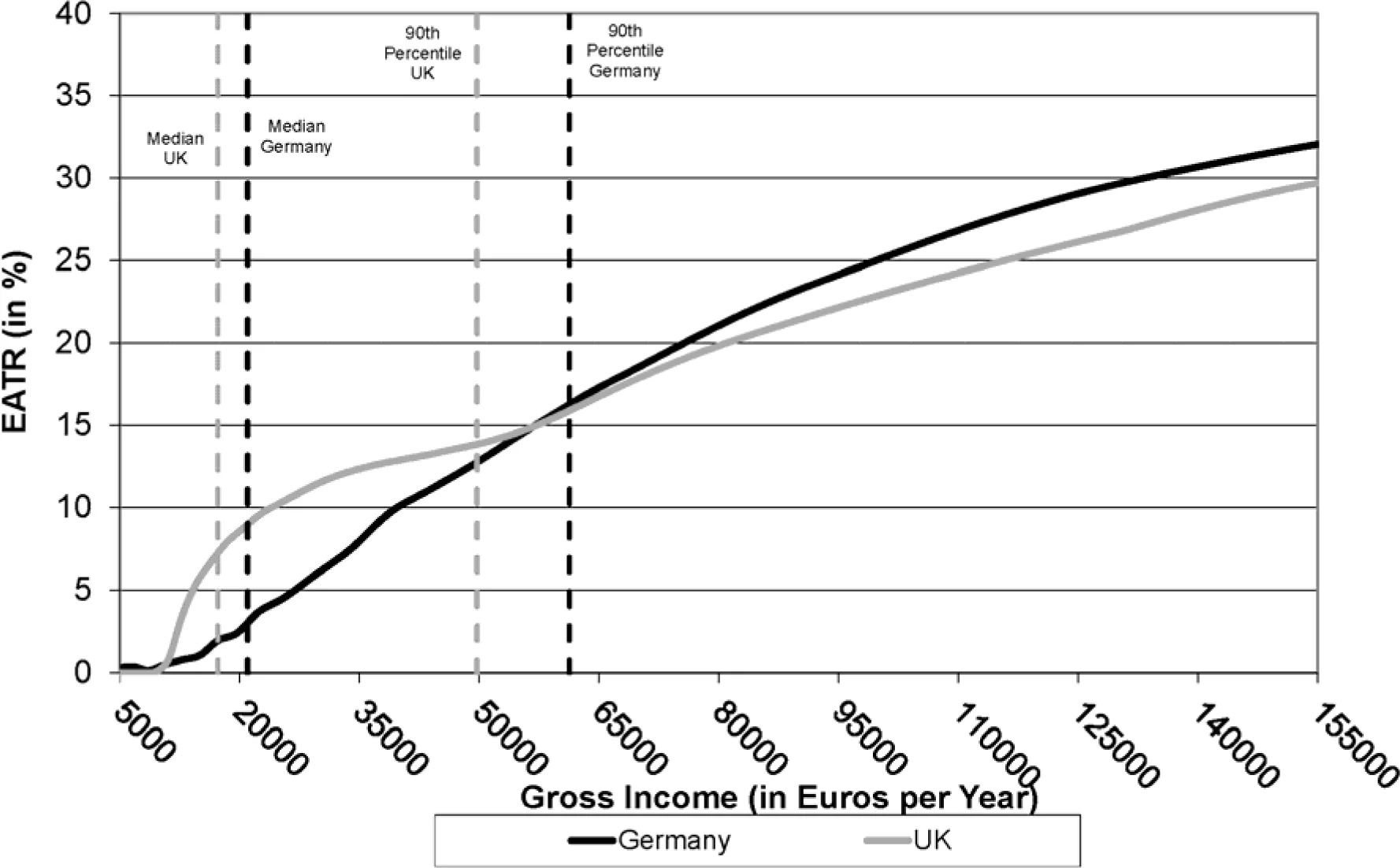
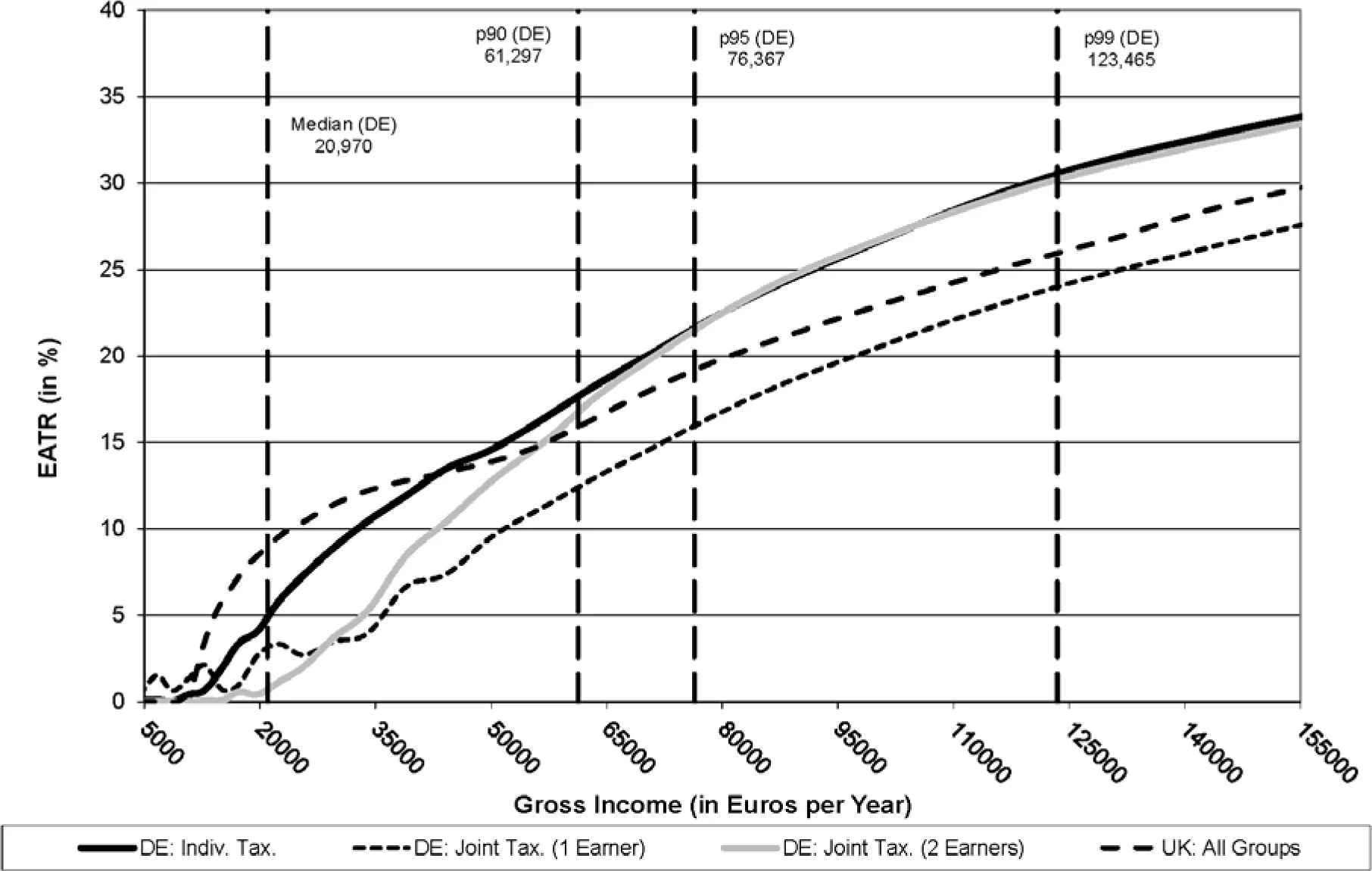
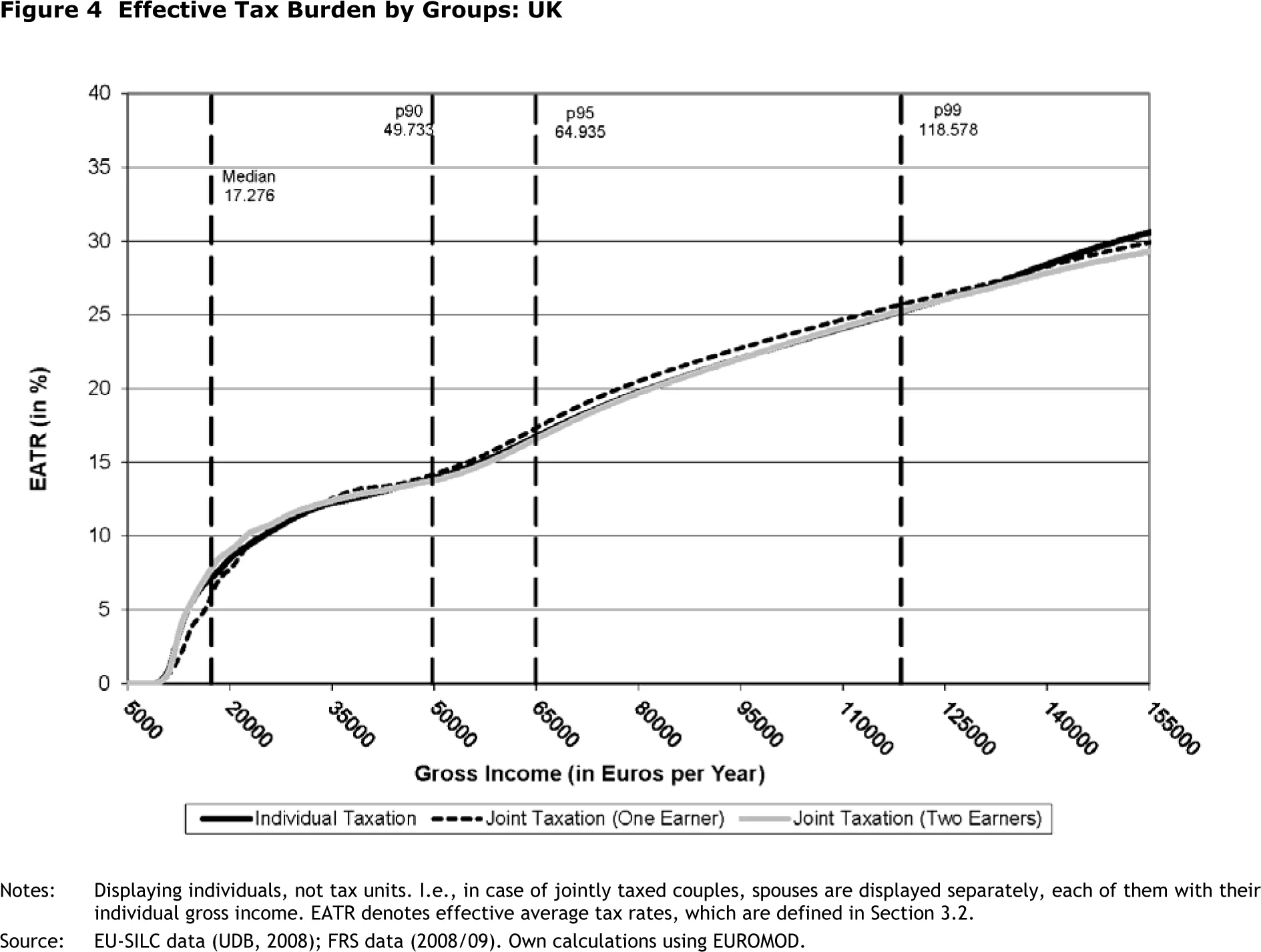
A large body of literature points out that joint taxation of married couples with full income splitting (Ehegattensplitting) is an important reason for the relatively low labor force participation of married women in Germany. This paper investigates the relative gains of joint taxation for married couples by comparing effective tax burdens for three groups of tax units between Germany and the UK. Using the tax and benefit microsimulation model, EUROMOD, we compare effective average income tax rates for singles, one-earner couples, and two-earner couples in Germany and the UK. Applying the concept of effective tax rates, we go beyond marginal tax rates and account for effects of tax allowances and tax exemptions. We find that effective income tax liabilities are significantly lower for the majority of tax units in Germany compared to the UK, in particular for married couples. This is because married couples are taxed jointly in Germany, whereas the spouses are taxed individually in the UK. The benefits of joint taxation are particularly important for one-earner couples, and they can be found along almost the entire income distribution.
This article contains 4 figures.