
This article contains 7 figures and 1 table.
Figures
Tables
| fEnl | fEx | fEm | fRet | |
|---|---|---|---|---|
| Status quo | 100% | 0% | 100% | 0% |
| 2nd enlargement | 200% | 0% | 100% | 0% |
| Soft Brexit | 0% | 10% | 80% | 10% |
| Exodus | 0% | 70% | 80% | 10% |
| Hard Brexit | 0% | 70% | 30 % | 80% |
Research articles · Aug 31, 2017
Averisera Ltd, United Kingdom
Cite as: A. Werpachowska, R. Werpachowski; 2017; Microsimulations of demographic changes in England and wales under different EU referendum scenarios; International Journal of Microsimulation; 10(2); 103–117. doi: 10.34196/ijm.00158
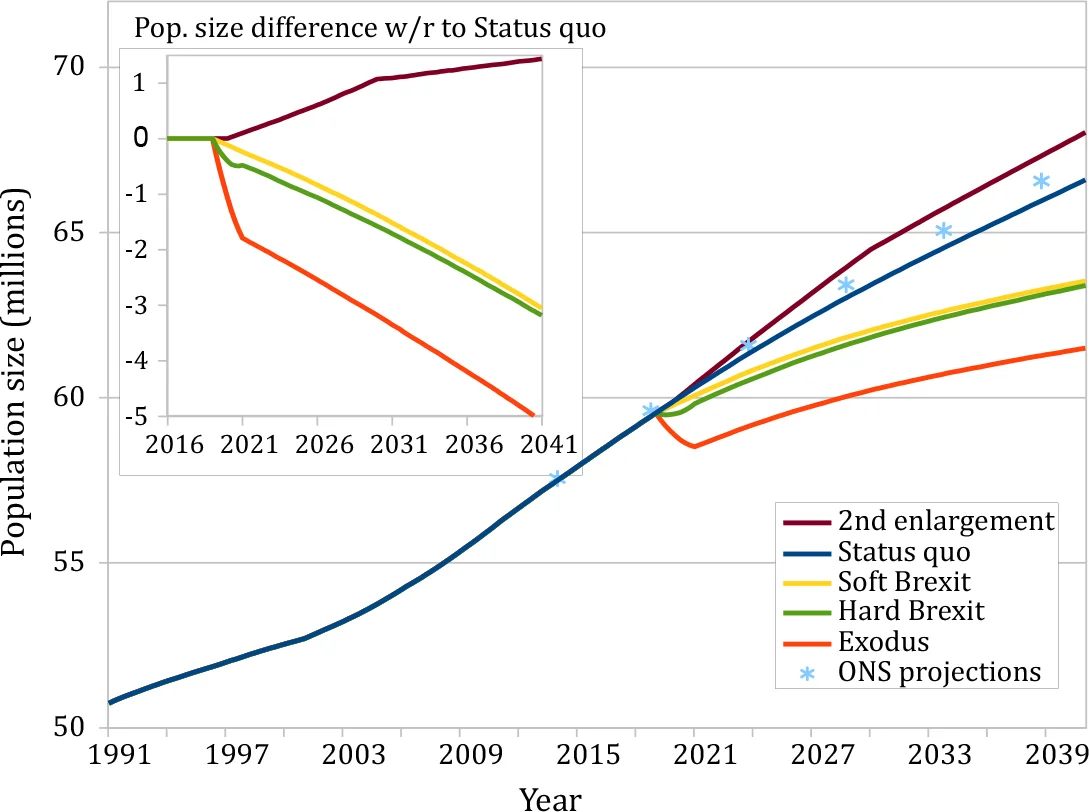
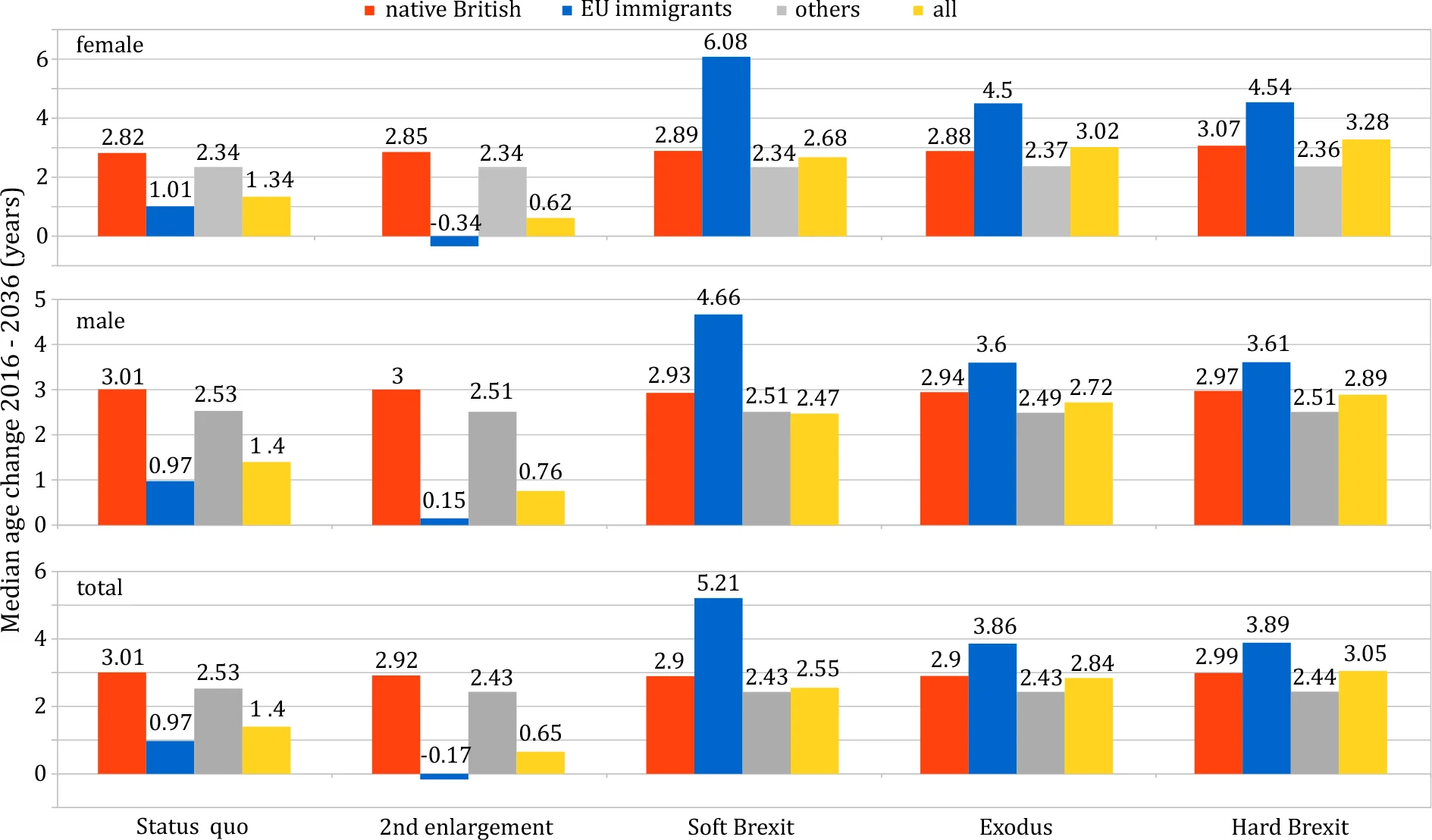
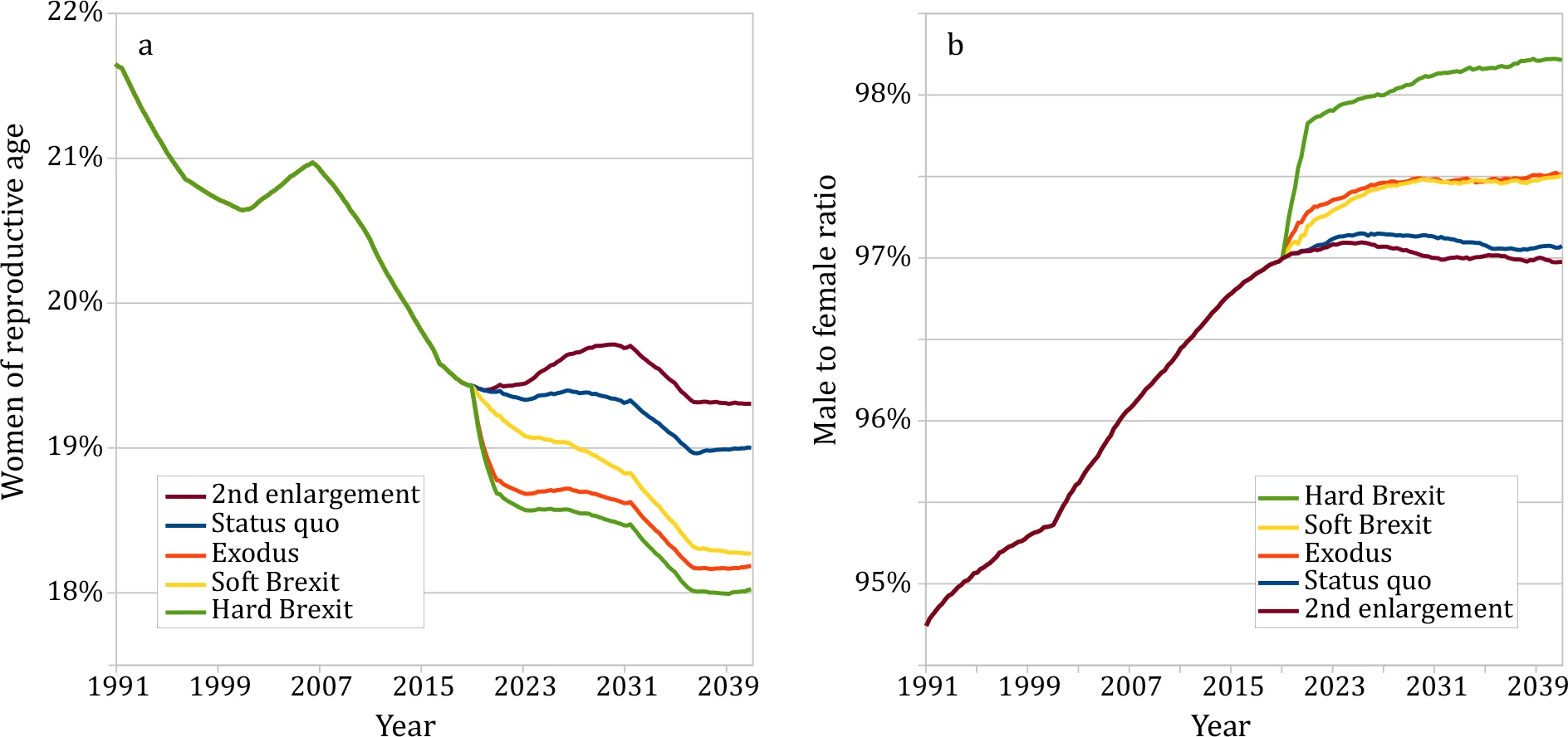
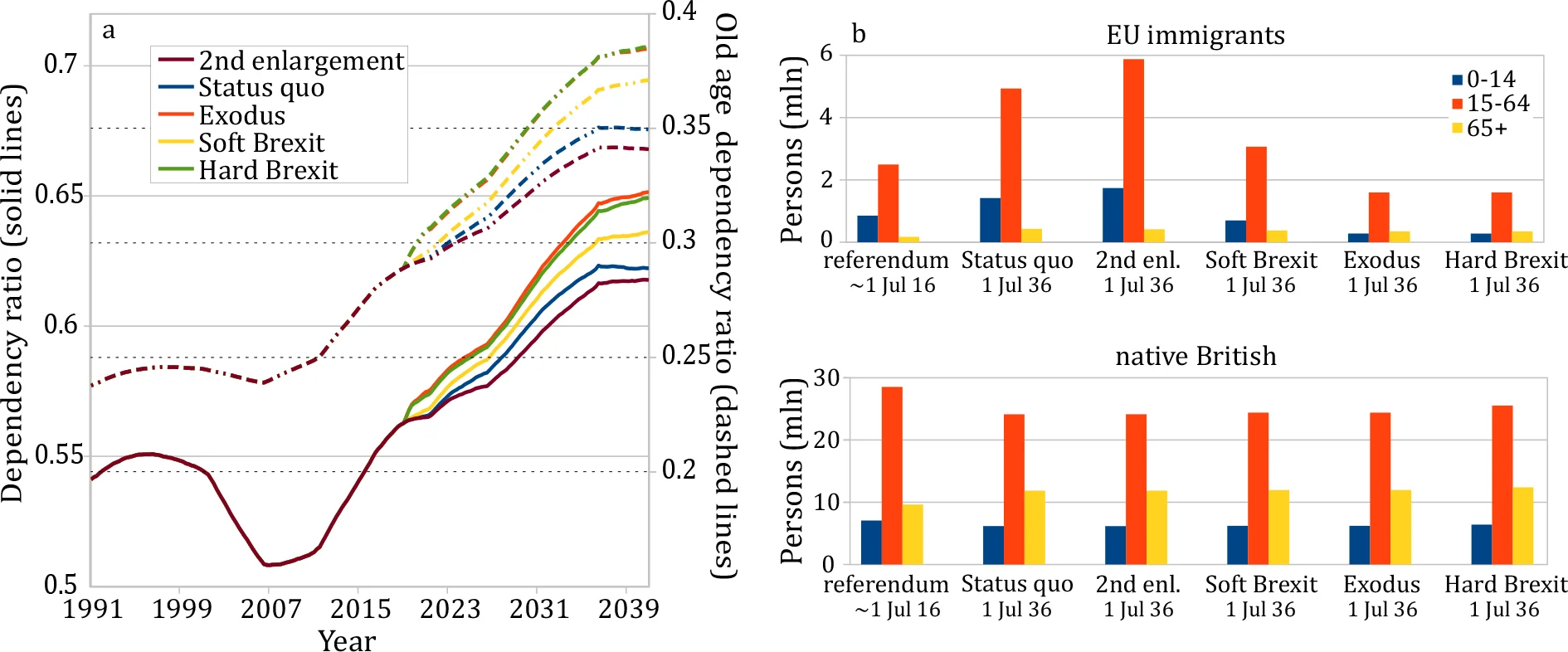
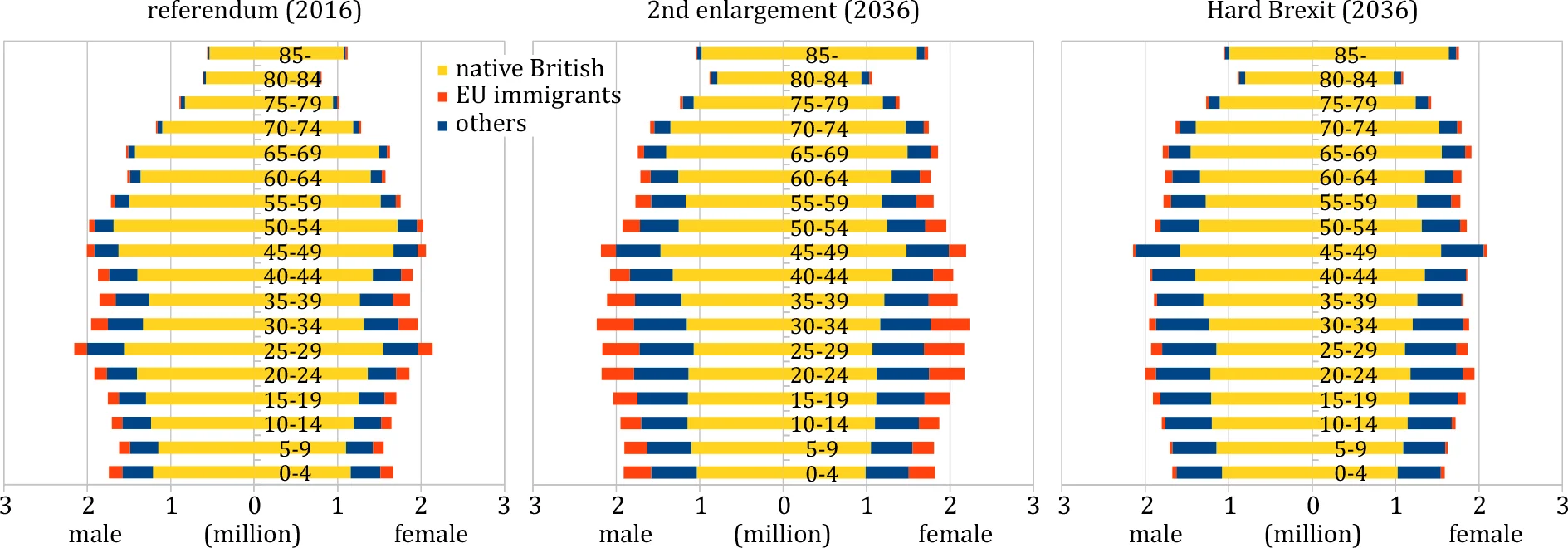
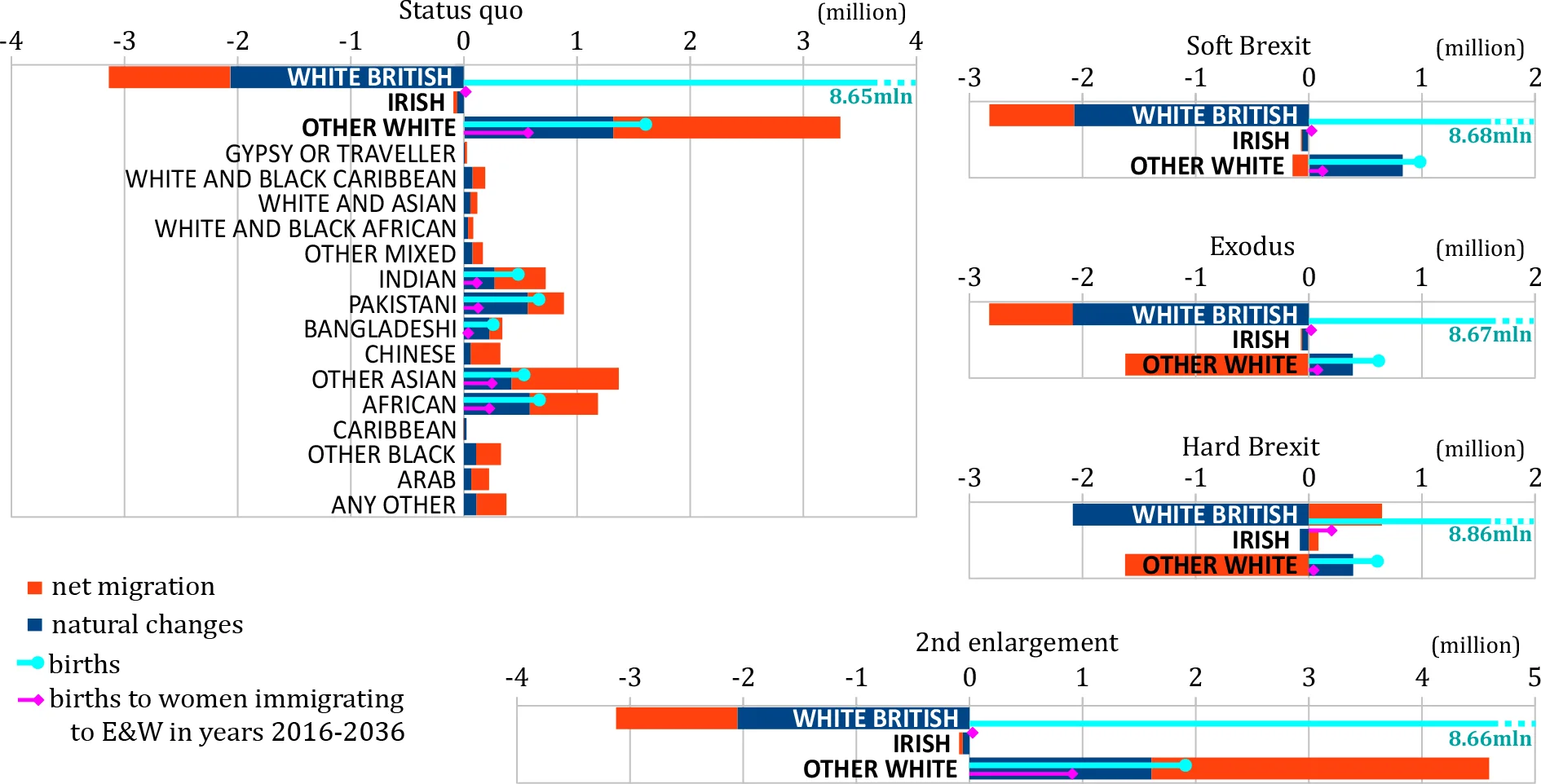
We perform stochastic microsimulations of the dynamics of England and Wales population after the British referendum on EU membership, considering different possible outcomes. Employing available survey data, we model the demographics of the region over the next generation, as shaped by births, deaths and international migration. The migration patterns between England and Wales and the remaining EU countries are modified according to the possible scenarios of their future relations. We find that Brexit will accelerate the overall population ageing and the deepening imbalance between workers and retirees but reduce the population growth and the fraction of women of reproductive age. In the alternative scenarios of remaining in the EU these effects will be partially forestalled by waves of immigration from current and prospective EU countries and their children. In all considered scenarios the native British population declines. Our study demonstrates that microsimulations can be a useful tool for designing and evaluating the country’s policies in the advent of fundamental transformations.
This article contains 7 figures and 1 table.
| fEnl | fEx | fEm | fRet | |
|---|---|---|---|---|
| Status quo | 100% | 0% | 100% | 0% |
| 2nd enlargement | 200% | 0% | 100% | 0% |
| Soft Brexit | 0% | 10% | 80% | 10% |
| Exodus | 0% | 70% | 80% | 10% |
| Hard Brexit | 0% | 70% | 30 % | 80% |