Cite as: R. De Blander, I. Schockaert, A. Decoster, P. Deboosere; 2017; Projected population, inequality and social expenditures: The Case of Flanders; International Journal of Microsimulation; 10(3); 92–133. doi: 10.34196/ijm.00167
Abstract
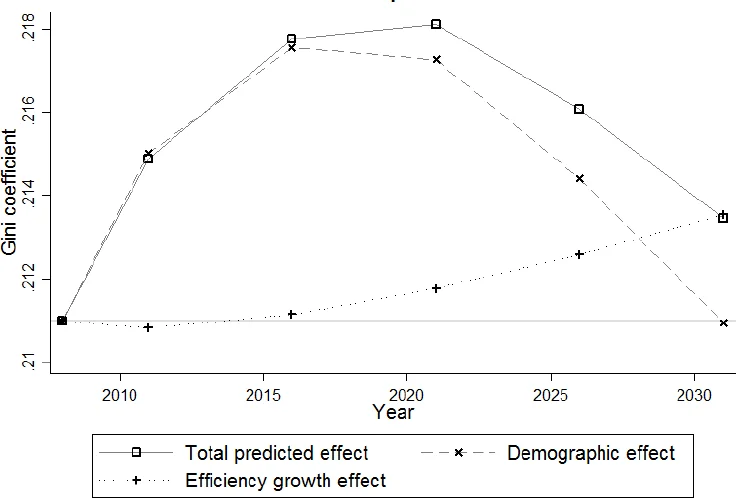
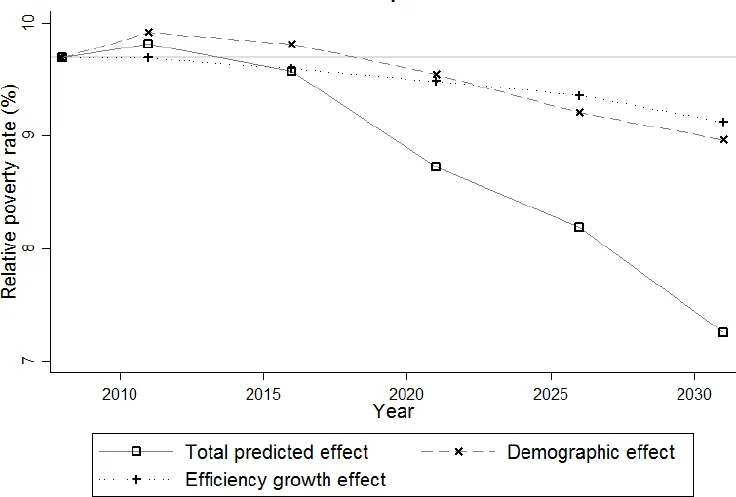
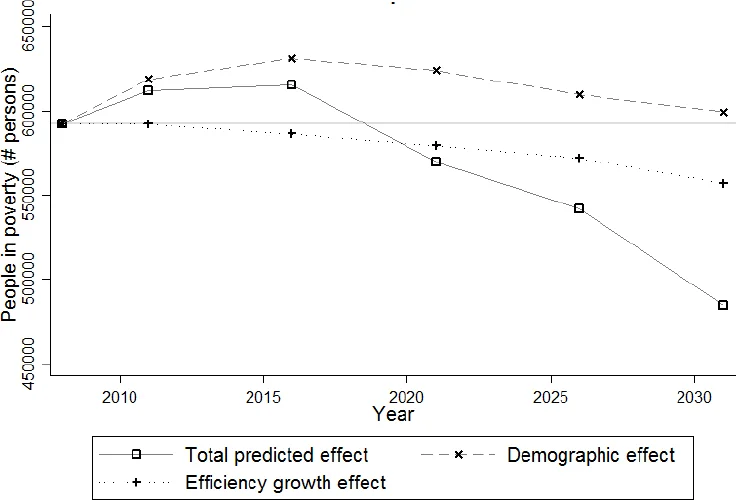
We investigate the budgetary and distributional effects of a demographic and economic evolution in Flanders between 2011 and 2031. We project demographic changes by means of two multi-state population projections (LIPRO-projections), on the basis of which we statically reweigh the EU-SILC 2008 dataset. In addition, we assume a modest real exogenous –meaning not induced by the demographic projections– growth rate of 1%. Population-wise, we find a pronounced ageing, a growth of single-headed households, mostly to the detriment of couples with children, and a closing generational gap in education. While income inequality exhibits a non-monotonous pattern over time (reaching a maximum around 2020), poverty steadily declines after 2011. We find a large increase in expenditures on pensions, which is, however, covered by the modest public income growth we assume, while keeping the tax system constant in real terms.
This article contains 29 figures and 3 tables.
Figures
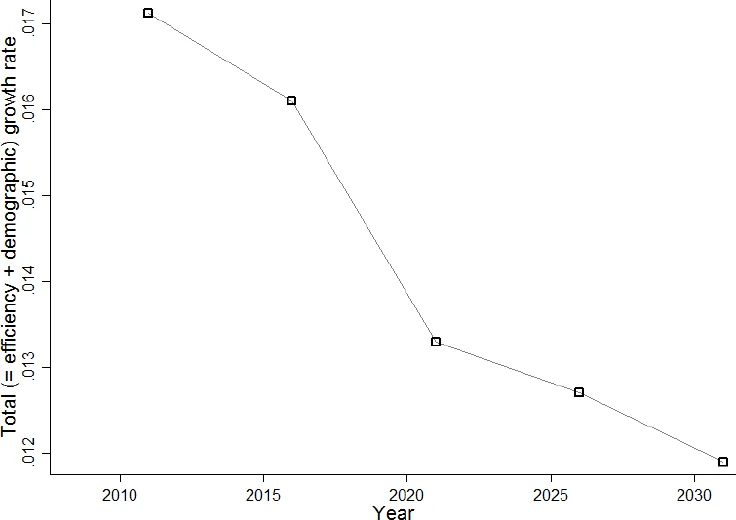
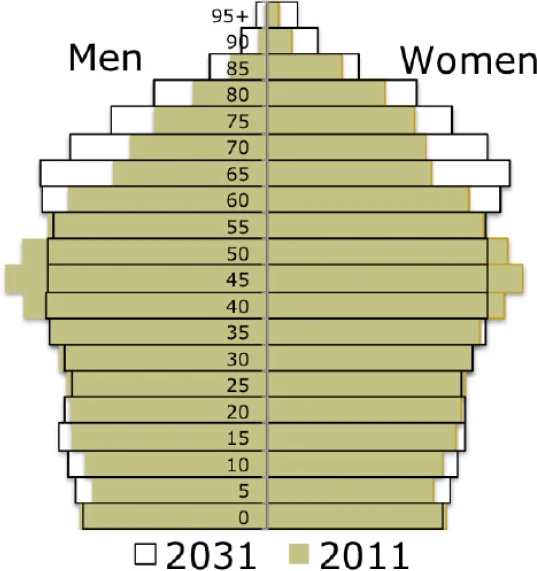
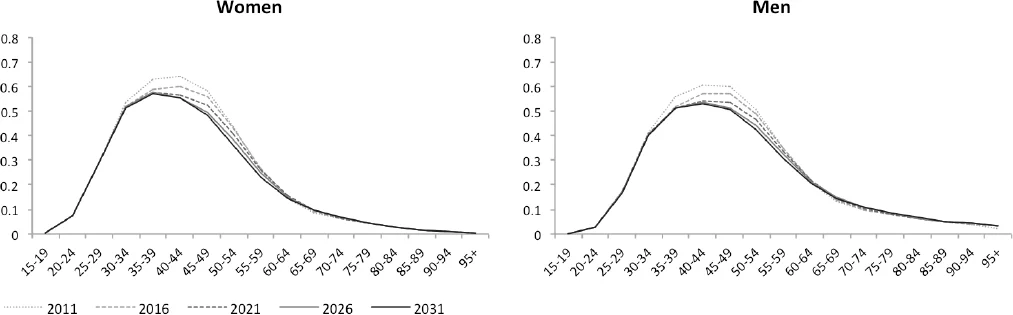
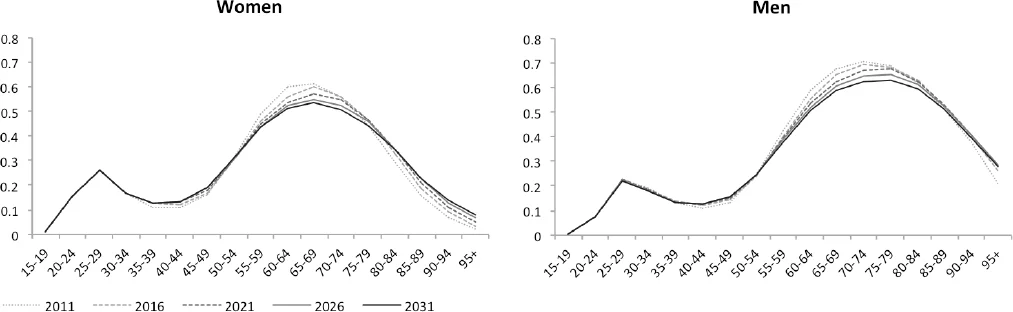
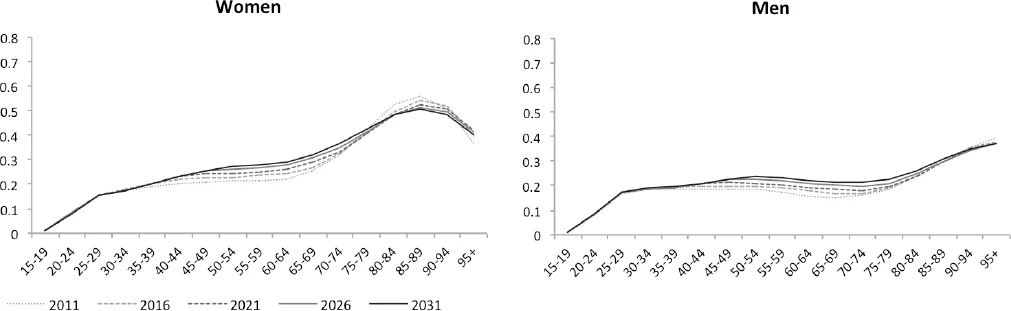
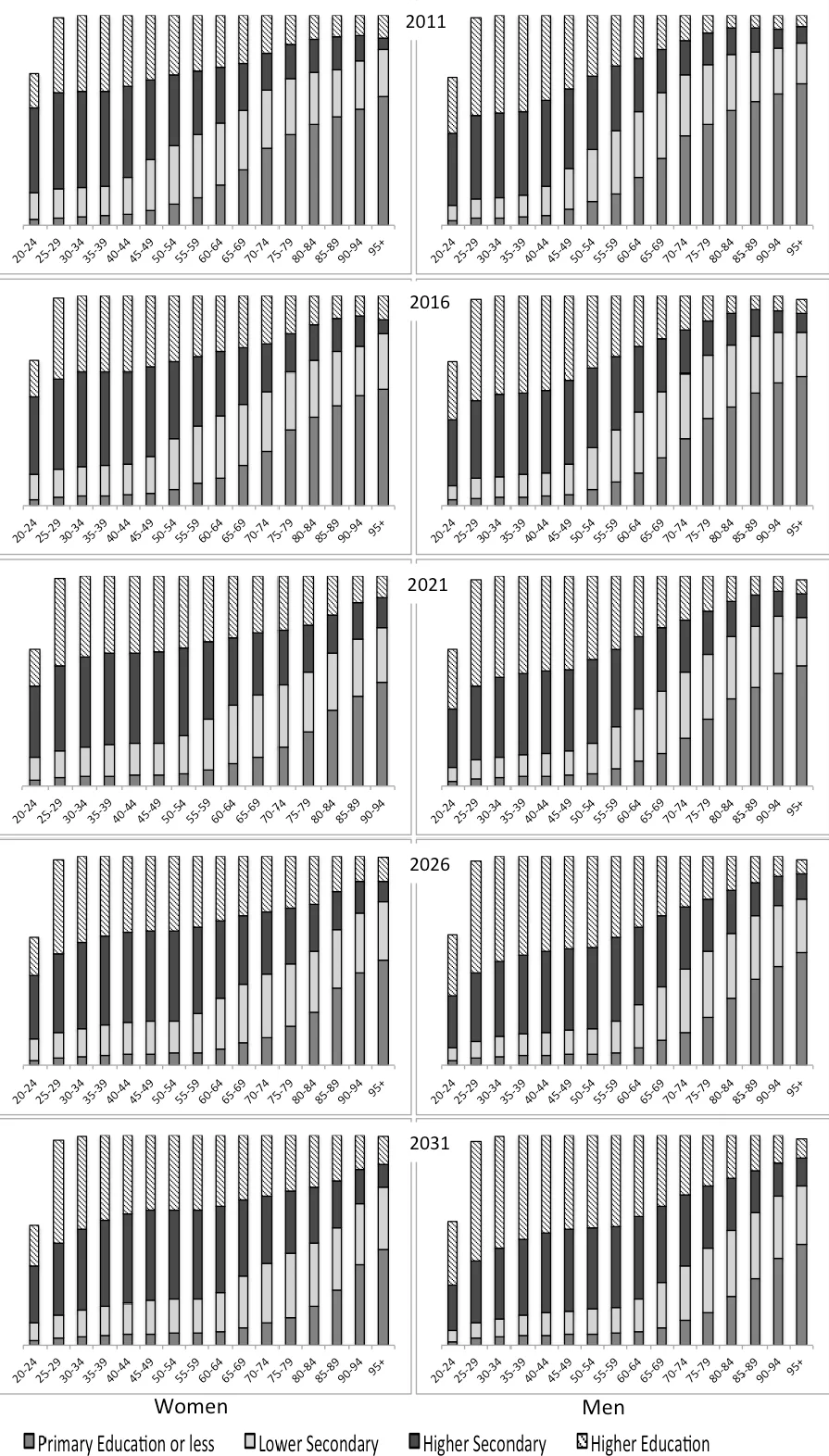
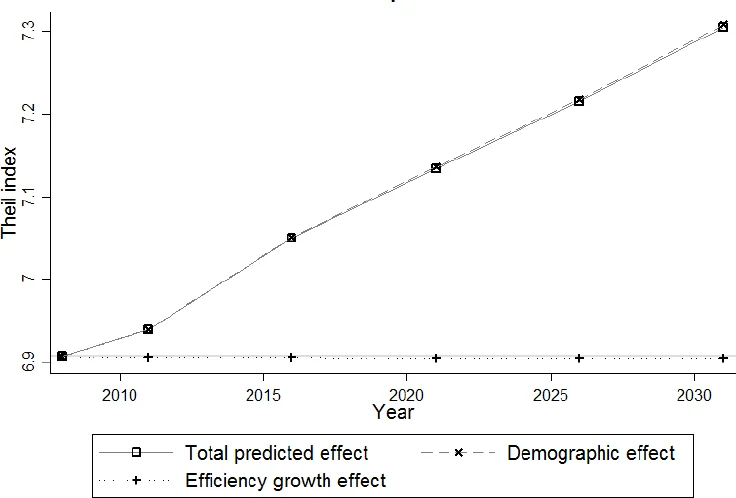
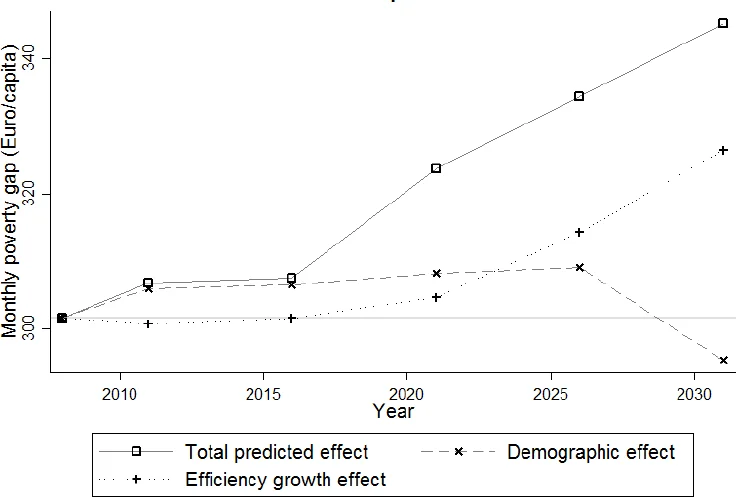
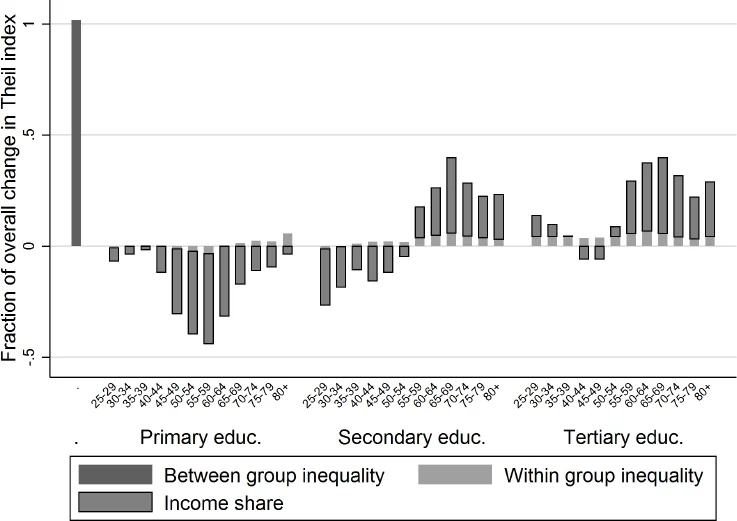
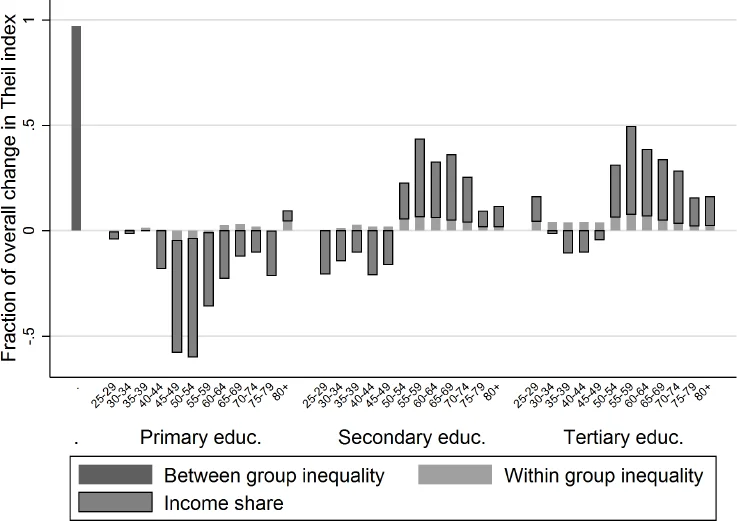
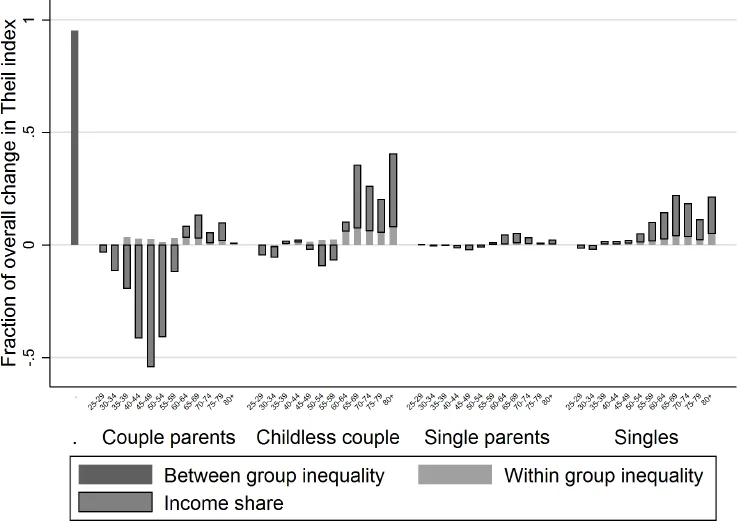
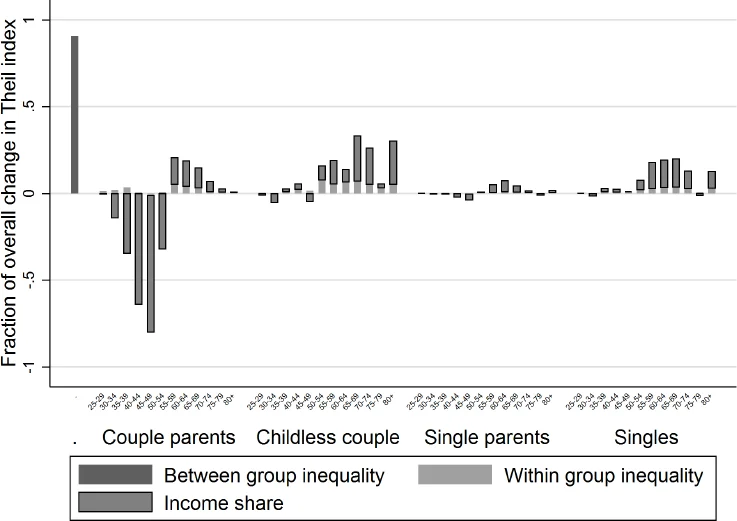
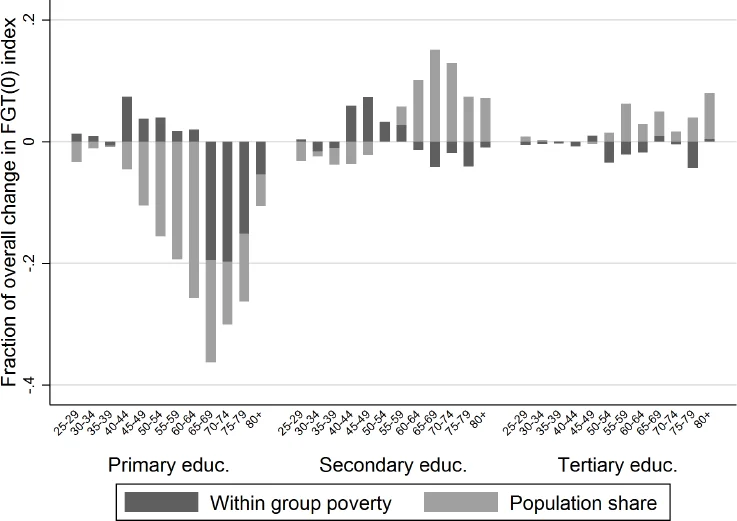
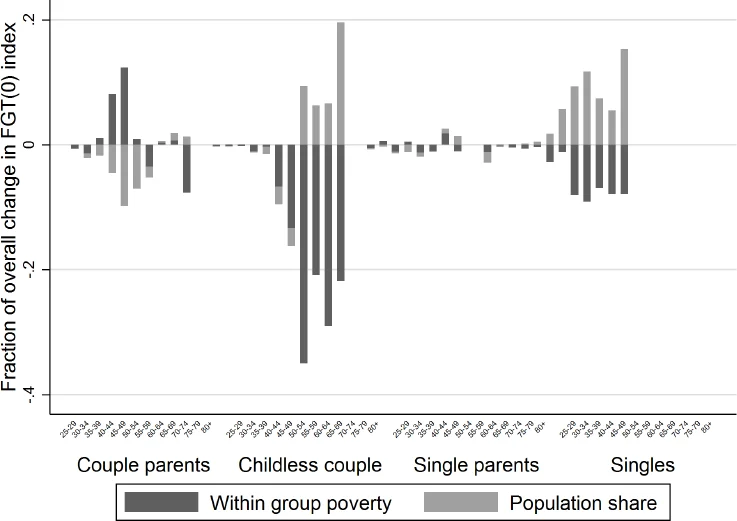
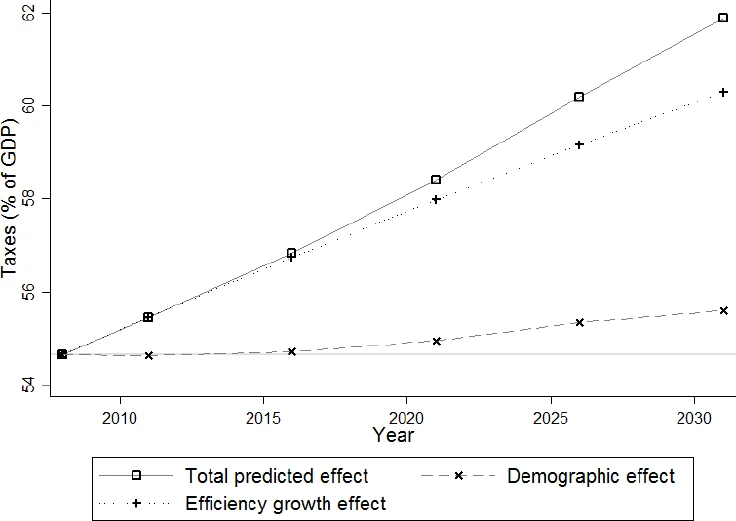
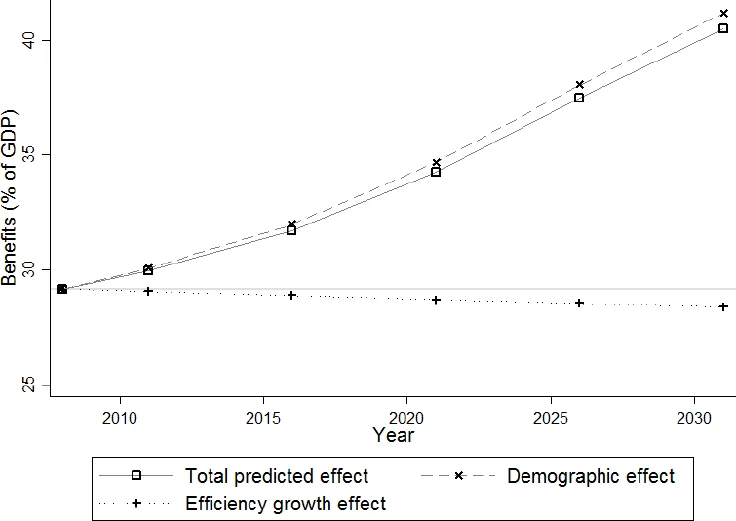
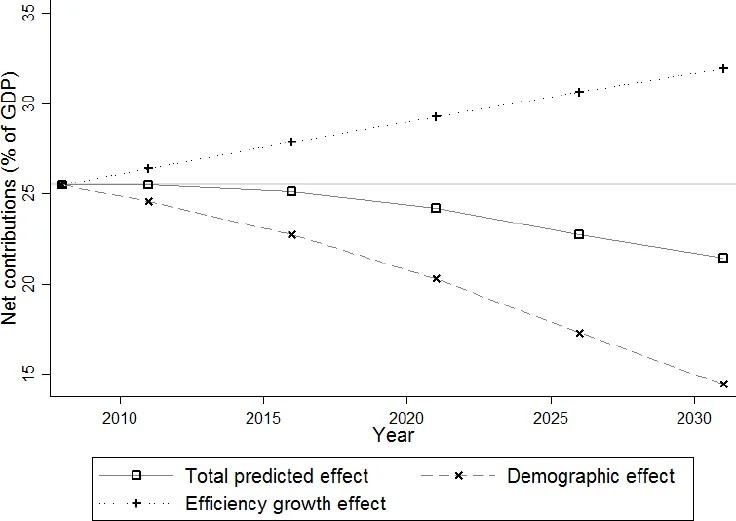
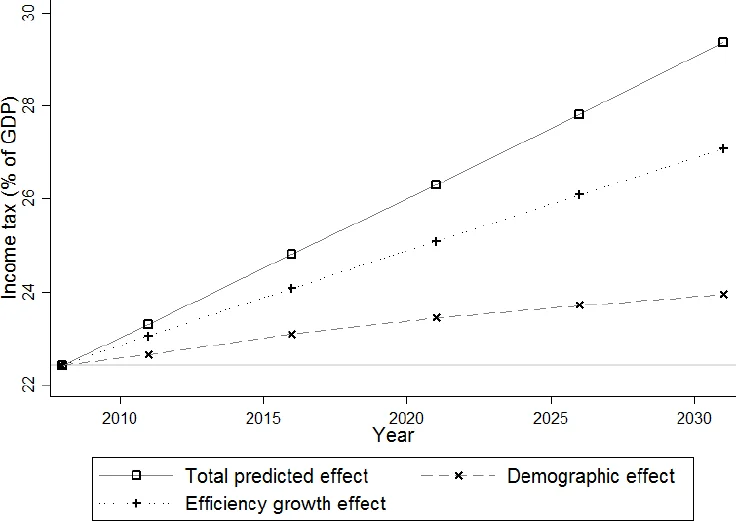
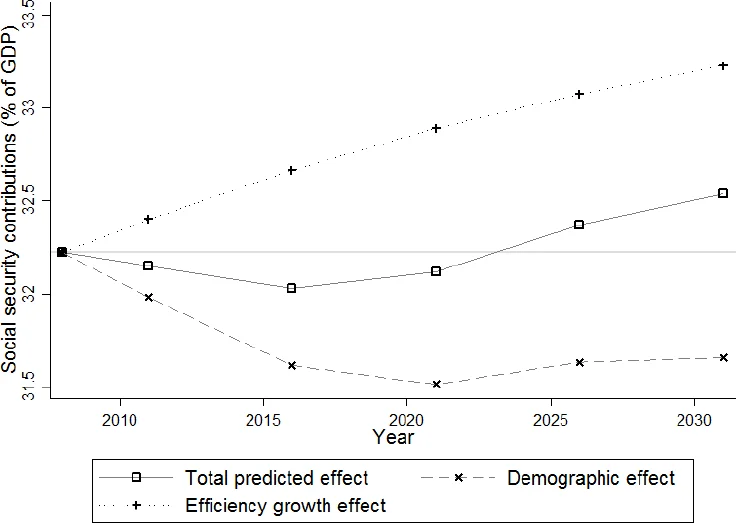
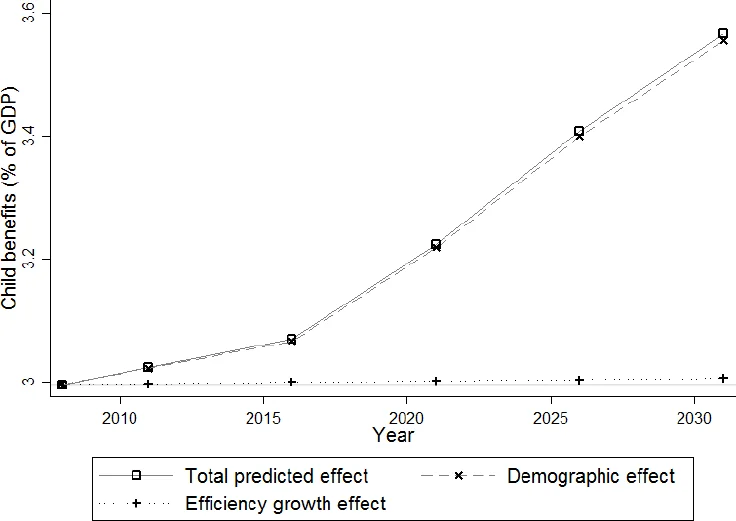
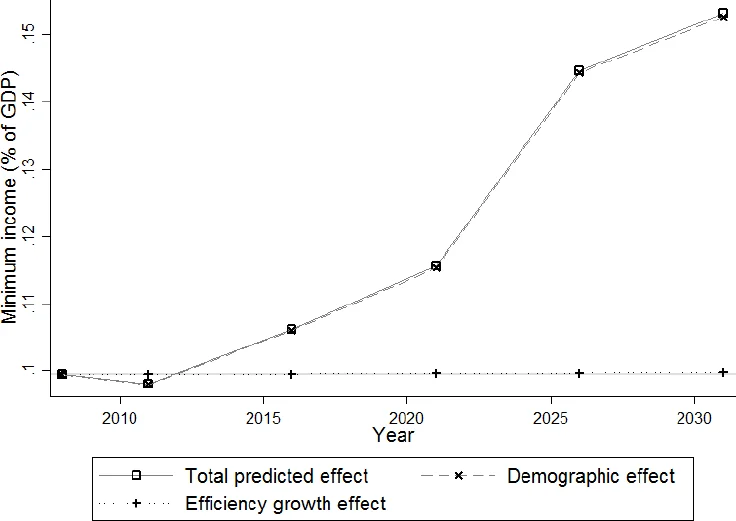
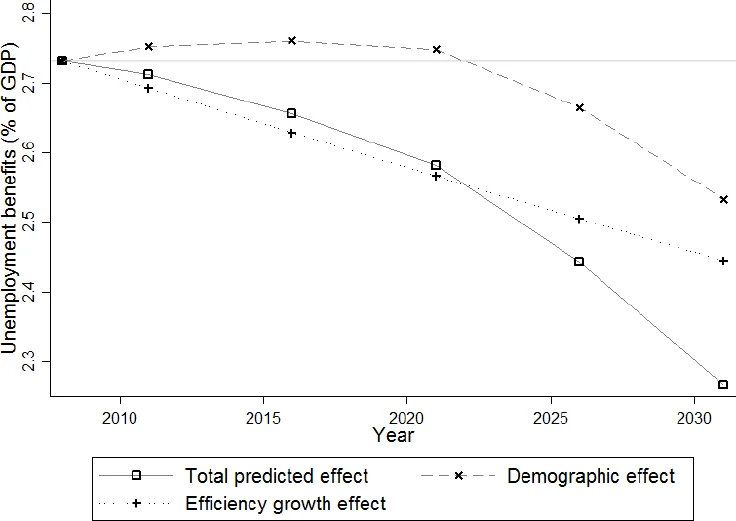
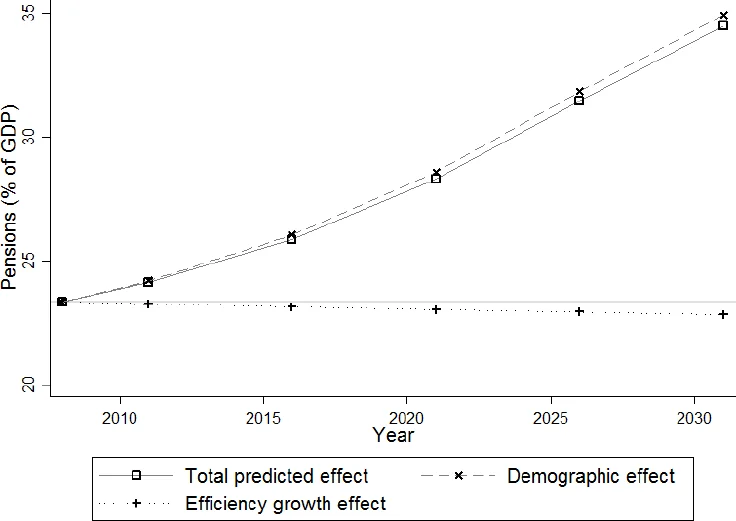
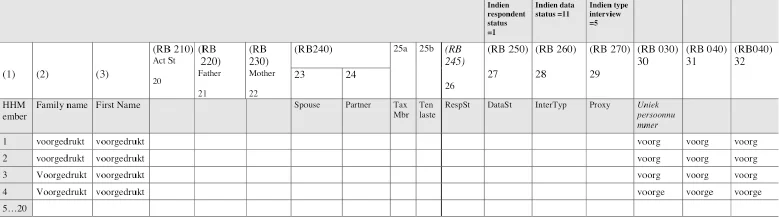
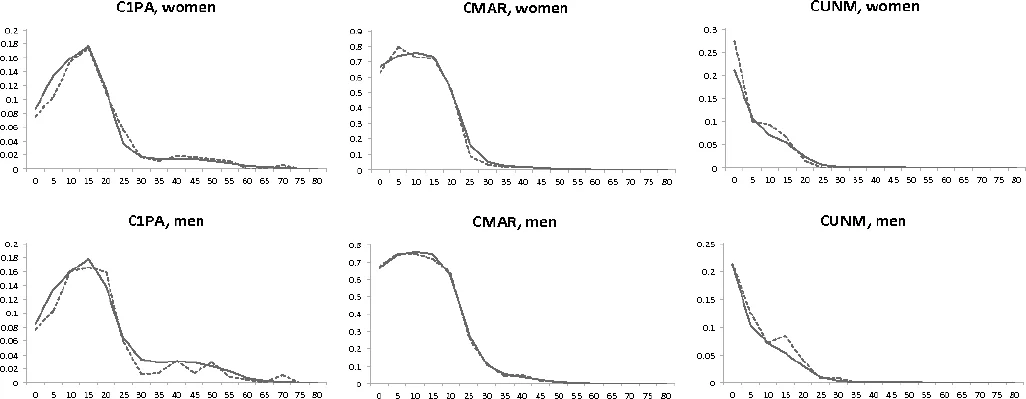
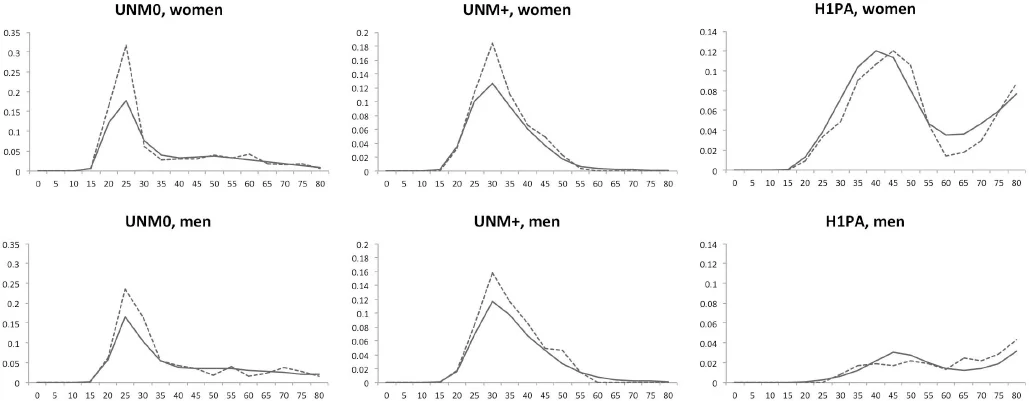
Figure 1. The macro-economic growth rate resulting from both effciency and demographic growth.Figure 2. Population pyramid 2011 – 2031.Figure 3. Couples with children by age and sex.Figure 4. Couples without children by age and sex.Figure 5. Single-headed household-heads by age and sex.Figure 6. Population and educational attainment by age and sex.Figure 7. Inequality measure: Gini coefficient.Figure 8. Inequality measure: Theil index.Figure 9. Relative poverty rate.Figure 10. People in poverty.Figure 11. Monthly poverty gap per poor household.Figure 12. Decomposition of the change in Theil index with respect to sub-populations by age and educational attainment, period 2011–2031.Figure 13. Decomposition of the change in Theil index with respect to sub-populations by age and educational attainment, period 2011–2021.Figure 14. Decomposition of the change in Theil index with respect to sub-populations by age and household position, period 2011–2031.Figure 15. Decomposition of the change in Theil index with respect to sub-populations by age and household position, period 2011–2021.Figure 16. Decomposition of poverty change by age and educational attainment.Figure 17. Decomposition of poverty change by age and household position.Figure 18. Evolution of income taxes and social security contributions as a percentage of total income.Figure 19. Evolution of all social security payments received as a percentage of total income.Figure 20. Net yearly payments made.Figure 21. Evolution of income taxes.Figure 22. Evolution of social security contributions.Figure 23. Evolution of different types of child support.Figure 24. Evolution of minimum income.Figure 25. Evolution of Unemployment benefits.Figure 26. Evolution of Pensions.Figure A.1. The EU-SILC questionnaire on relationships among household members.Figure A.2. Comparison of the population distribution by age and sex in EU-SILC and the projection, SING, MAR0, MAR+.Figure A.3. Comparison of the population distribution by age and sex in EU-SILC and the projection, UNM0, UNM+, H1PA.
Tables
Table 1. Projection scenarios.
Period
2006–10
2011–15
2016–20
2021–25
2026–30
Fertility (births per woman)
1.73
1.82
1.76
1.72
1.70
Life expectancy (years)
Female
82.7
83.2
83.8
84.4
85.0
Male
76.9
77.7
78.7
79.6
80.7
Net migration (rate/base rate)
1
1.2
1.4
1.2
1
Educat. retent. (rate/base rate)
1
1.065
1.13
1.195
1.25
Table 2. Up-rate factors.
year
factor
2011
1.030
2016
1.083
2021
1.138
2026
1.196
2031
1.257
Table A.1. Rules for creating a LIPRO-typology in EU-SILC.
SING
only individual living in the household
H1PA
someone’s parent and without partner
MAR0
married with partner and not someone’s parent
MAR+
married with partner and is someone’s parent
UNM0
someone’s partner (one of both unmarried) and not someone’s parent
UNM+
someone’s partner (one of both unmarried) and someone’s parent
CMAR
has a parent with a partner, both are married
CUNM
has a parent with a partner, one of both is unmarried currently married