Women and Superannuation in the 21st Century: Poverty or Plenty?
Simon Kelly, Richard Percival, Ann Harding
NATSEM, University of Canberra, Canberra, Australia. This article was originally presented to the SPRC National Social Policy Conference at the University of New South Wales, 4-6 July 2001, and published by NATSEM as a technical paper.
Cite as: S. Kelly, R. Percival, A. Harding; 2023; Women and Superannuation in the 21st Century: Poverty or Plenty?; International Journal of Microsimulation; 16(2); 54–72. doi: 10.34196/ijm.00283
Abstract
The ageing of the population and its consequences is widely recognised as one of the major public policy challenges facing Australia, with likely future retirement incomes emerging as a key policy issue. In such debates, the future fortunes of women loom large. Will compulsory employer contributions to superannuation make a difference to the financial position of women in retirement? Will increased labour force participation result in a better retirement? What of the women who were relying on their partner’s superannuation but their marriage has ended in divorce? Models established to date do not provide the best tools to answer questions such as those above. In particular, they are unable to cope with the impact of divorce. With this in mind, NATSEM, with support from an Australian Research Council grant (A79906127), has added a superannuation module onto an existing microsimulation model. This new model allows detailed distributional analysis of future retirement incomes, including analysis of a wide range of policy settings and of the impact on future superannuation of behavioural changes. This paper presents the first, preliminary results using this model.
This article contains 12 figures and 6 tables.
Figures
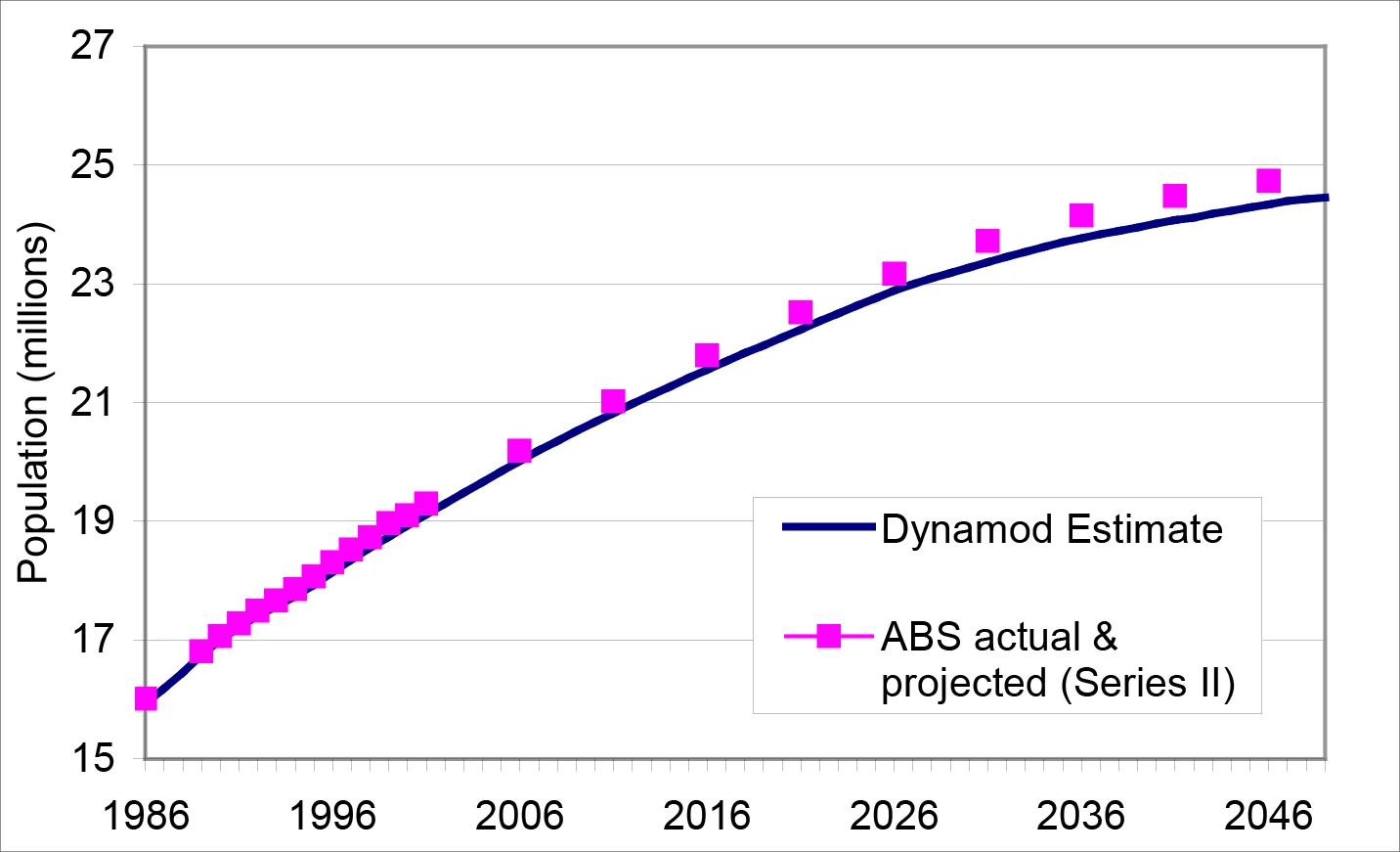
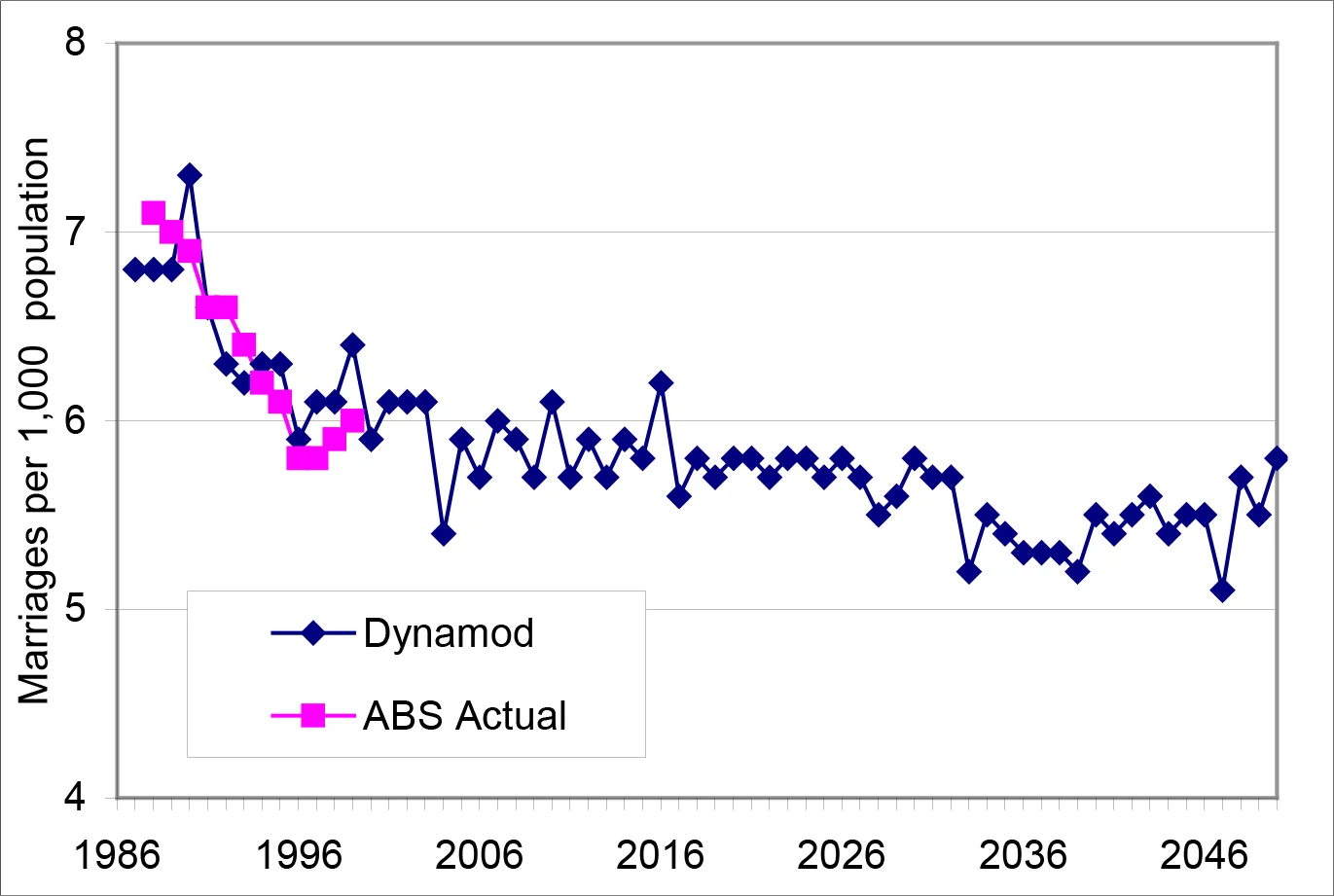
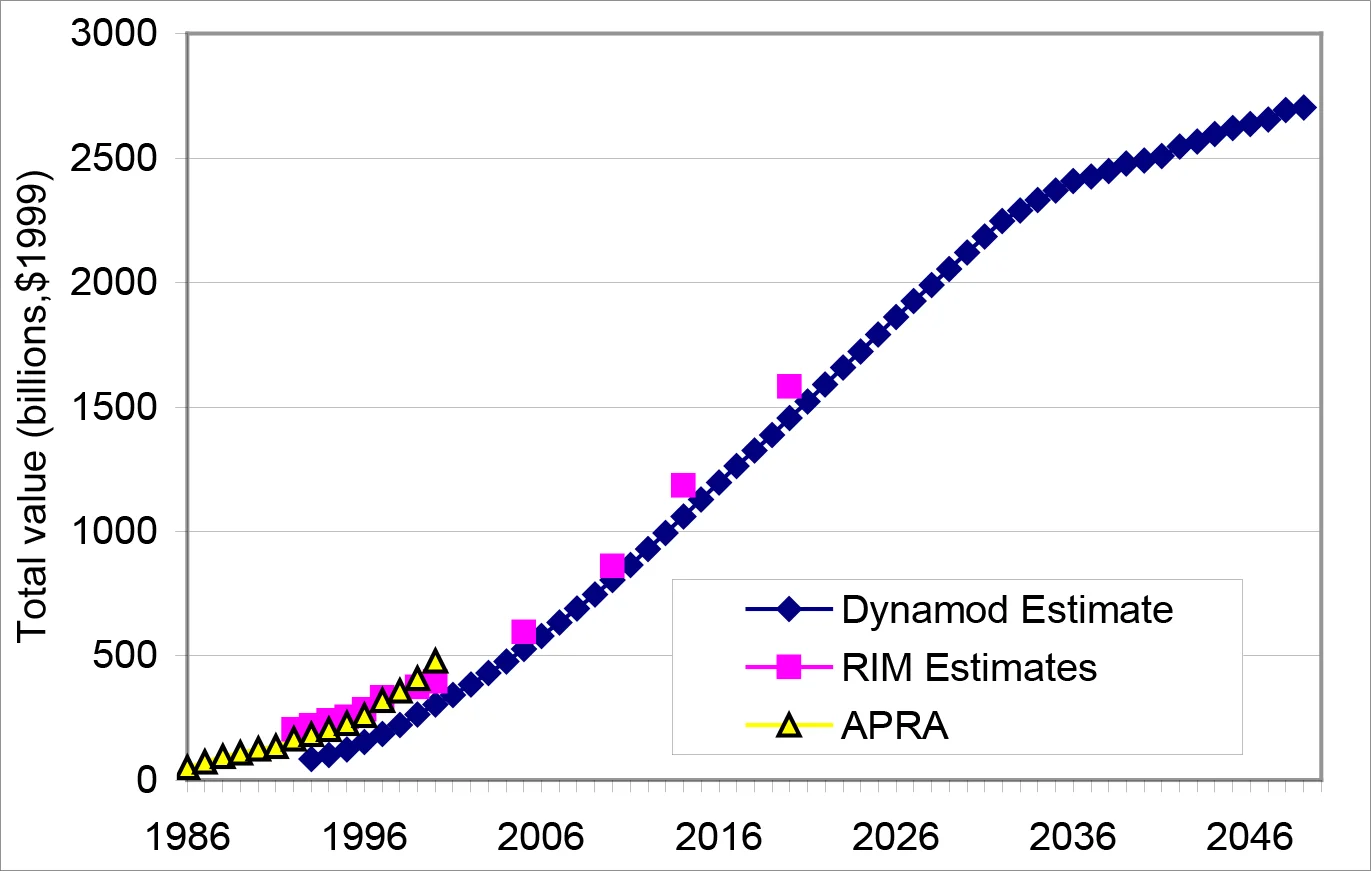
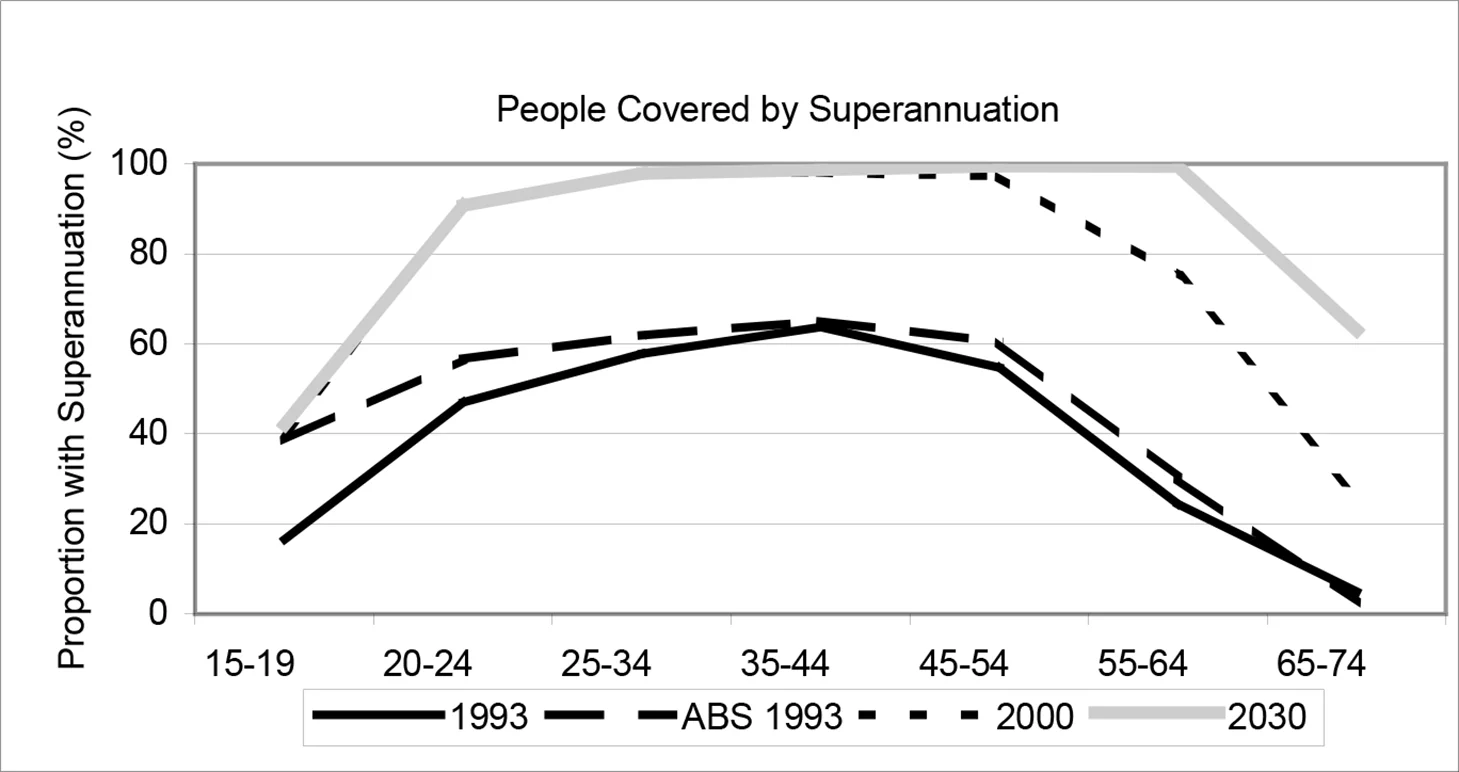
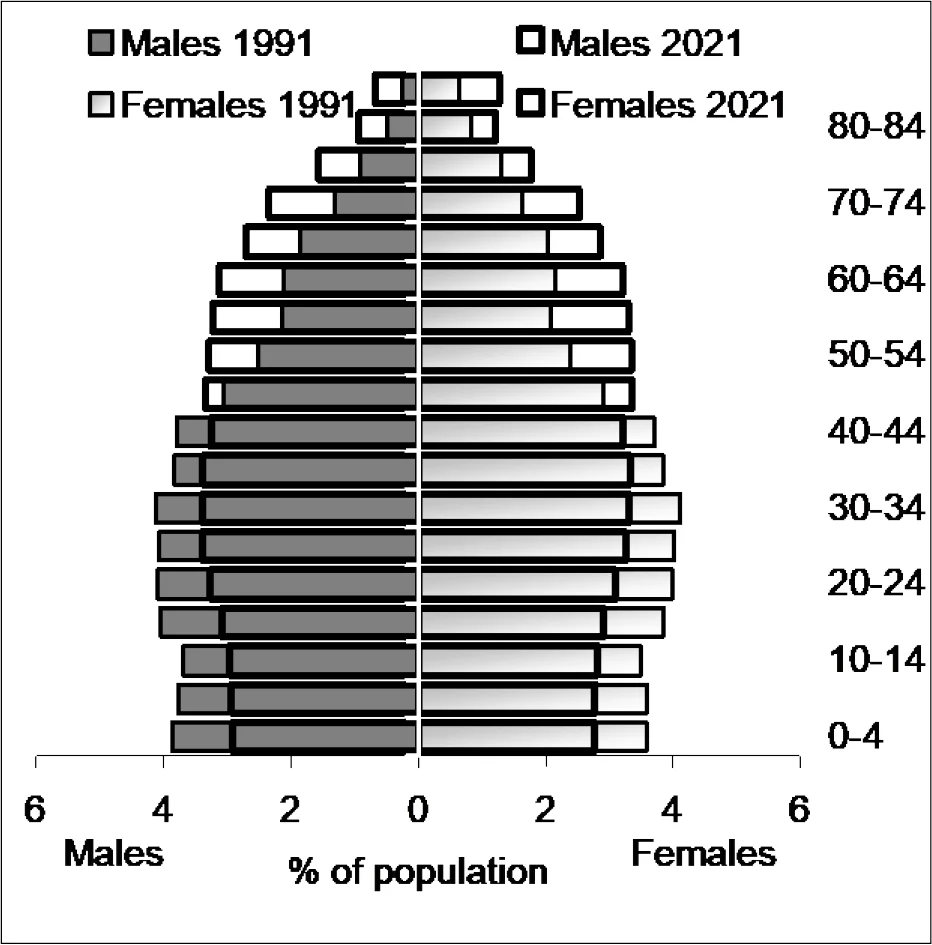
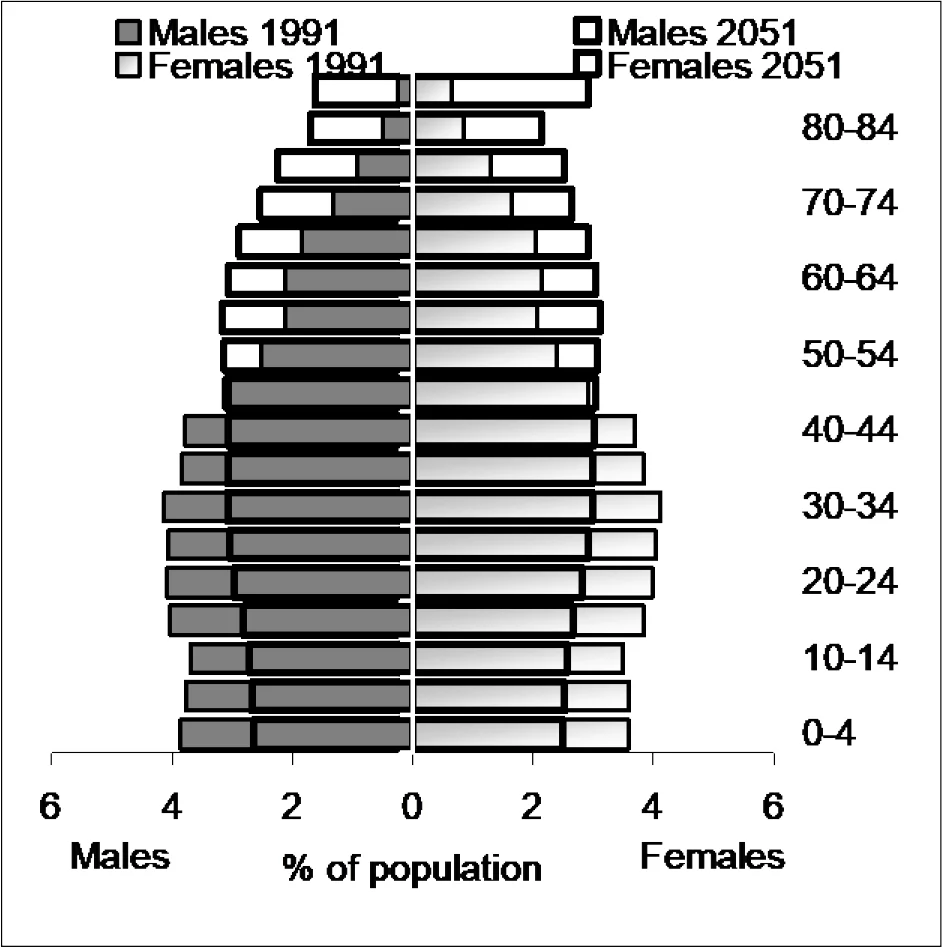
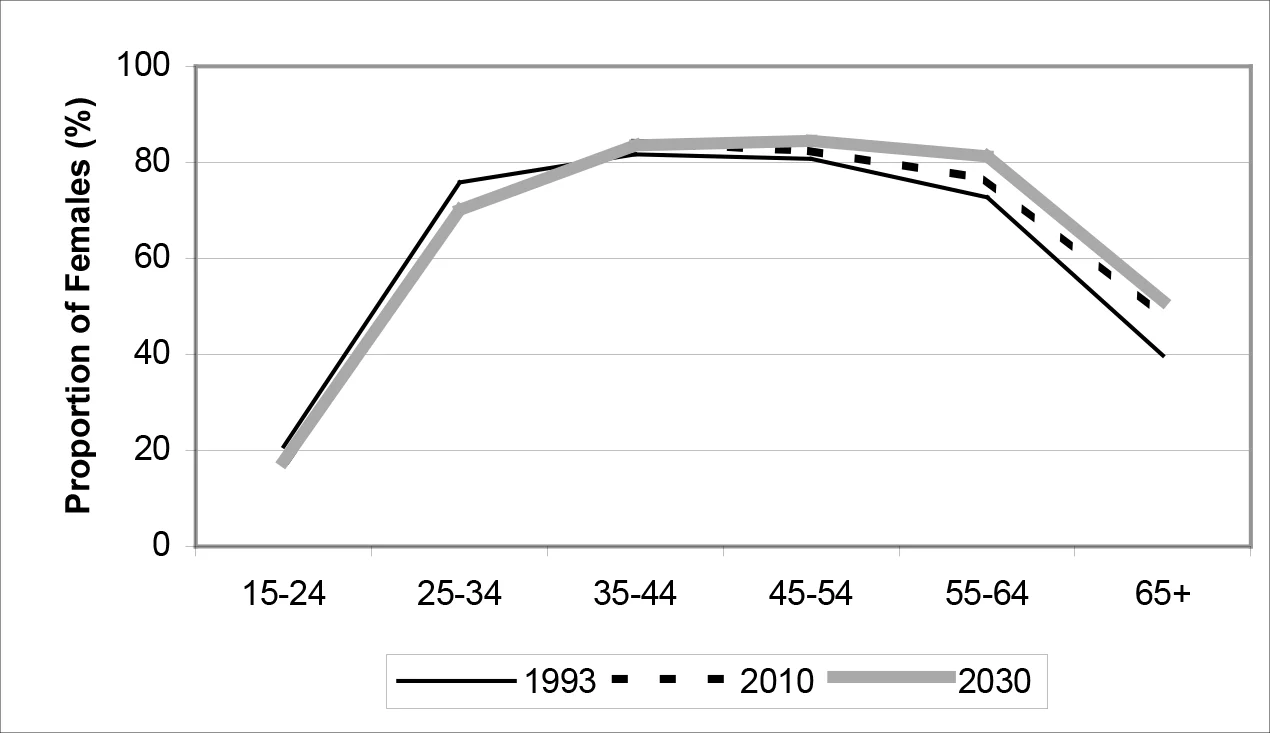
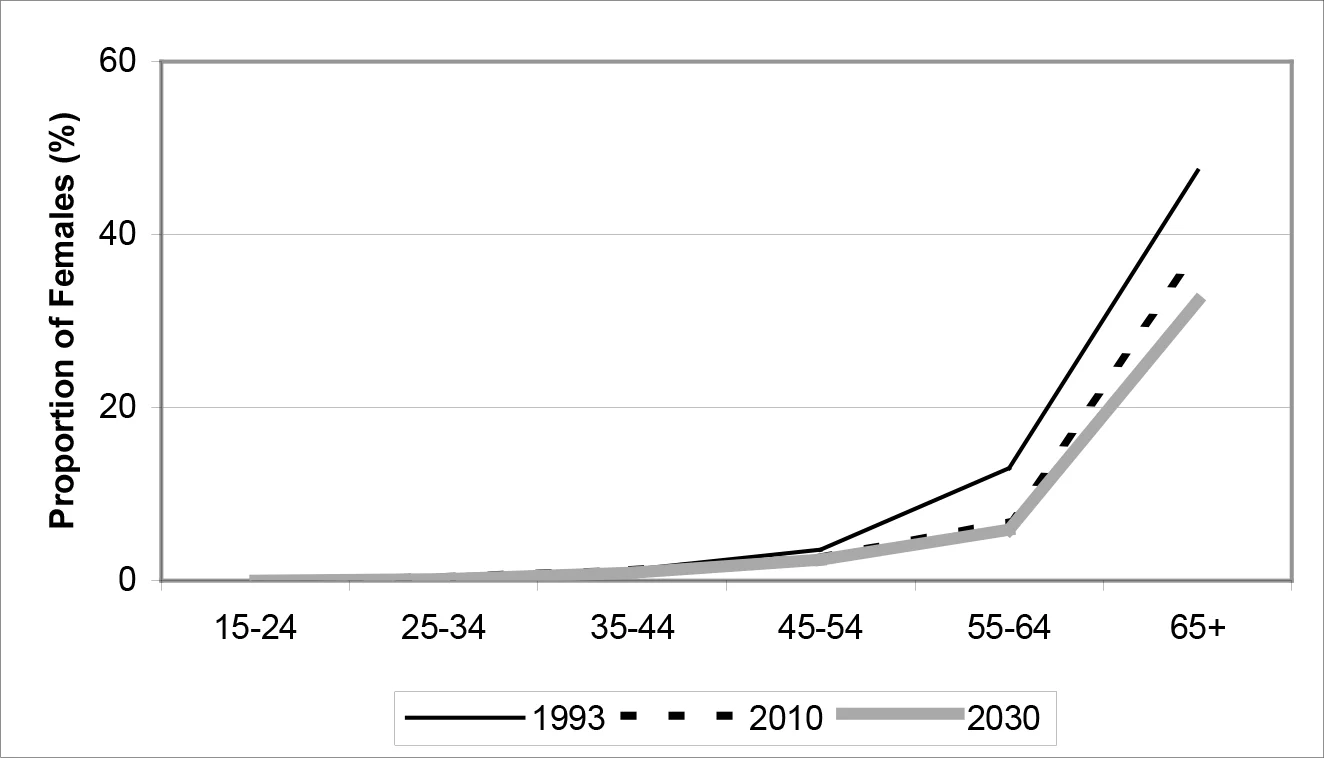
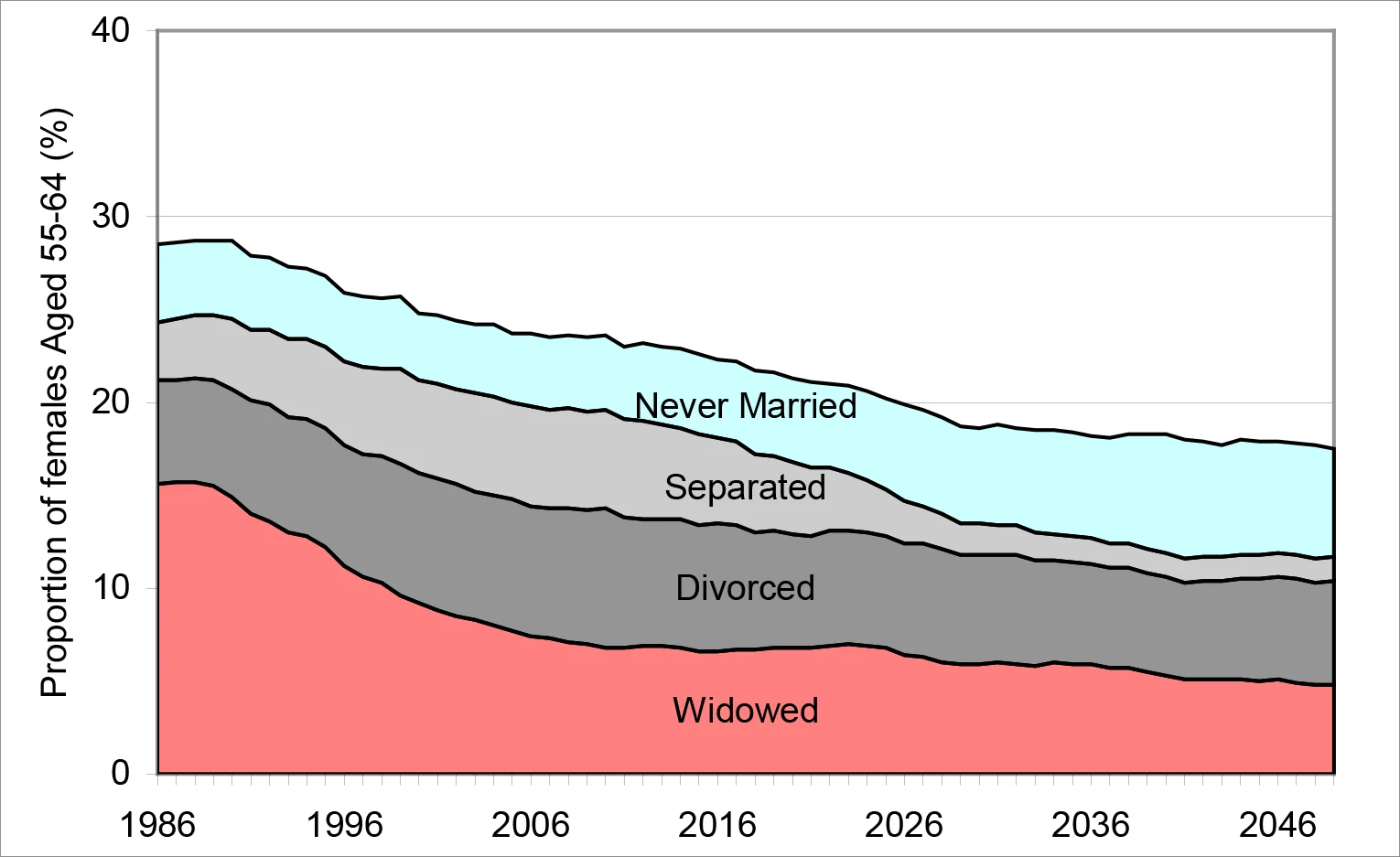
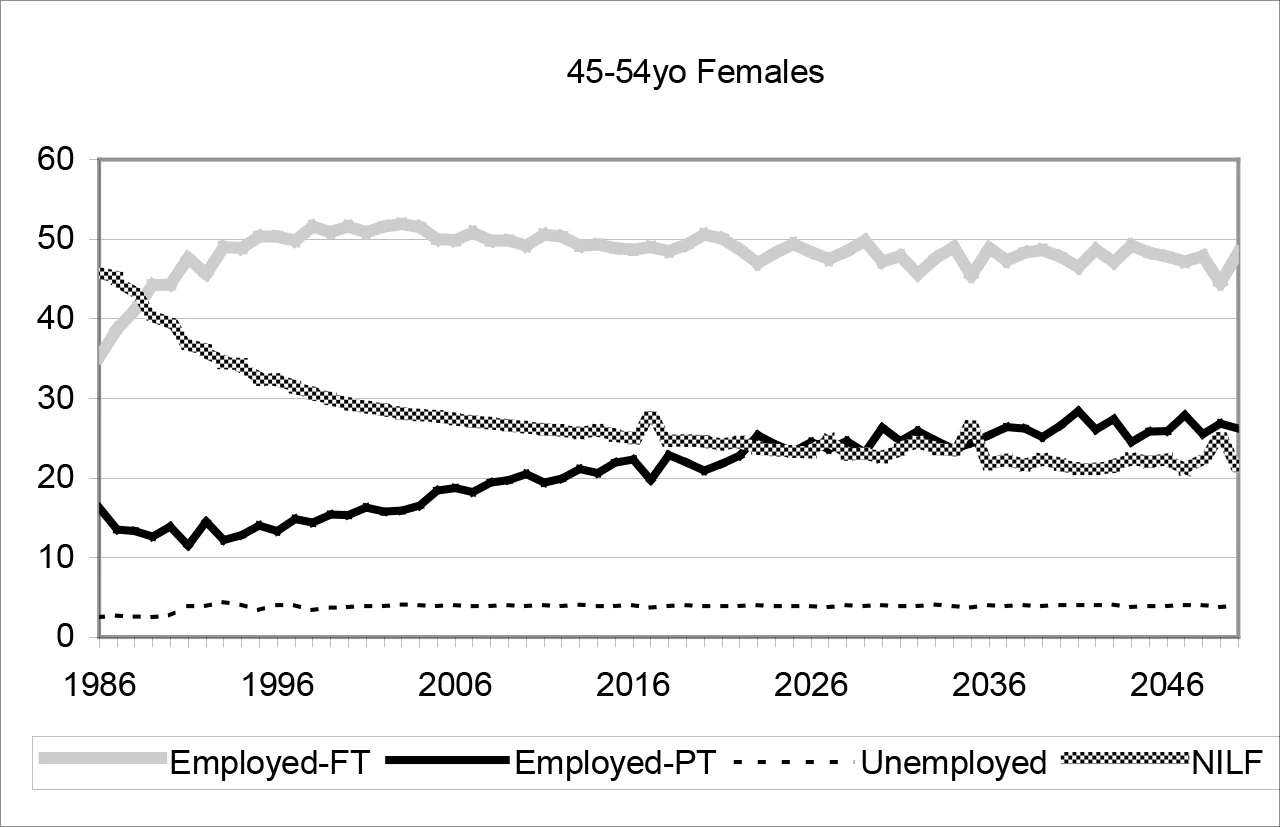
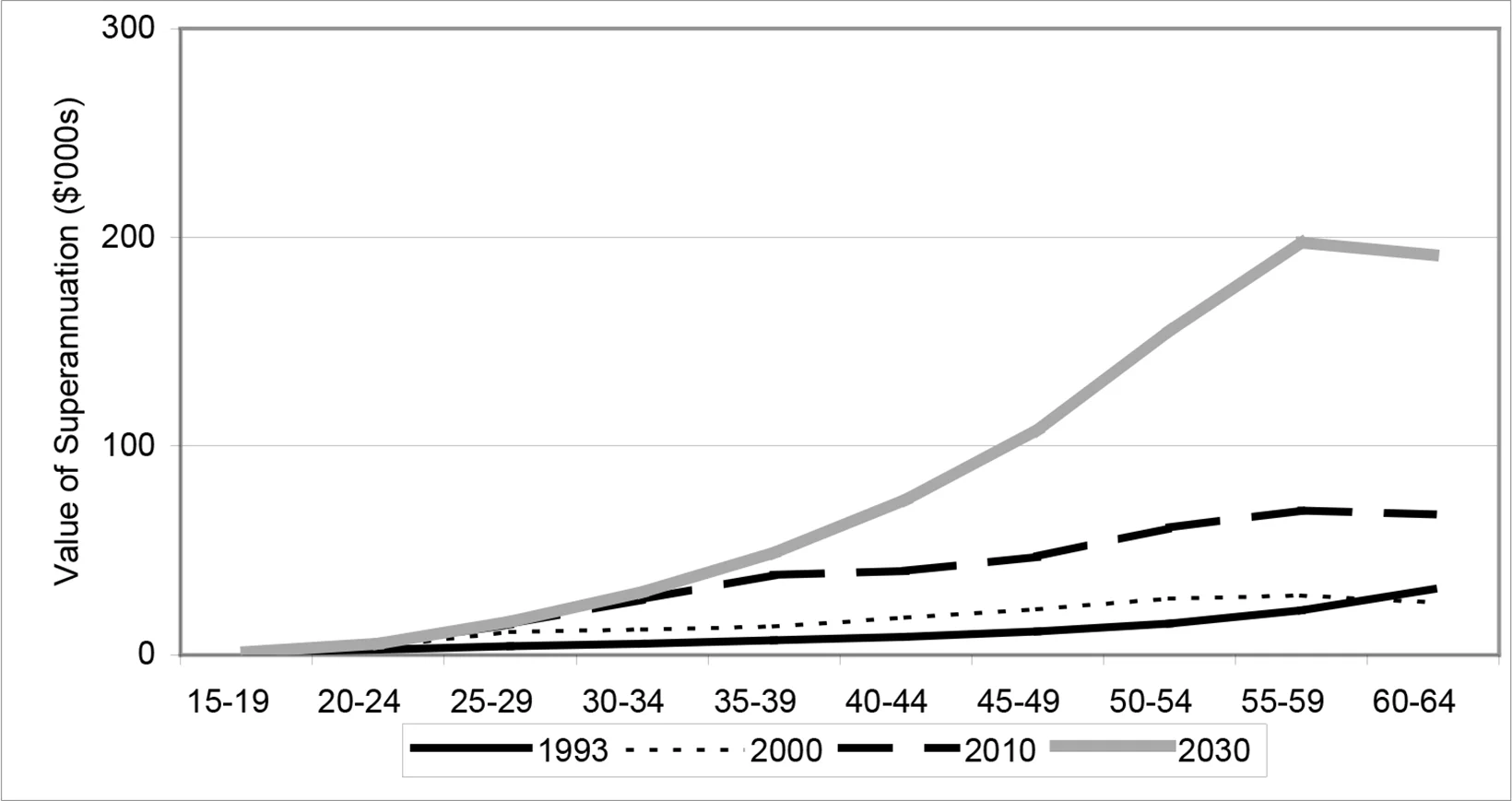
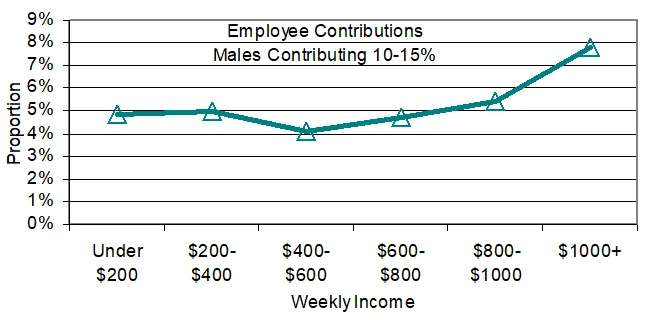
Figure 1. Australian Population – 1986-2050. Source: ABS 3222.0 Population Projections.Figure 2. Australian Marriage Rate – 1986-2050. Source: ABS 3310.0 Marriages and Divorces 1999.Figure 3. Aggregate Superannuation Assets – 1986-2050. Source: RIM estimates : Rothman, RIM Conf Paper 98/2.APRA estimates: Superannuation Trends June Qtr 2000.Figure 4. Superannuation Coverage, selected years 1993 -2030. Source: ABS 1993 - 6319.0 Superannuation Australia,1995.Other values – DYNAMOD calculations.Figure 5. Australian Population in June 1991 and June 2021. Source: ABS 3222.0 Population Projections.Figure 6. Australian Population in June 1991 and June 2051. Source: ABS 3222.0 Population Projections.Figure 7. Estimated Proportion of Females Married by Age Group, Selected years 1993-2030. Source: DYNAMODFigure 8. Estimated Proportion of Females Widowed by Age Group, Selected years 1993-2030. Source: DYNAMODFigure 9. Estimated Marital Status of Women aged 55-64, 1986-2030. Source: DYNAMOD.Note: ‘Married’ women are the residual group on this chart – i.e. if the proportion in the four other marital states identified totals 25%, then 75% of women at the age are estimated to be married (de jure or de facto).Figure 10. Estimated Labour Force Status of Females Aged 45-54, 1986 -2050. Source: DYNAMOD.Figure 11. Estimated Accumulated Superannuation by Age Group - Females, selected years 1993-2030. Source: DYNAMOD.Figure A1. Male Employees Contributing 10-15% to a Superannuation Fund. Source: Calculated from ABS Cat 6319.0 Superannuation Australia Nov 95.
Tables
Table 1. Average Superannuation Assets July 1993 and 2030 (in 1999 dollars)
RIM
DYNAMOD
DYNAMOD
DYNAMOD
1993
1993
2030
% change 1993-2030
Age Group
Males
Females
Males
Females
Males
Females
Males
Females
($)
($)
($)
($)
($)
($)
(%)
(%)
15-19
2,237
1,488
2,237
1,488
2,046
1,422
-9%
-4%
20-24
3,911
2,767
3,911
2,767
8,030
5,319
105%
92%
25-29
7,798
4,739
7,798
4,739
25,220
15,987
223%
237%
30-34
12,930
6,093
12,930
6,093
52,149
30,064
303%
393%
35-39
19,588
7,792
19,588
7,792
91,403
48,877
367%
527%
40-44
26,606
9,761
26,606
9,761
139,752
74,269
425%
661%
45-49
35,646
12,709
35,646
12,709
201,778
109,832
466%
764%
50-54
44,712
16,905
44,712
16,905
281,115
155,452
529%
820%
55-59
55,688
23,993
55,688
23,993
352,794
196,930
534%
721%
60-64
71,731
35,194
71,731
35,194
389,926
193,374
444%
449%
65 & over
75,424
25,976
75,424
25,976
397,204
194,837
427%
650%
All Ages
21,957
7,993
21,419
9,647
128,235
89,591
499%
829%
Source: RIM Conference paper 94/2 (Brown, 1994) and DYNAMOD, 2001.
Table 2. Superannuation Balances for Females with Superannuation Aged 55-64, selected years 2000-2030
Percentile
2000 ($)
2010 ($)
2020 ($)
2030 ($)
90%
47,042
103,110
179,705
290,632
Median
29,459
61,674
109,600
183,638
10%
3,850
27,226
55,032
93,414
Source: DYNAMOD.
Table A1. Types of Superannuation Schemes
Fund Type
Members (000’s)
Members (%)
Assets ($ billion)
Assets (%)
Accumulation
18,885
87%
257
60%
Defined Benefit
499
2%
24
6%
Hybrid
2,344
11%
146
34%
TOTAL
21,726
100%
427
100%
Source: APRA Superannuation Trends – June Qtr 2000.
Table A2. Superannuation Employer Obligations
From
Percent of Salary
July 1996
6%
July 1998
7%
July 2000
8%
July 2002
9%
Table A3. Employed People Making own Contributions to Superannuation Schemes
Age
Male
Female
Under 18
2.4%
4.8%
18 – 24
16.1%
19.3%
25 – 34
27.5%
39.8%
35 – 44
32.4%
46.9%
45 – 54
32.5%
46.4%
55 – 59
24.8%
35.6%
60 – 64
10.4%
20.7%
65+
0.6%
1.4%
Source: Calculated from RIM Conference Paper 98/1.
Table A4. Employee Contributions to Superannuation Schemes
Average Weekly Earnings
Employee Contribution
Zero
< 3%
3-4%
4-5%
5-6%
6-10%
10-15%
15+%
Total
MALES (000’s) 45-76 years
Under $200
16.3
0.3
0.4
0.0
0.6
0.6
1.1
3.6
23.9
200-400
47.8
4.2
3.7
1.6
2.0
4.5
3.6
5.2
75.9
400-600
124.4
20.9
18.4
24.3
30.2
35.2
11.2
7.8
284.8
600-800
78.5
16.1
16.1
21.3
29.2
36.7
10.0
4.9
224.4
800-1000
35.5
12.0
9.3
19.0
24.7
28.7
7.5
1.7
147.7
1000+
49.3
14.8
9.4
22.1
29.5
33.3
14.3
10.4
195.0
Not reported
17.0
0.3
0.3
0.4
1.9
1.3
1.3
0.0
37.4
Total
368.8
68.6
57.6
88.7
118.1
140.3
49.0
33.6
989.1
FEMALES (000’s) 45-76 years
Average Weekly Earnings
Zero
< 3%
3-4%
4-5%
5-6%
6-10%
10-15%
15+%
Total
Under $200
56.7
0.9
0.4
0.9
1.8
2.4
3.6
5.8
73.5
200-400
133.9
11.0
8.4
6.5
10.1
14.5
7.2
6.3
203.9
400-600
114.7
15.5
11.1
16.9
22.4
32.5
9.2
4.6
237.8
600-800
40.6
7.0
8.0
11.7
13.6
18.7
5.3
2.1
114.7
800-1000
8.7
4.2
2.1
6.7
6.0
14.0
2.4
0.8
48.4
1000+
6.0
2.0
0.0
1.9
3.9
2.5
1.7
1.5
21.9
Not reported
7.9
0.0
0.3
0.2
0.2
1.2
0.1
0.2
17.0
Total
368.5
40.6
30.3
44.8
58.0
85.8
29.5
21.3
717.2
Source: ABS Cat 6319.0 Superannuation Australia November 1995 Table 13.