Micro-macro links

Research articles · Dec 2, 2024

Endogenous Economic Growth Through Selection

Gunnar Eliasson

Royal Technical Institute and Industrial Institute for Economic and Social Research, Stockholm, Sweden

Volume 17(2) Summer 2024

Cite as: G. Eliasson; 2024; Endogenous Economic Growth Through Selection; International Journal of Microsimulation; 17(2); 202–212. doi: 10.34196/ijm.00296

Abstract

Economic growth can be viewed as being propelled endogenously by the (1) entrepreneurial entry, (2) reorganization, (3) rationalization and (4) the exit of firms, with the first two selection and innovation investments operating in the very long run, and the remaining two (rationalization and exit) in the short and immediate term. This growth process can only be represented by a micro-market-based macro theory and is simulated here on the Swedish micro-to-macro model MOSES. It is found that the impact of the market selection mechanisms operating through entrepreneurial entry, market competition and the enforced exit of underperformers, while slow in the beginning, significantly affect economic growth in the long run. A political economy that is unable to organize itself to wait for the very long-run benefits of significant immediate efforts to enhance firm exit and entry may never experience strong and sustained economic growth.

This article contains 7 figures and 2 tables.

Figures
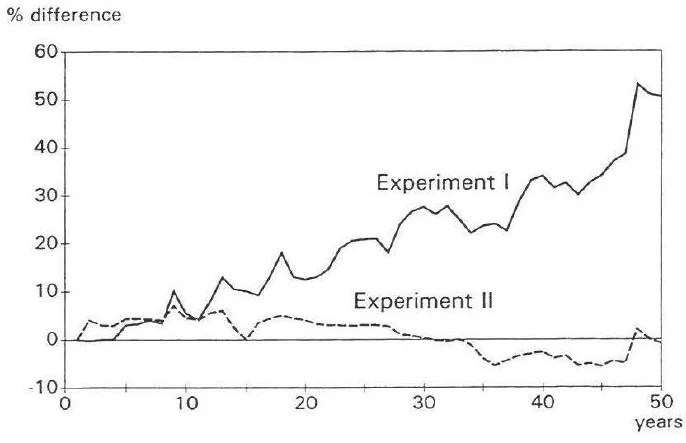
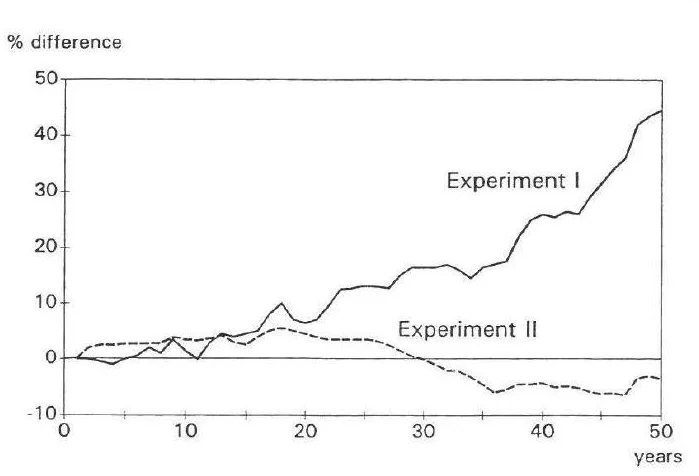
Figure 1. Difference between manufacturing output in base run and Experiments I and II (Expressed as Percentage of Manufacturing Output in Base Run).
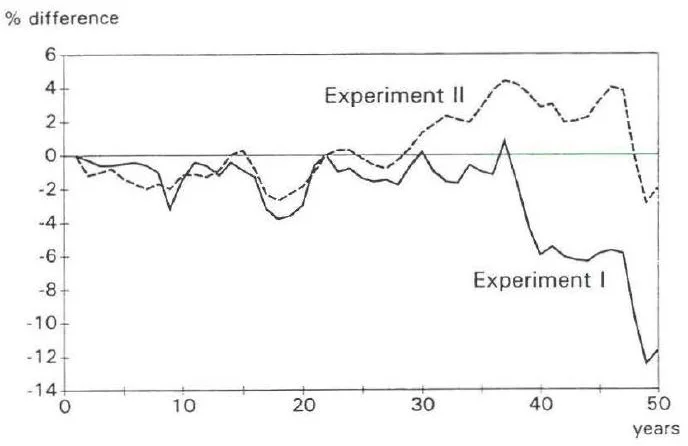
Figure 2. Difference in GNP between base run and Experiments I and II (Expressed as Percentage of GNP in base run).
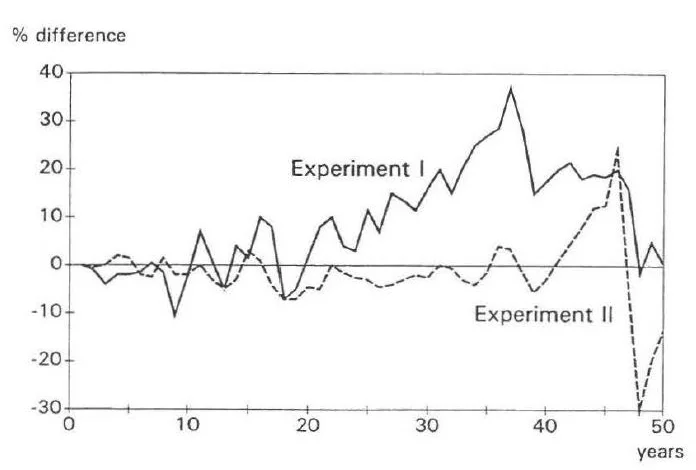
Figure 3. Difference in unemployment rate between base run and Experiments I and II (Expressed as Percentage of unemployment rate in base run).
Figure 4. Difference in rate of return between base run and Experiments I and II (Expressed as Percentage of rate of return in base run).
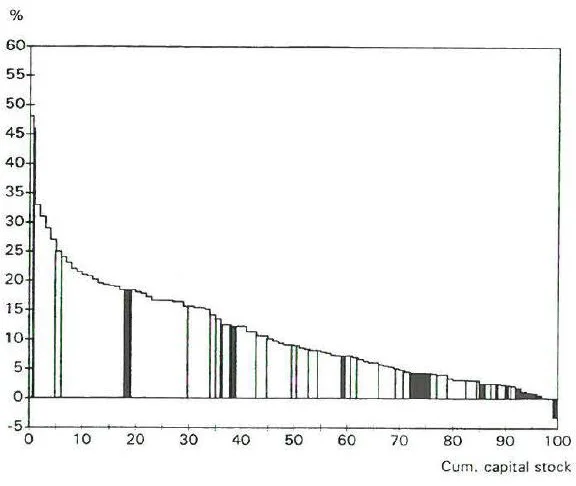
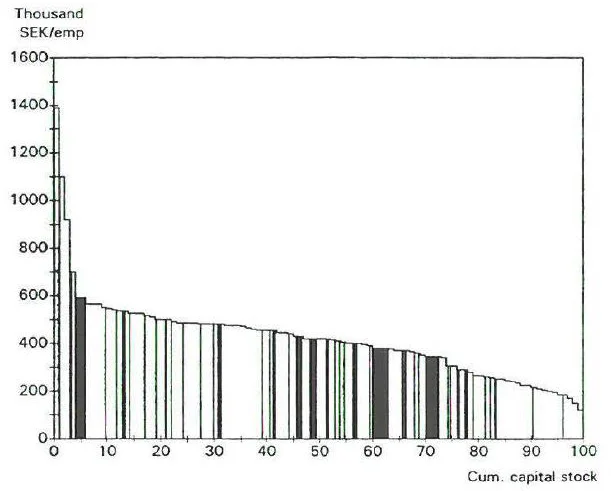
Figure 5. Rate and return distribution after 50 years in Experiment I.
Figure 6. Labor productivity (Salter) distributions on 50 year Horizon in Experiment I.
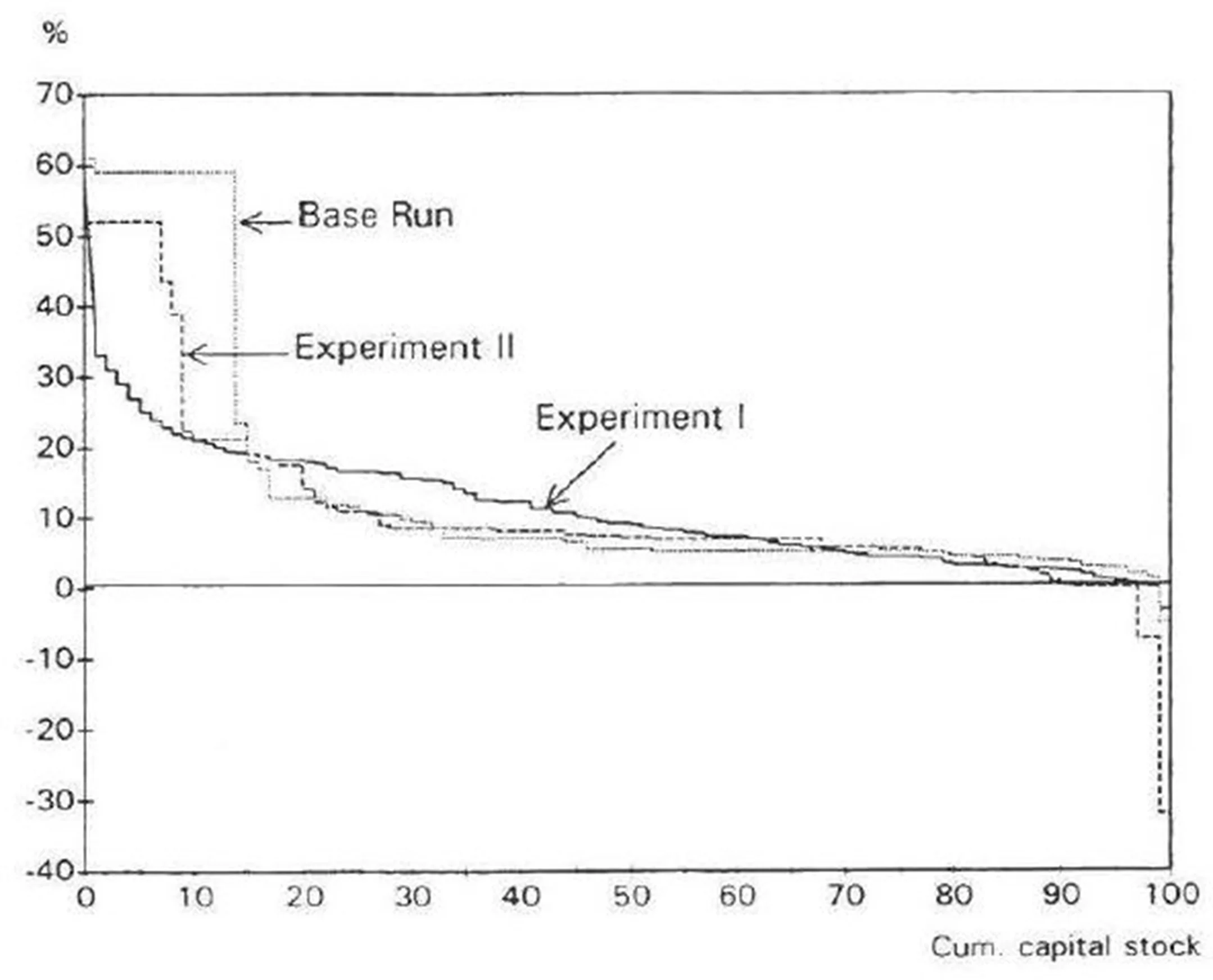
Figure 7. Rate of return distributions in entry, base and no exit Experiments after 50 years.

Tables

Table 1.
The Four Fundamental Investment/Growth Mechanisms
(1)entry, of new innovative establishments
(2)reorganization of existing firms
(3)efficient management of existing firms (rationalization)
(4)bankruptcy, exit or creative destruction

Source: Eliasson (1995), “The Economics of Technical Change: The Macroeconomic Consequences of Business Competence in an Experimentally Organized Economy”, Revue D’èconomie Industrielle,Numèro Exceptionel, :53-82

Table 2. Number of Initial, Entering and Exiting Firms in Simulations.
Initial YearNew entries duringExits during simulation
50 year simulation
Base run2500119
Experiment I (entry)250257125
Experiment II (low exit)250087