Cite as: T. Kirn, P. Oschwald, R. Anderl; 2025; SWISSMOD – A New Tax-Benefit Model of Switzerland; International Journal of Microsimulation; 18(2); 1–20. doi: 10.34196/ijm.00320
Abstract
This article presents SWISSMOD, a new microsimulation model of the Swiss Tax and Transfer System (TTS) built on the EUROMOD platform. The significant variations in tax burden and transfer payments due to subnational fiscal autonomy make the Swiss TTS—and thus SWISSMOD—particularly intriguing for economic analyses. We focus on three core aspects of SWISSMOD. First, we provide an overview of EUROMOD-based and Swiss microsimulation models, followed by an introduction to the Swiss TTS, highlighting its fiscal autonomy, wealth taxation, joint taxation types, and the administration of social assistance at the subnational level, leading to substantial variation in transfer payments. Second, we provide insights into the Swiss SILC dataset, which forms the database of our model. Given the dataset’s lack of information on cantonal residence and wealth, we outline our approach to imputing this missing data using the Swiss Household Panel. Third, we present the results of the micro- and macro-validation. The micro-validation indicates that the model accurately represents the existing TTS. The results of the macro-validation confirm a high degree of fiscal precision at the aggregated level of income taxation. However, certain limitations exist concerning wealth taxation, driven by the lack of information on wealth. Overall, the model provides reliable results concerning the Swiss TTS.
This article contains 7 figures and 3 tables.
Figures
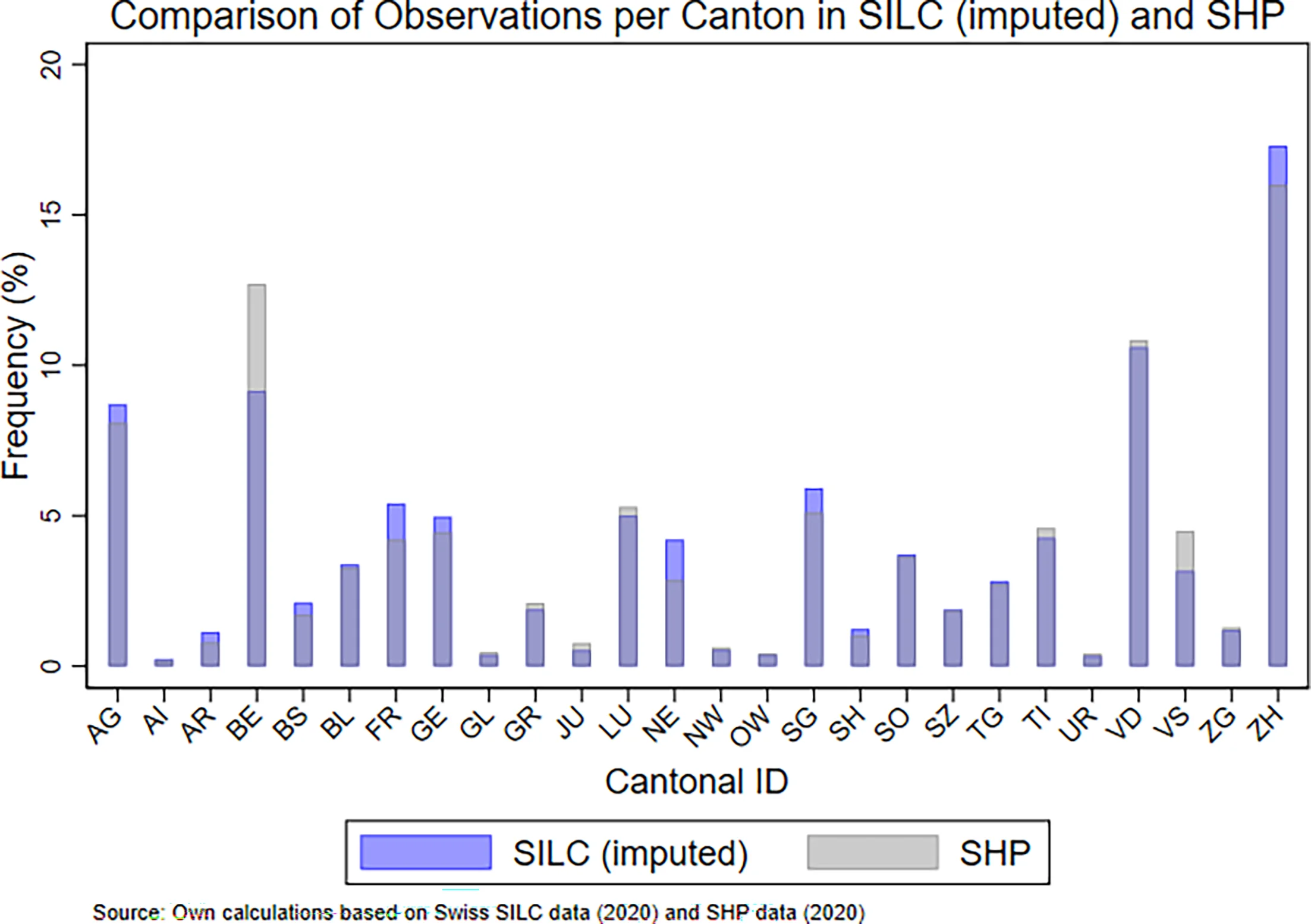
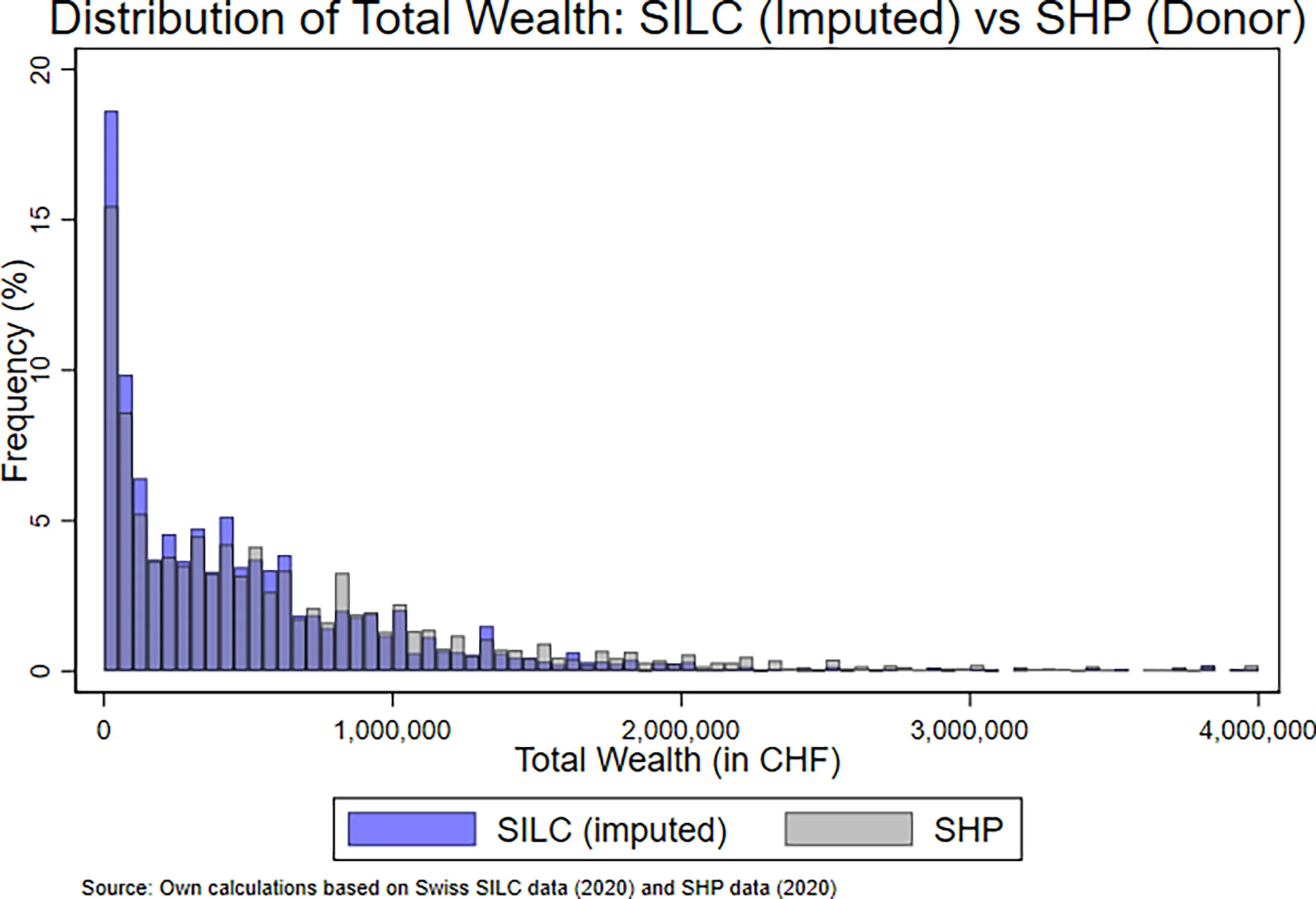
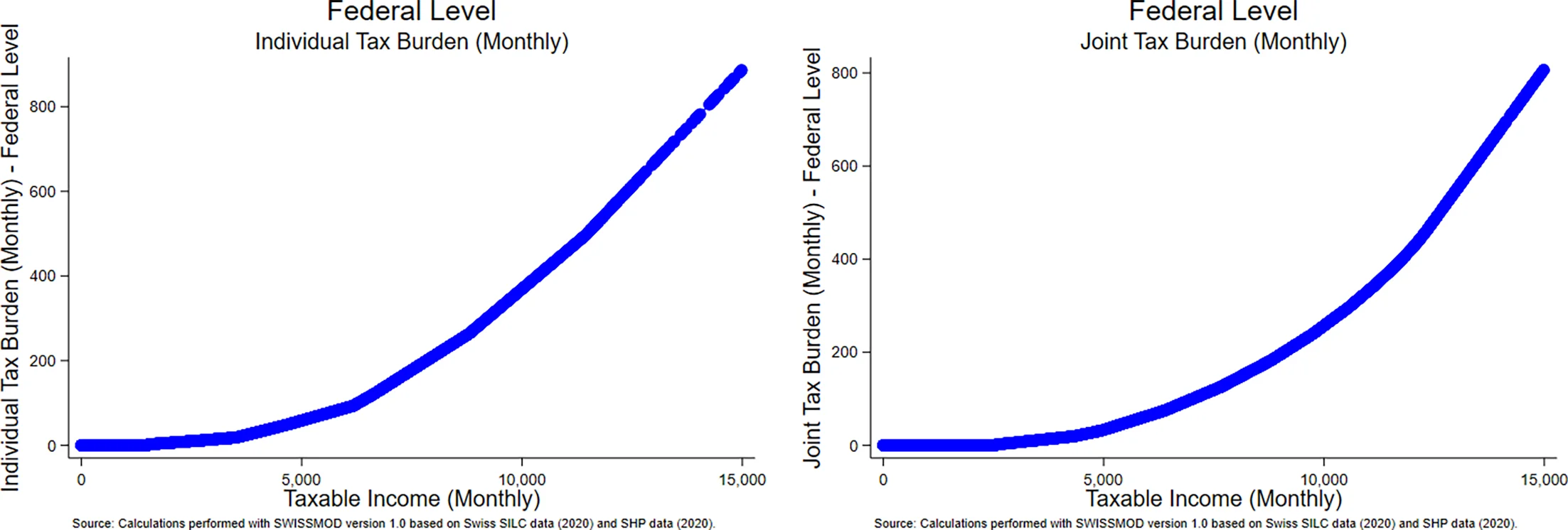
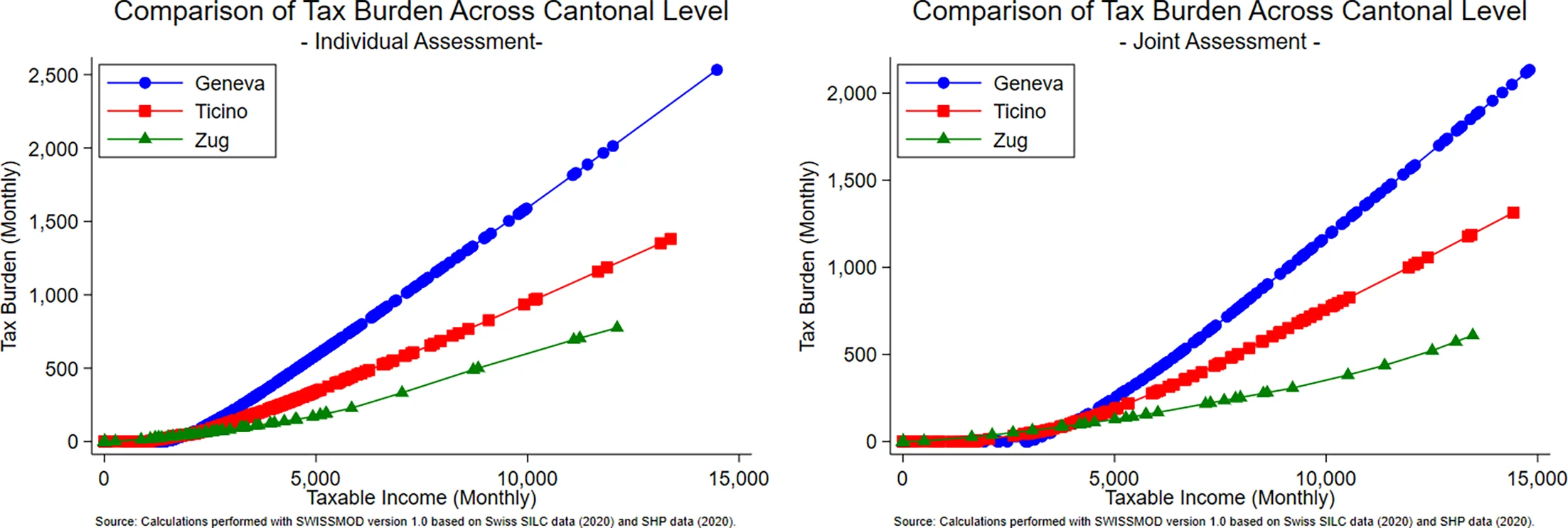
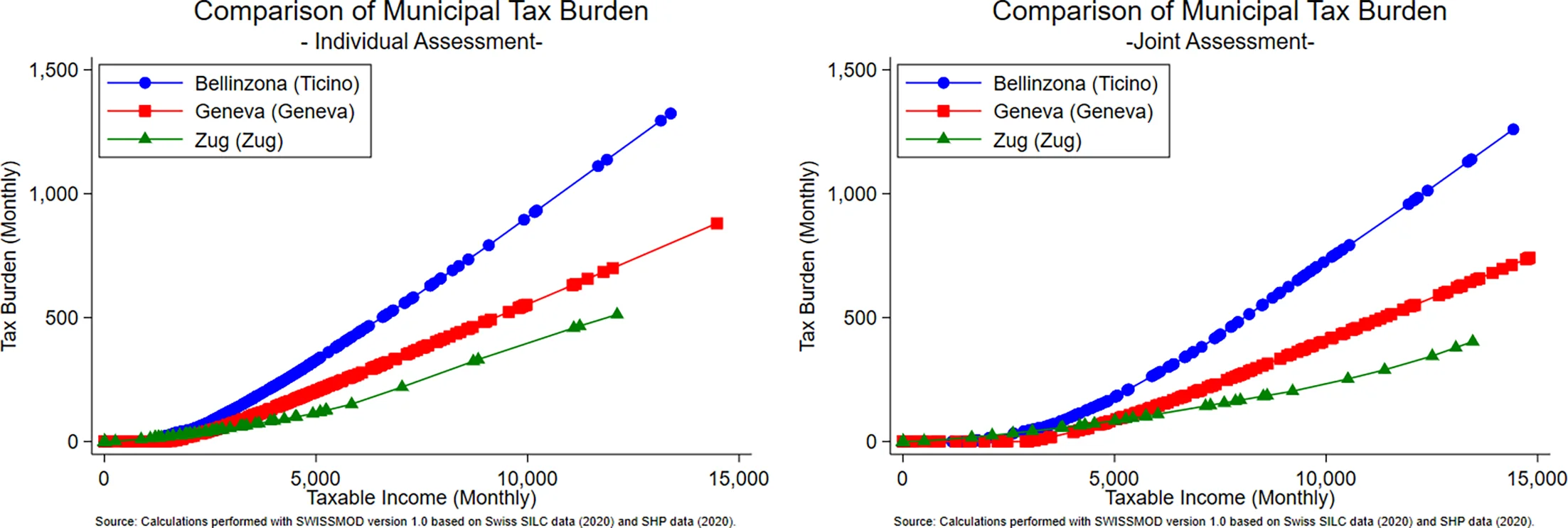
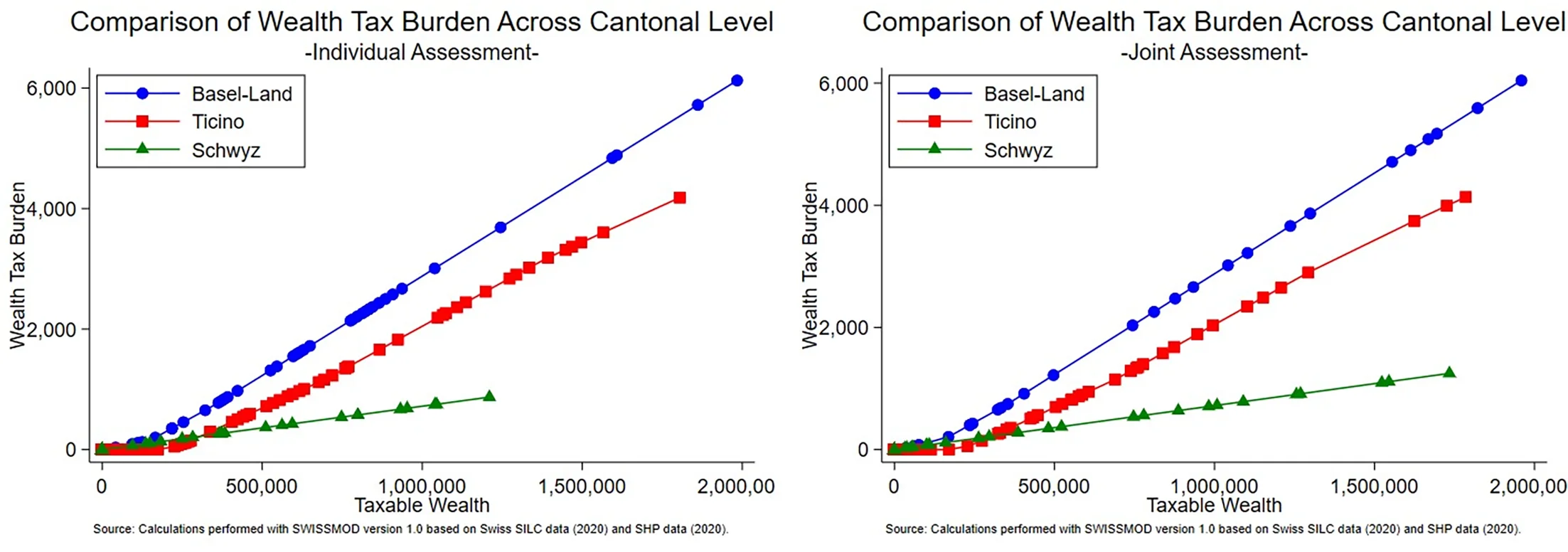
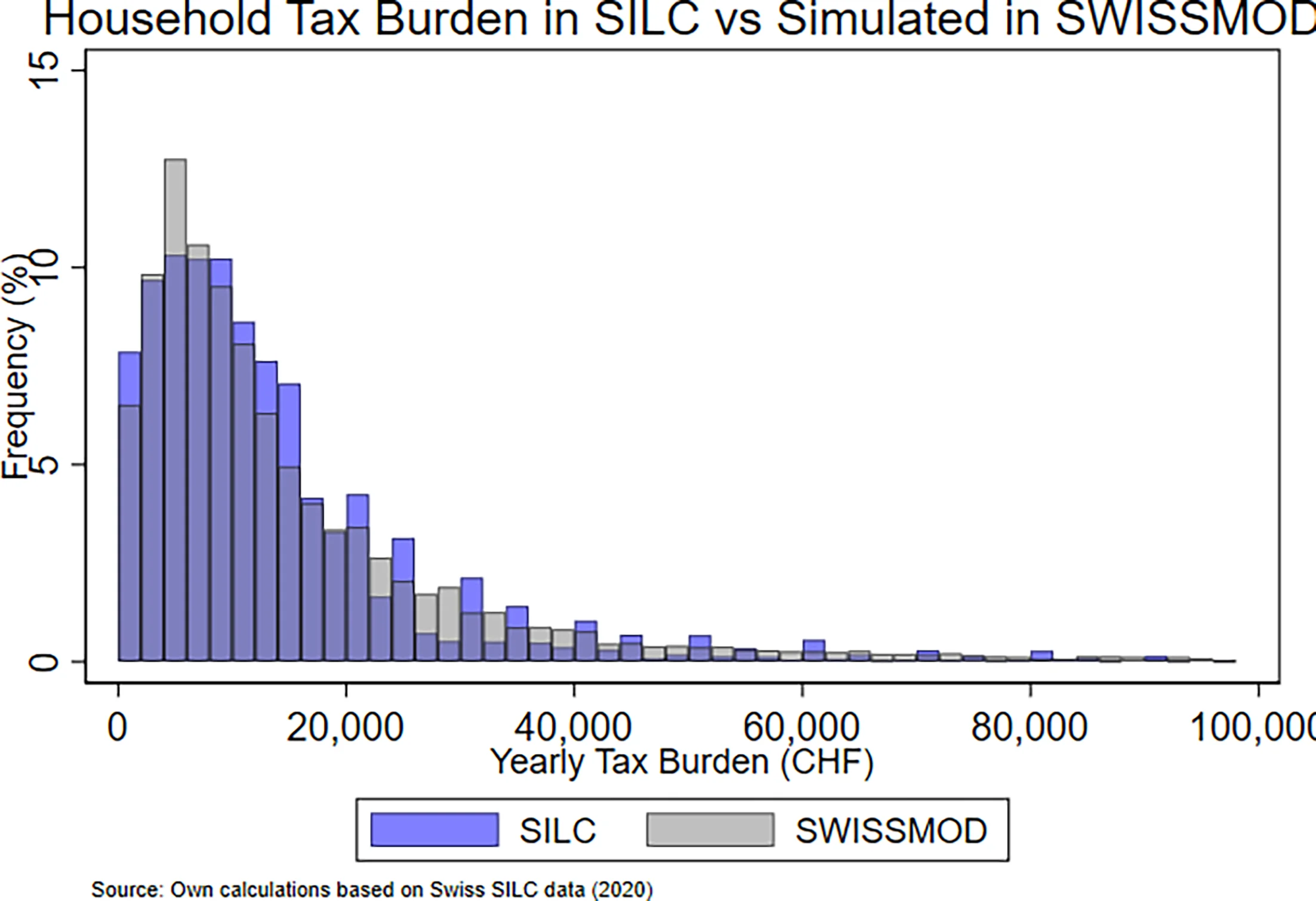
Figure 1. Comparison of observations per canton in SILC (imputed) and SHP, own calculations based on SILC (2020) and SHP (2020) data.Figure 2. Distribution of total wealth variable, own calculations based on SILC (2020) and SHP (2020) data.Figure 3. Comparison of individual and joint federal income tax burden, simulated with SWISSMOD version 1.0.Figure 4. Comparison of individual and joint cantonal income tax burden, simulated with SWISSMOD version 1.0.Figure 5. Comparison of individual and joint municipal income tax burden, simulated with SWISSMOD version 1.0Figure 6. Comparison of Individual and joint cantonal wealth tax burden, simulated with SWISSMOD version1.0.Figure 7. Comparison of household tax burden, based on Swiss SILC (2020) data and simulations performed by SWISSMOD version 1.0.
Tables
Table 1. Overview of simulated benefits and social insurance contributions in SWISSMOD.
Policy
Simulated: Yes (Y) or No (N)
Contributions
Benefits
Old-Age Insurance (OASI)
Y
N
Disability Insurance (DI)
Y
N
Compensation for mandatory work and maternity (MB)
Y
Y (maternity benefit)
Occupational pension (OP)
Y
N
Accident insurance (AI)
Y
N
Unemployment insurance (UB)
Y
Y
Family Allowance (FA)
Y
Y
Educational Allowance (EA)
Y
Y
Social Assistance
non-contributory
Y (partially)
Maternity Benefit
Y (part of MB)
Y
Supplementary Benefits (SB)
non-contributory
Y
Bridging Benefits (BB)
non-contributory
Y
Table 2. Overview of simulated taxes in SWISSMOD.
Tax
Simulated: Yes (Y), No (N), Partially (PS)
Comments
Personal Income Tax (Federal)
Y
Individual assessment
Y
Joint assessment
Y
Personal Income Tax (Cantonal)
Y
Individual assessment
Y
Joint Assessment
Y
Personal Income Tax (Municipal)
PS
Restricted to cantonal capital
Individual assessment
PS
Restricted to cantonal capital
Joint assessment
PS
Restricted to cantonal capital
Personal Wealth Tax (Cantonal)
Y
Individual assessment
Y
Joint assessment
Y
Personal Wealth Tax (Municipal)
PS
Restricted to cantonal capital
Individual assessment
PS
Restricted to cantonal capital
Joint assessment
PS
Restricted to cantonal capital
Value added tax
N
Table 3. SWISSMOD Macrovalidation Table, calculations based on 2023 tax-benefit policies in Switzerland.