Cite as: A. Afeku, C. O’Donoghue, K. Kilcline; 2026; Economic and Environmental Impact Analysis of Pasture-Based Agriculture: A Review of Economic Modelling Approaches; International Journal of Microsimulation; 19(1); 113–142. doi: 10.34196/ijm.00338
Abstract
Microsimulation is widely used in economics to analyse the distributional effects of policy and the behavioural responses of heterogeneous agents. In agricultural economics literature, farm-level simulation and bioeconomic models have developed in parallel with farm level microsimulation. These models operate at different scales but combine biological processes with economic and policy factors. The modelling literature provides little systematic assessment of how these approaches address economic and environmental outcomes in pasture-based agricultural systems. This paper addresses the gap through a systematic review of 173 peer-reviewed modelling studies published between 2000 and 2024. The analysis traces temporal and geographical trends in the literature, reviews methodological choices, and assesses how economic and environmental outcomes are modelled. The results shows that farm-level simulation approaches account for largest share of the literature, followed by optimisation models, while microsimulation and macro-scale approaches are less common. Most of the studies were at the farm-level and focus mainly on environmental outcomes, particularly land use and greenhouse gas emissions. Policy modelling concentrated on conventional production systems, while organic and low-input systems are underrepresented. Approximately half of the reviewed studies originate from Europe, and macro-level approaches account for less than 10% in literature. The literature exhibits a persistent pattern: models that handle farm-level heterogeneity seldom connect to sectoral outcomes, while those designed for aggregation are seldom applied to pasture-based systems. This limits the evidence base for policies that require both micro-level behavioural responses and macro-level assessment. Closing this gap will require integrated frameworks that couple farm-scale representation with sectoral or economy-wide models.
This article contains 18 figures and 2 tables.
Figures
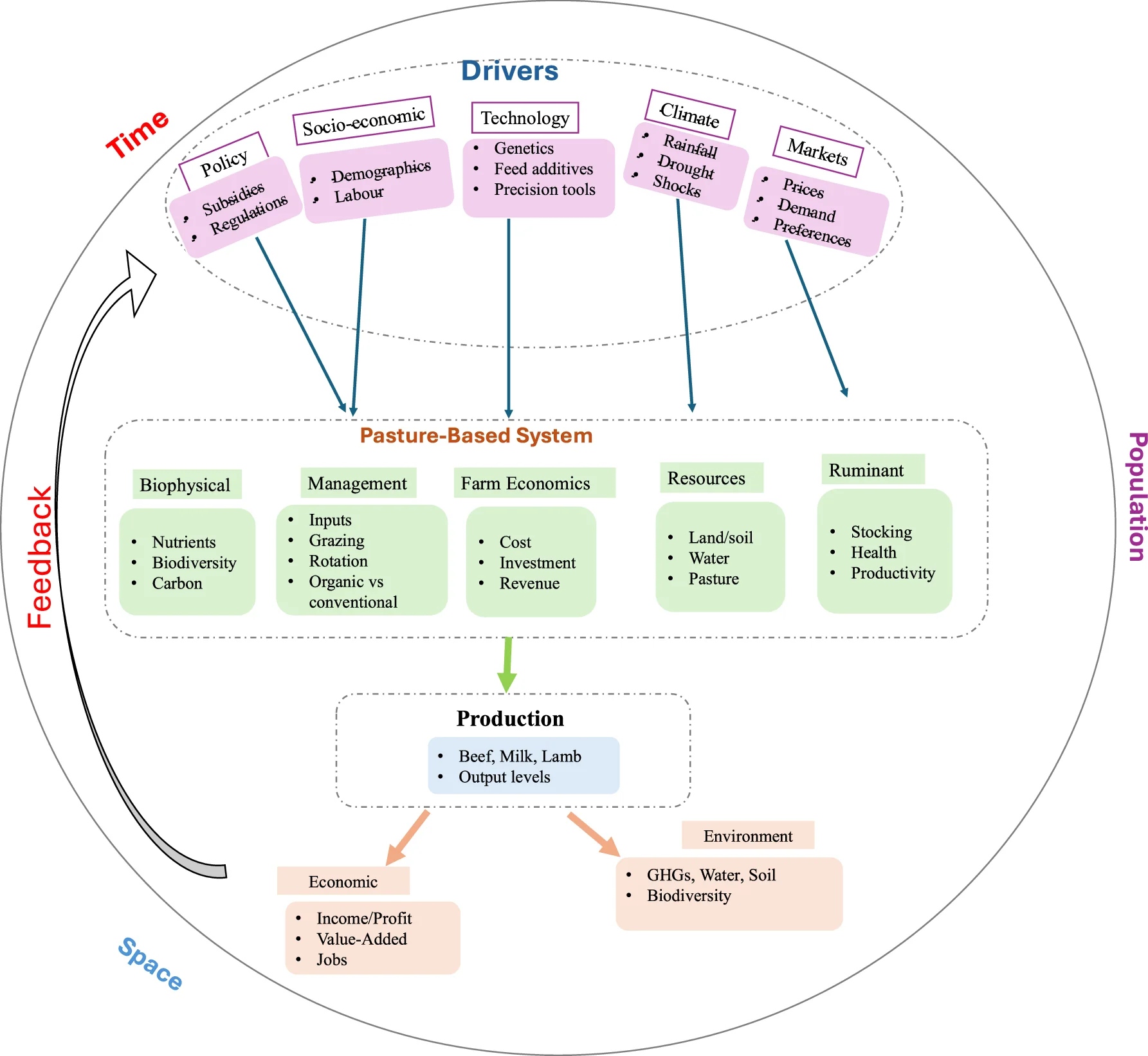
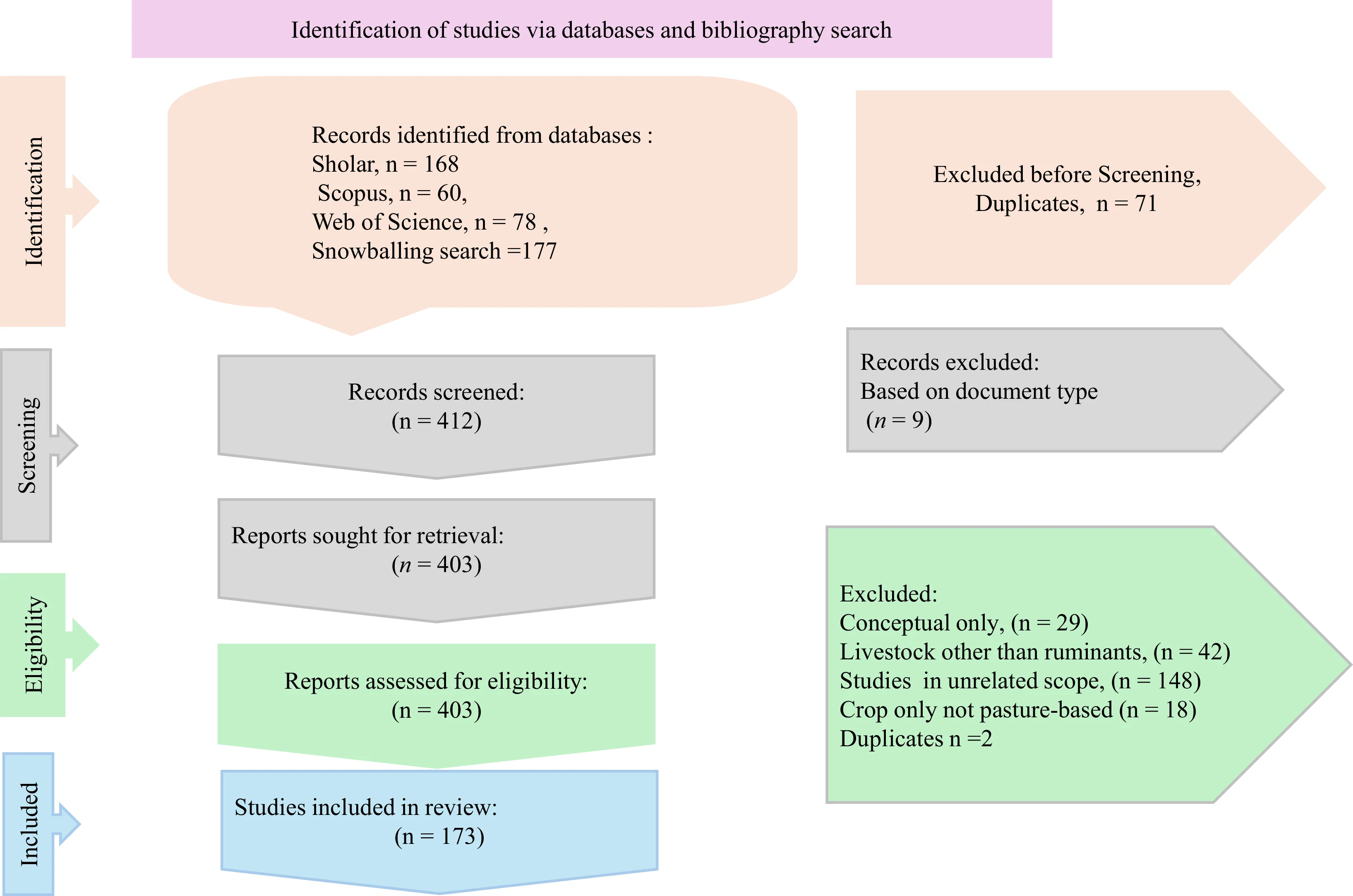
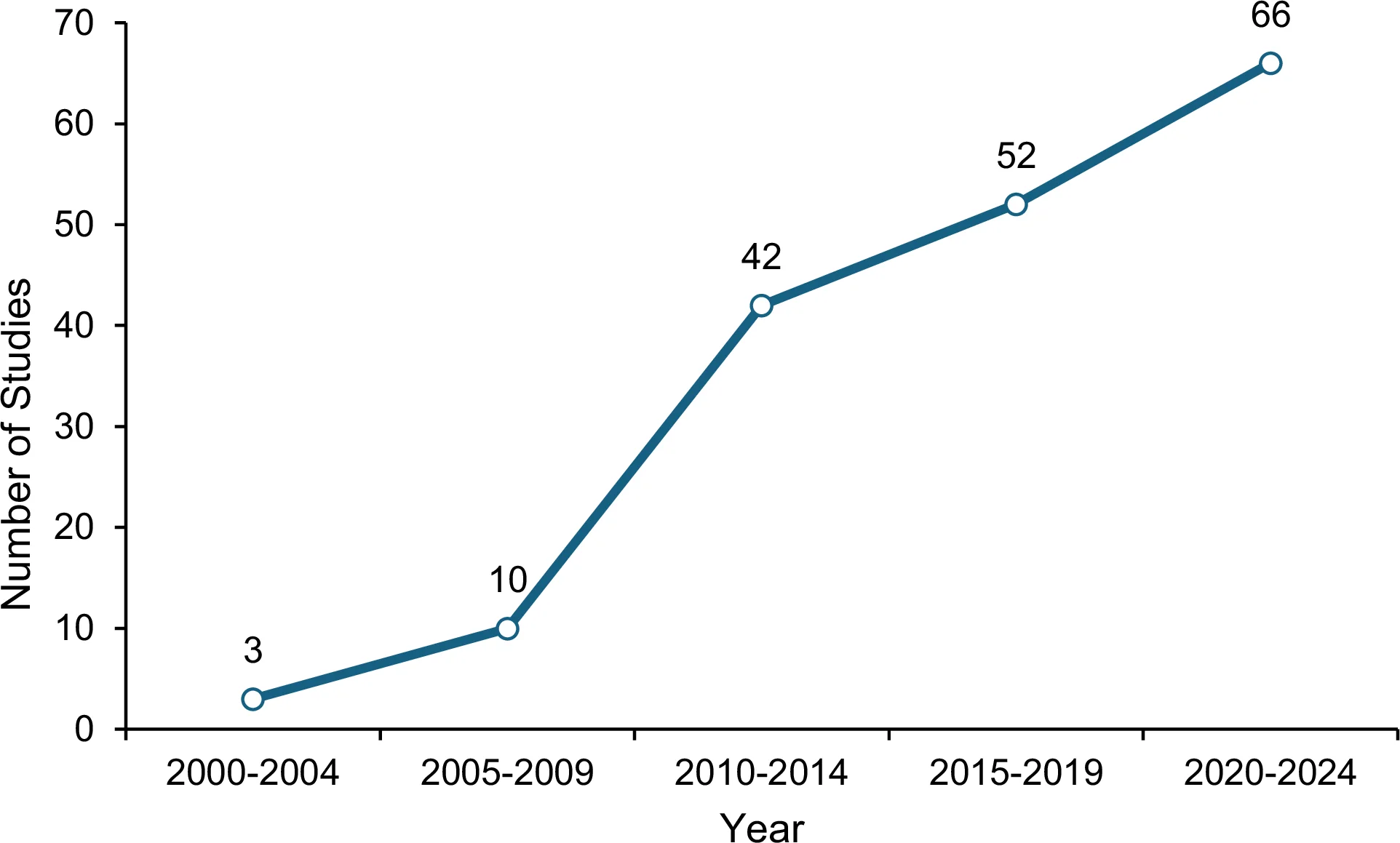
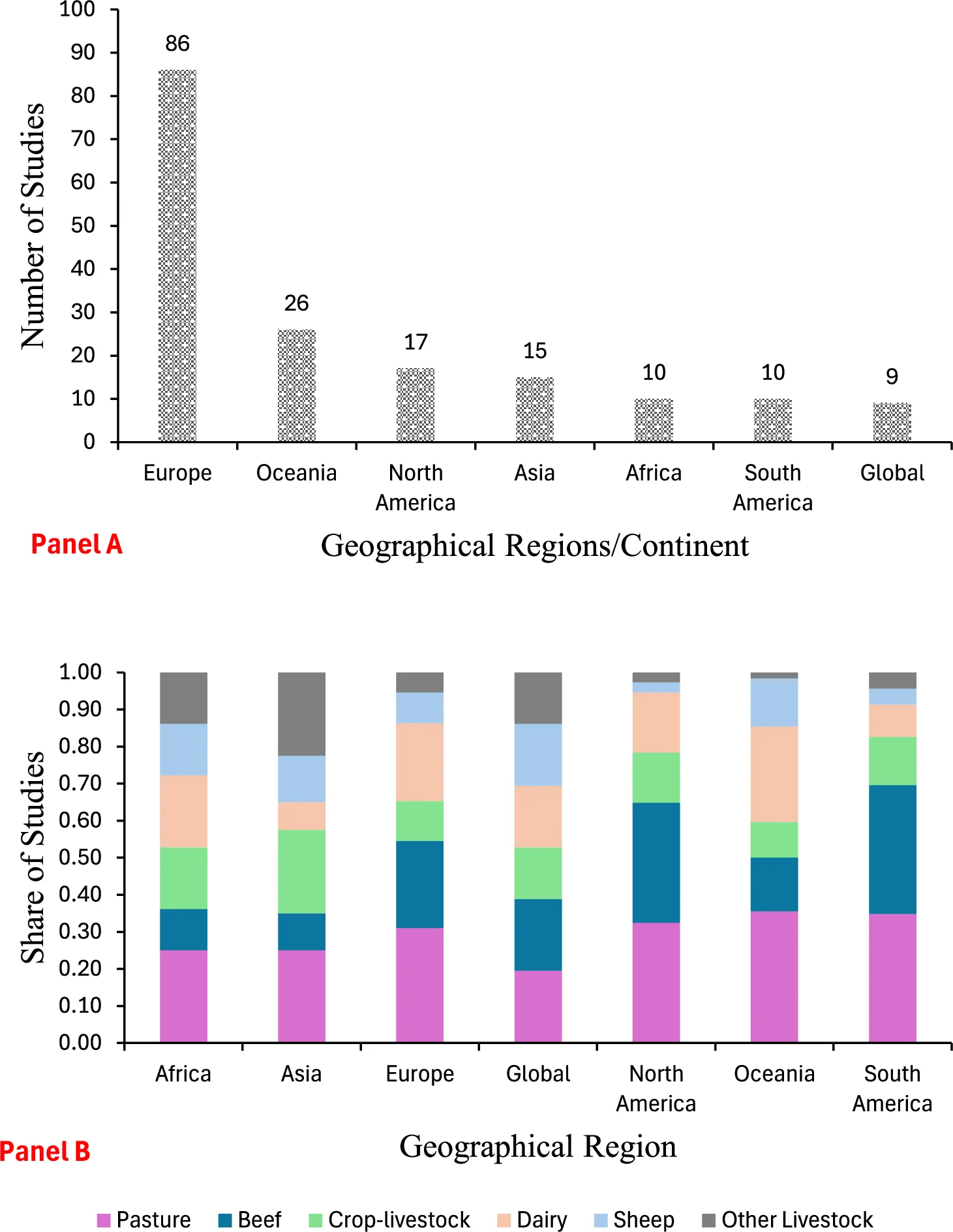
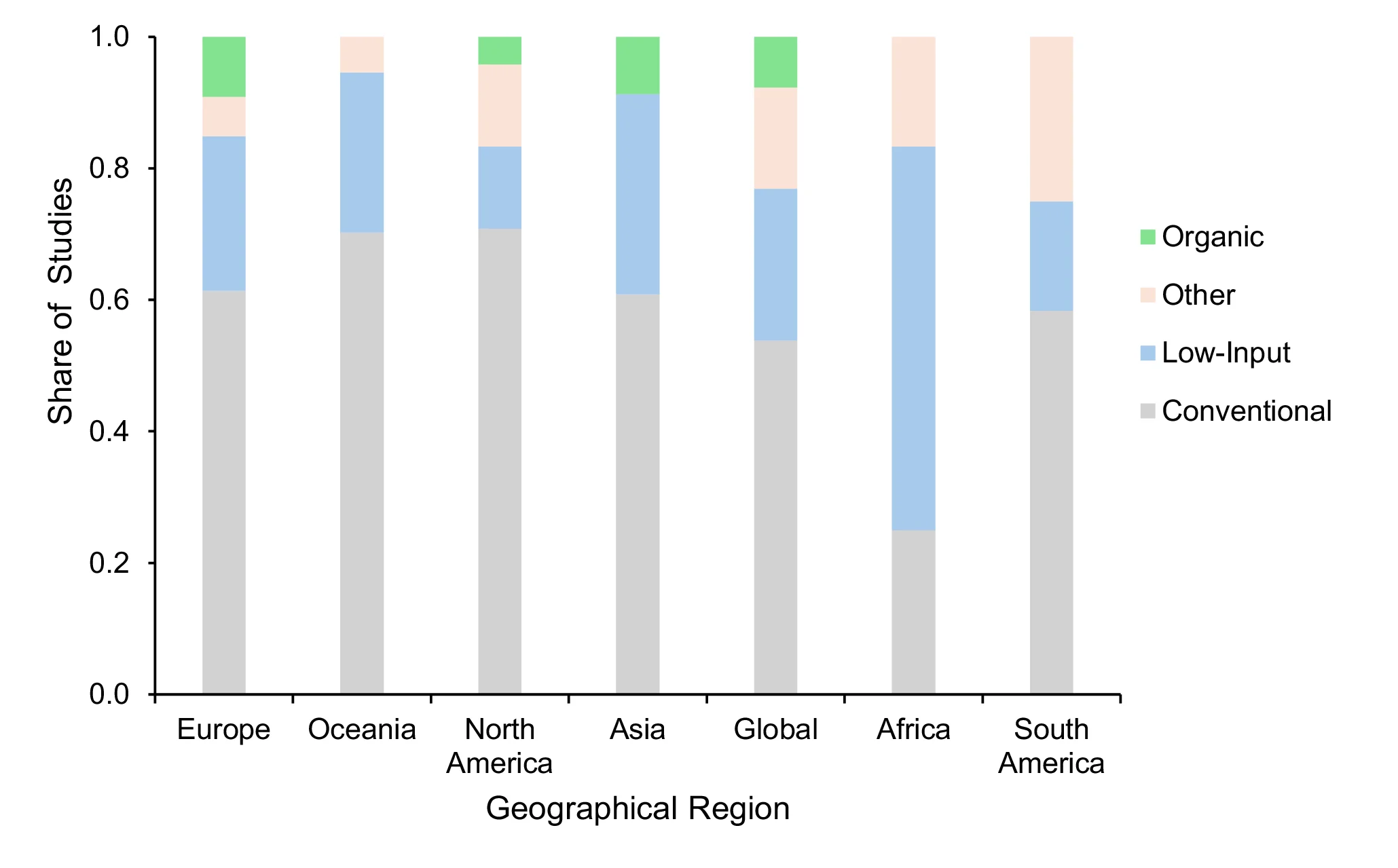
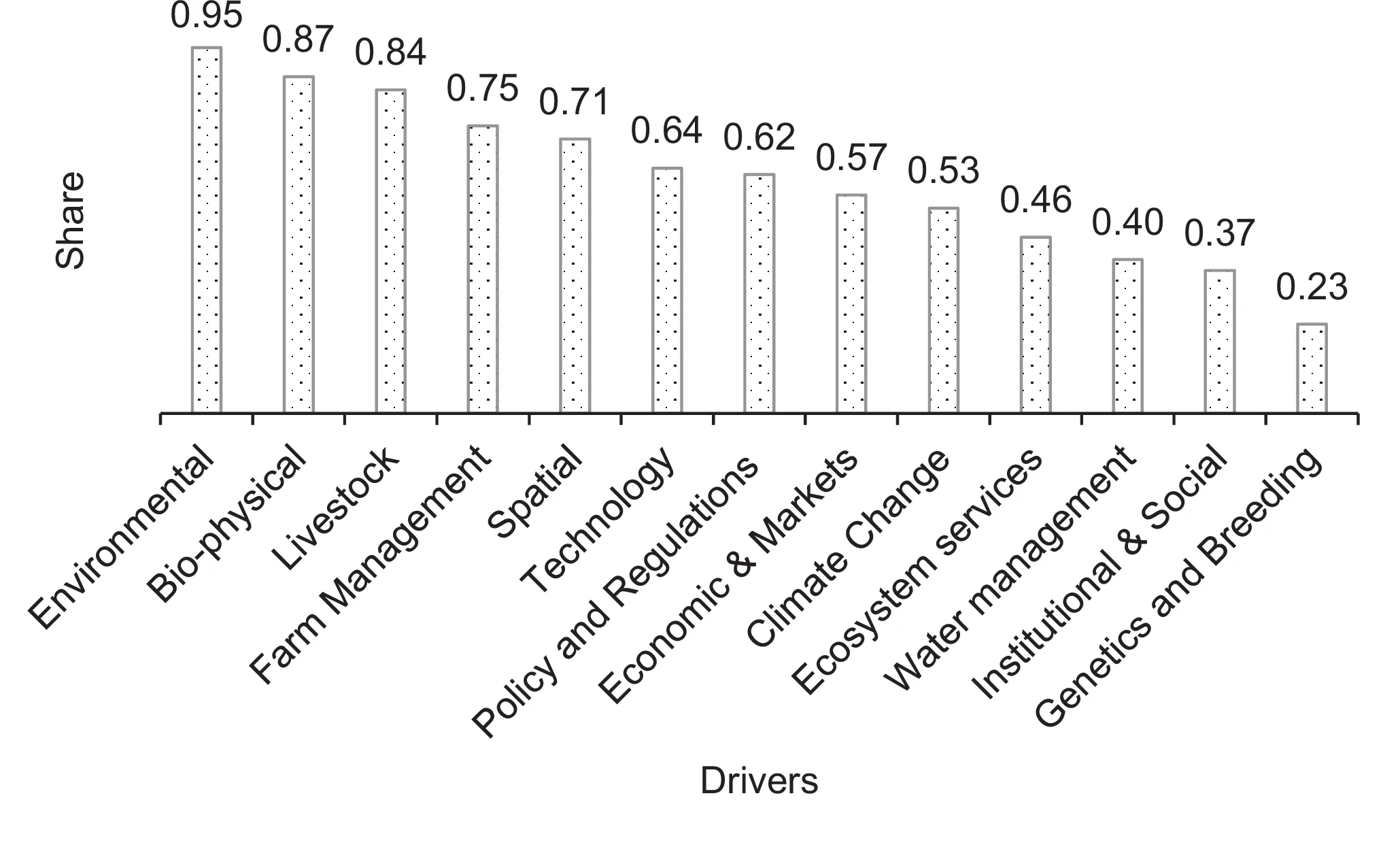
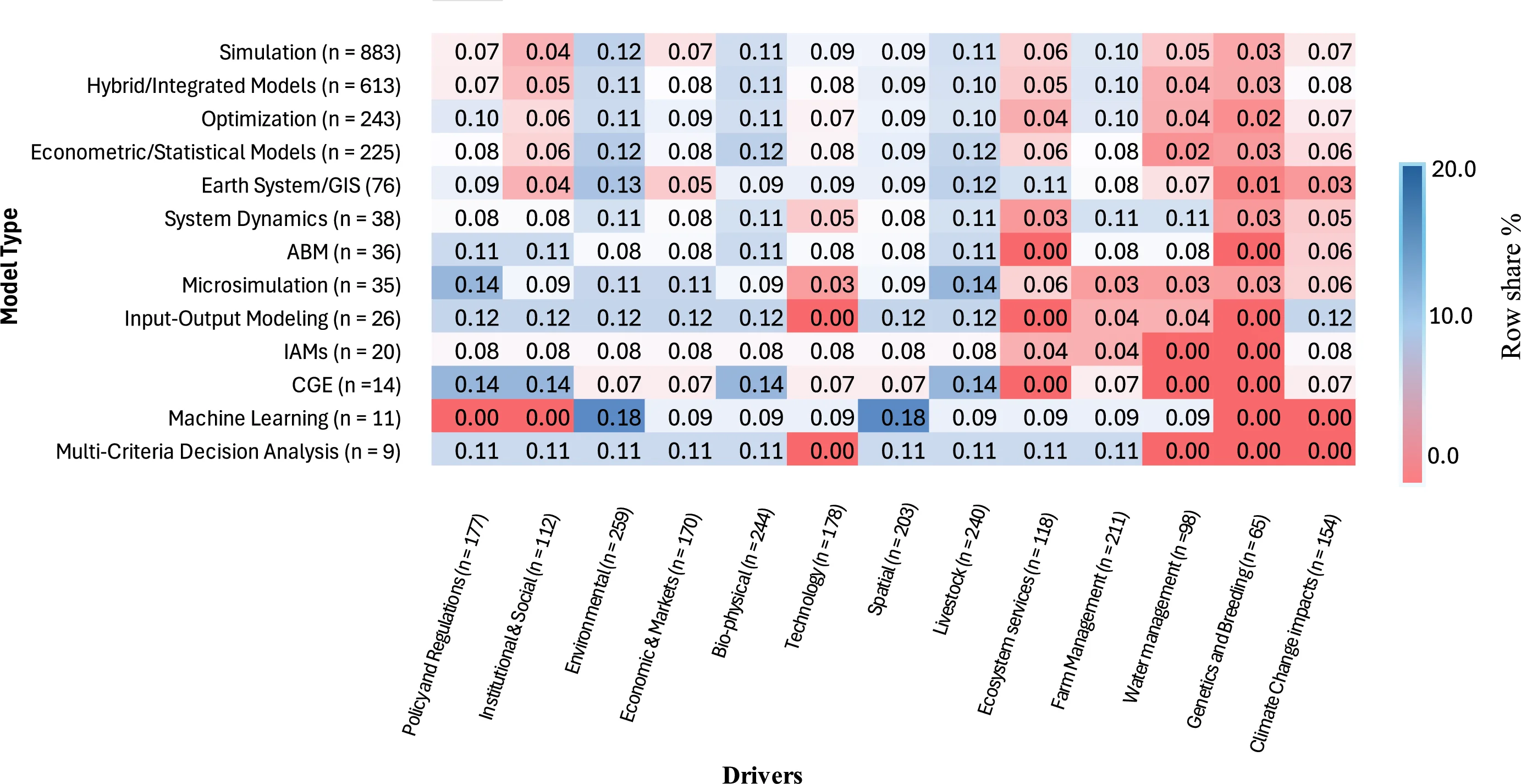
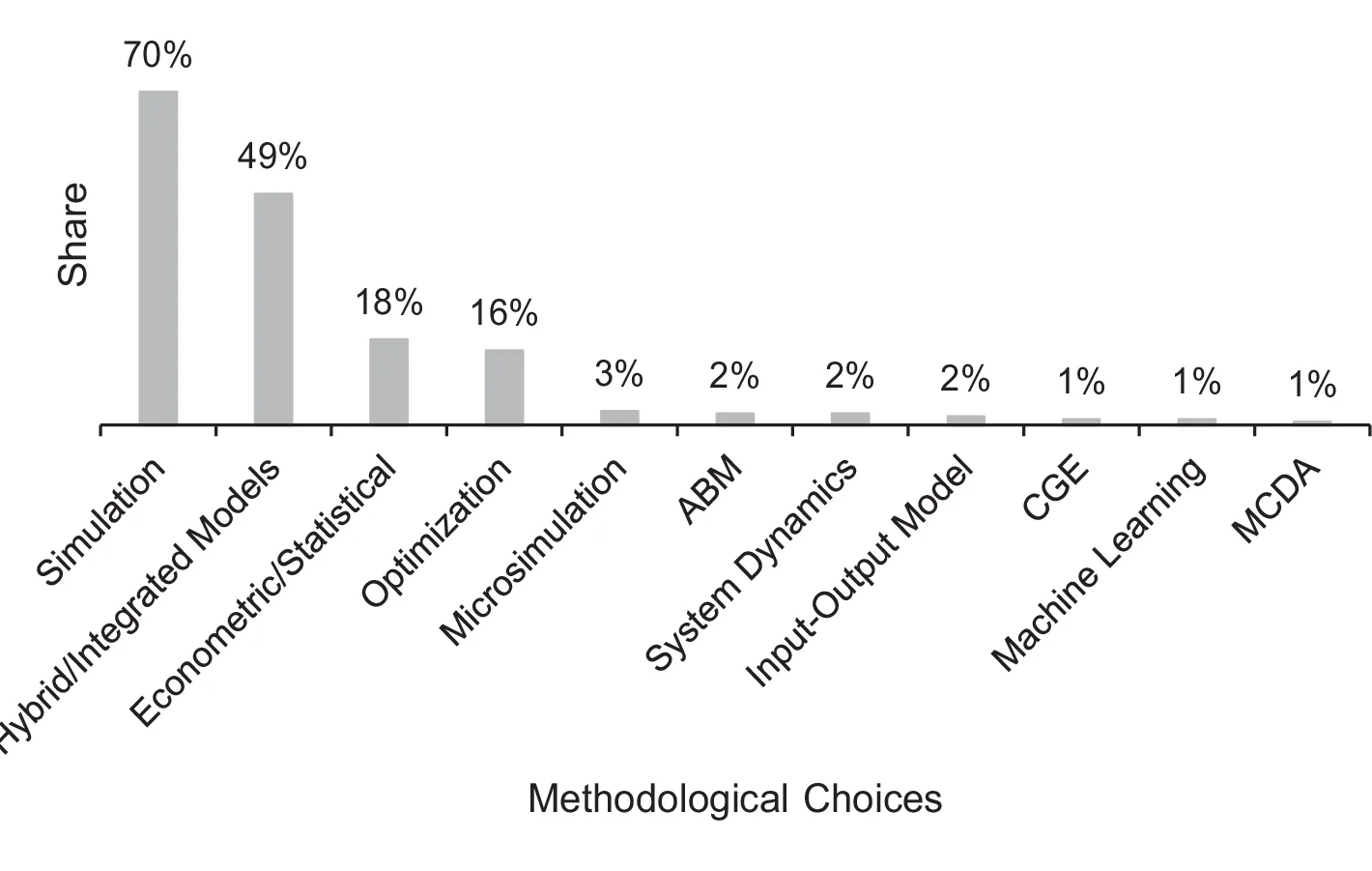
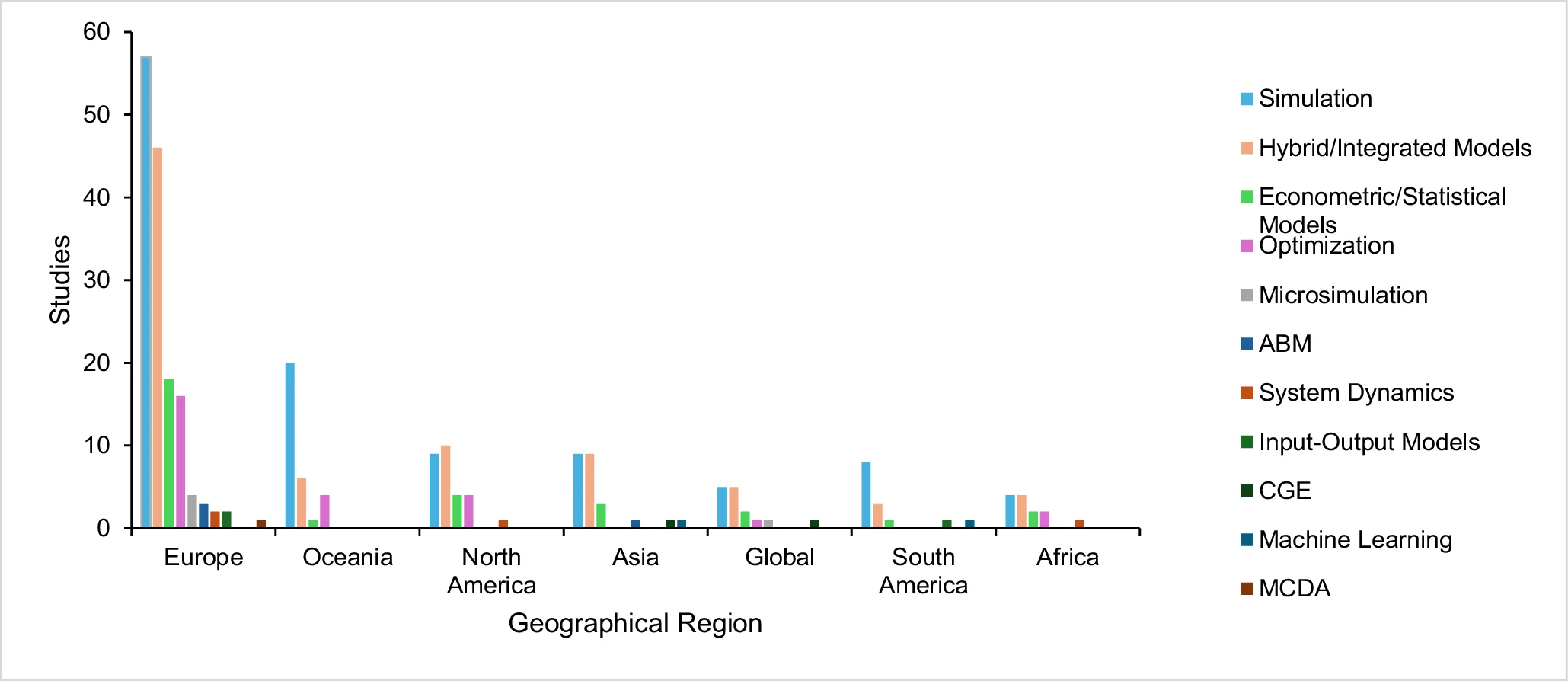
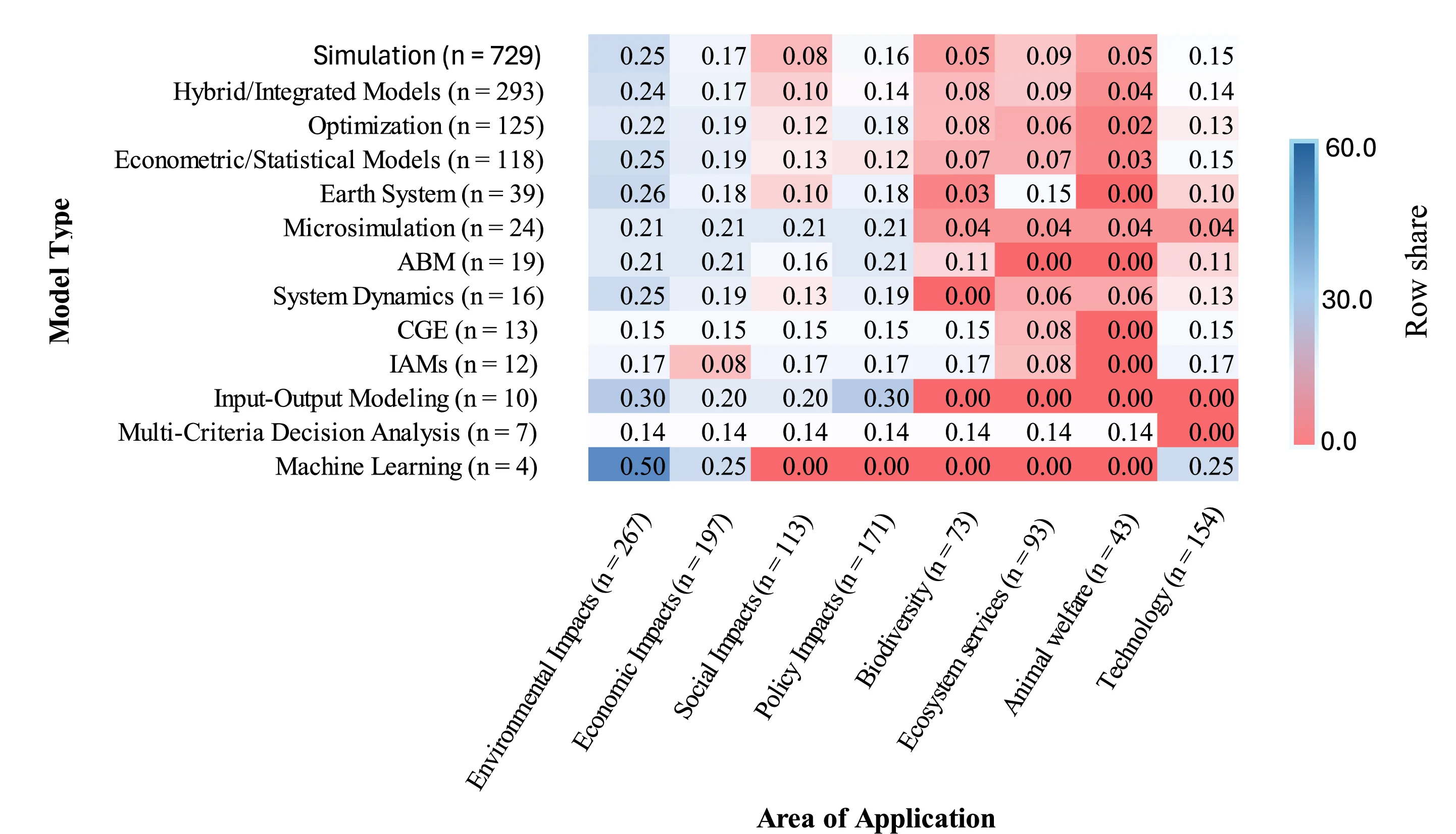
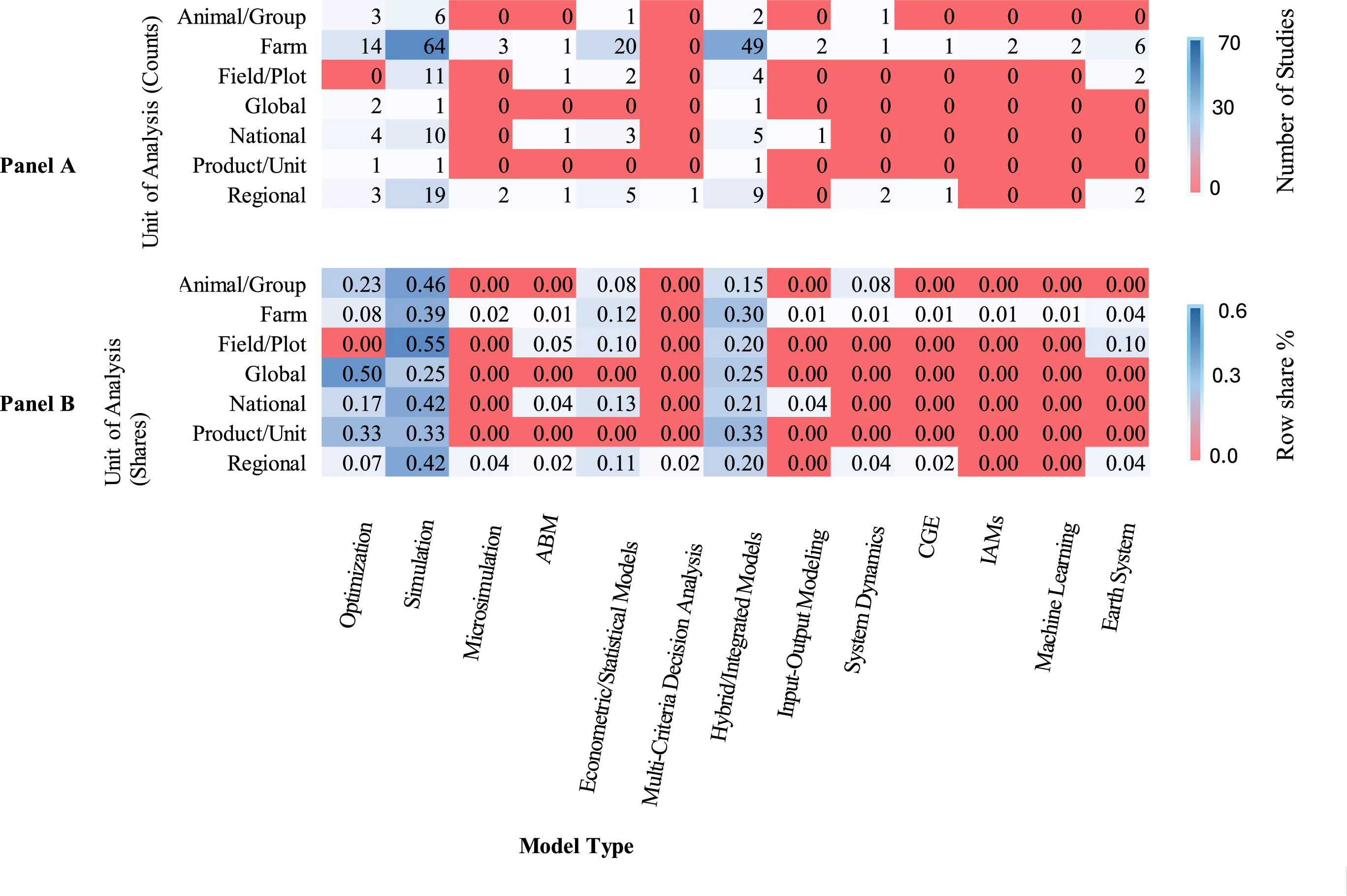
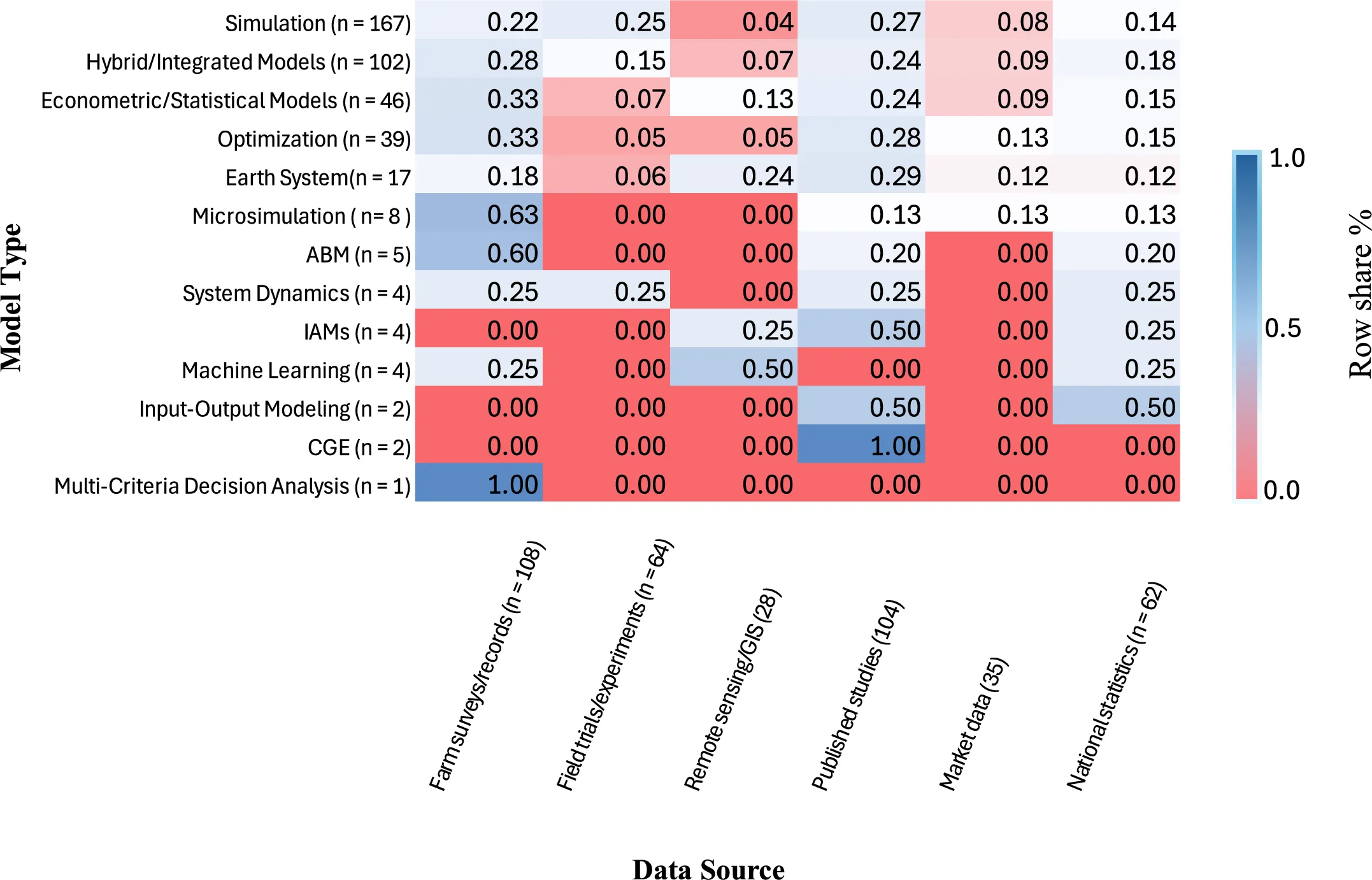
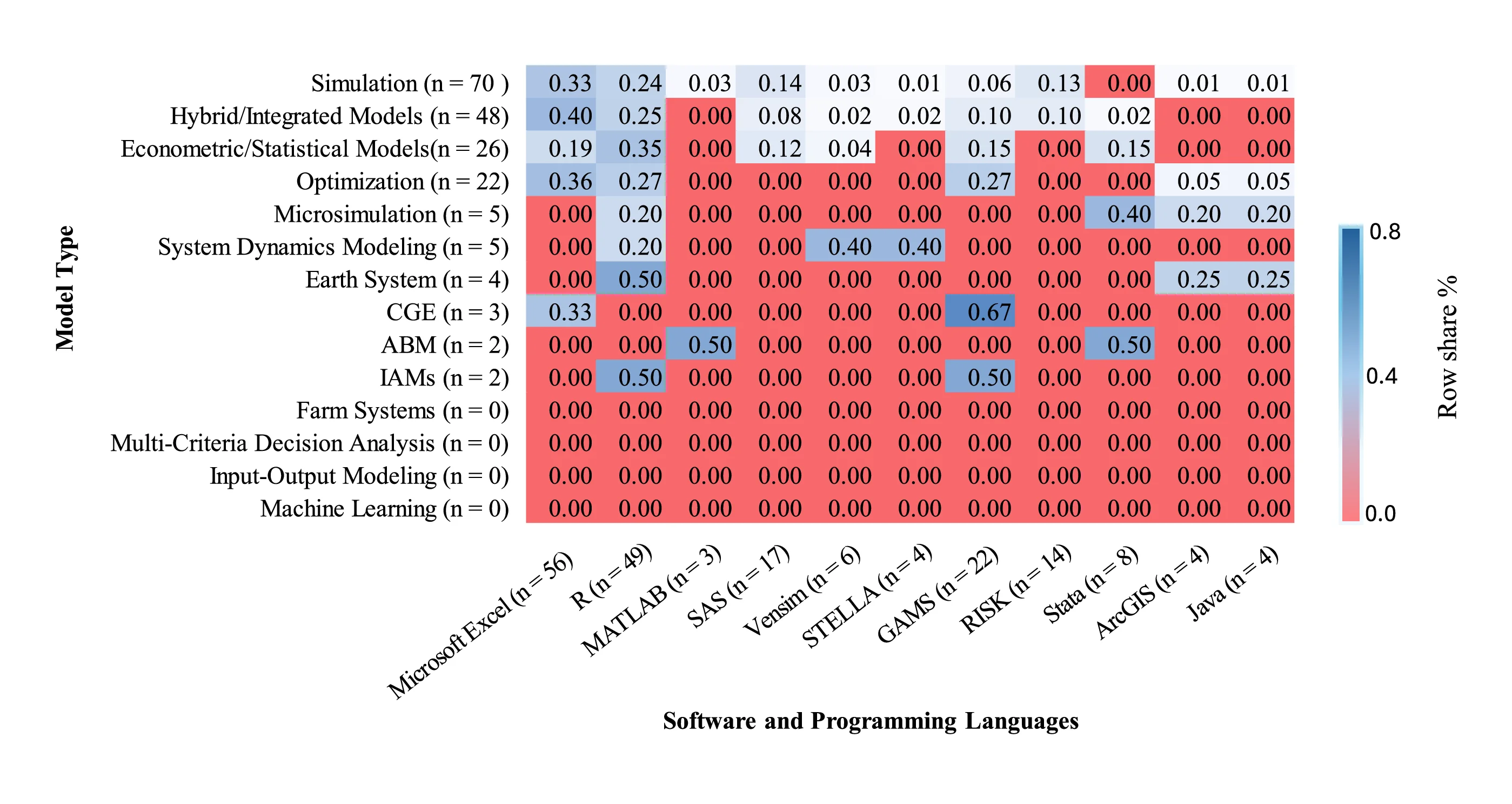
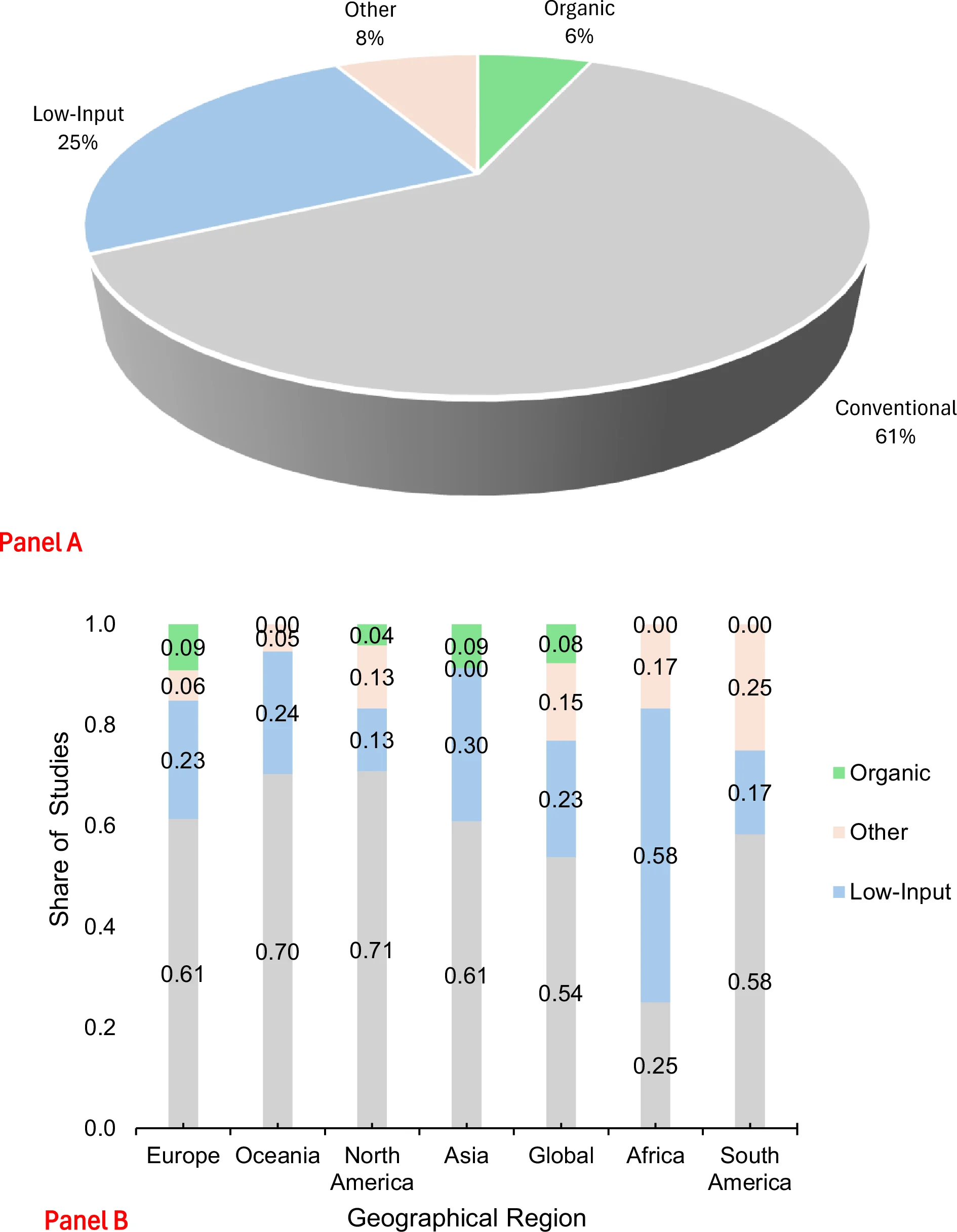
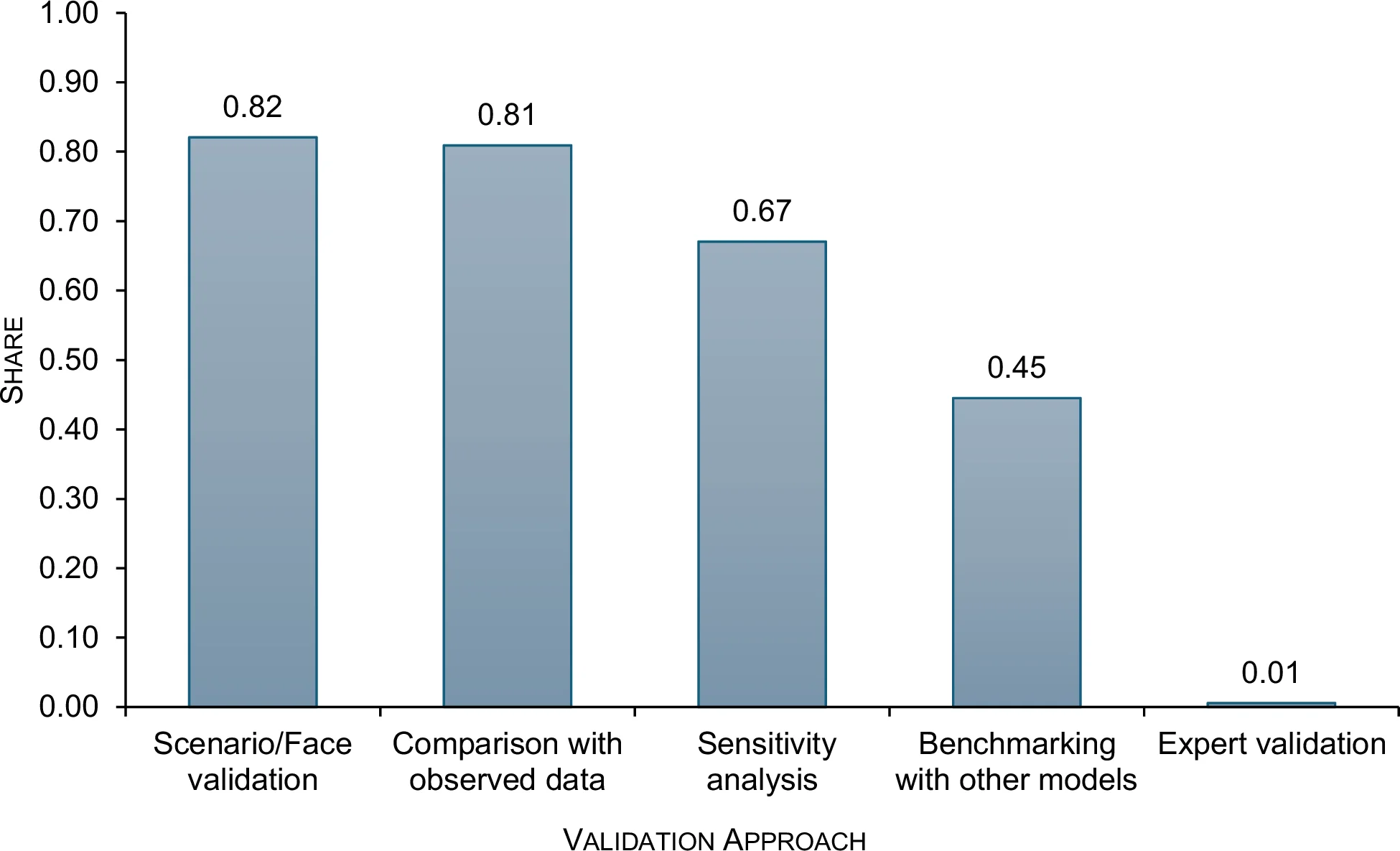
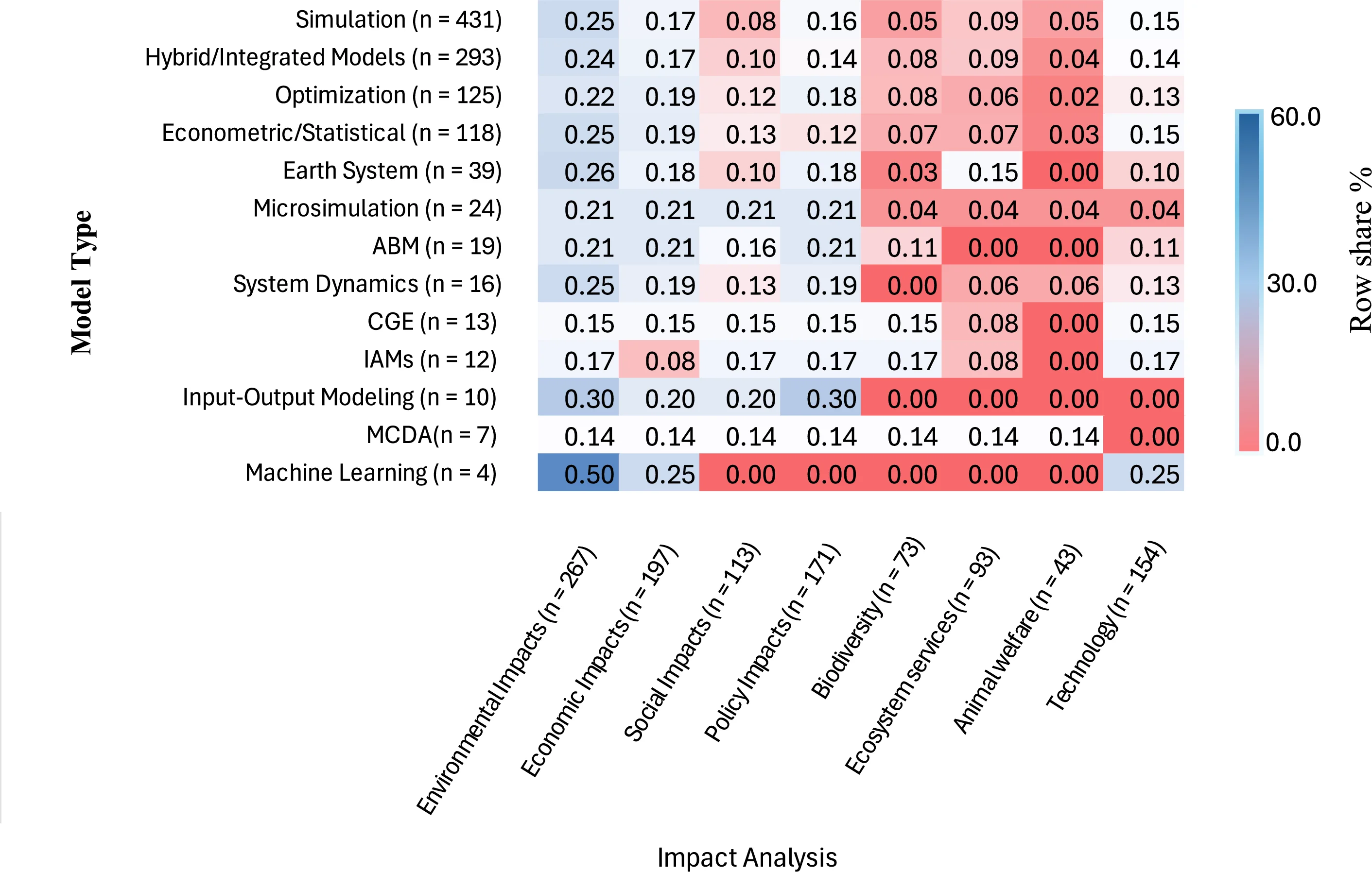
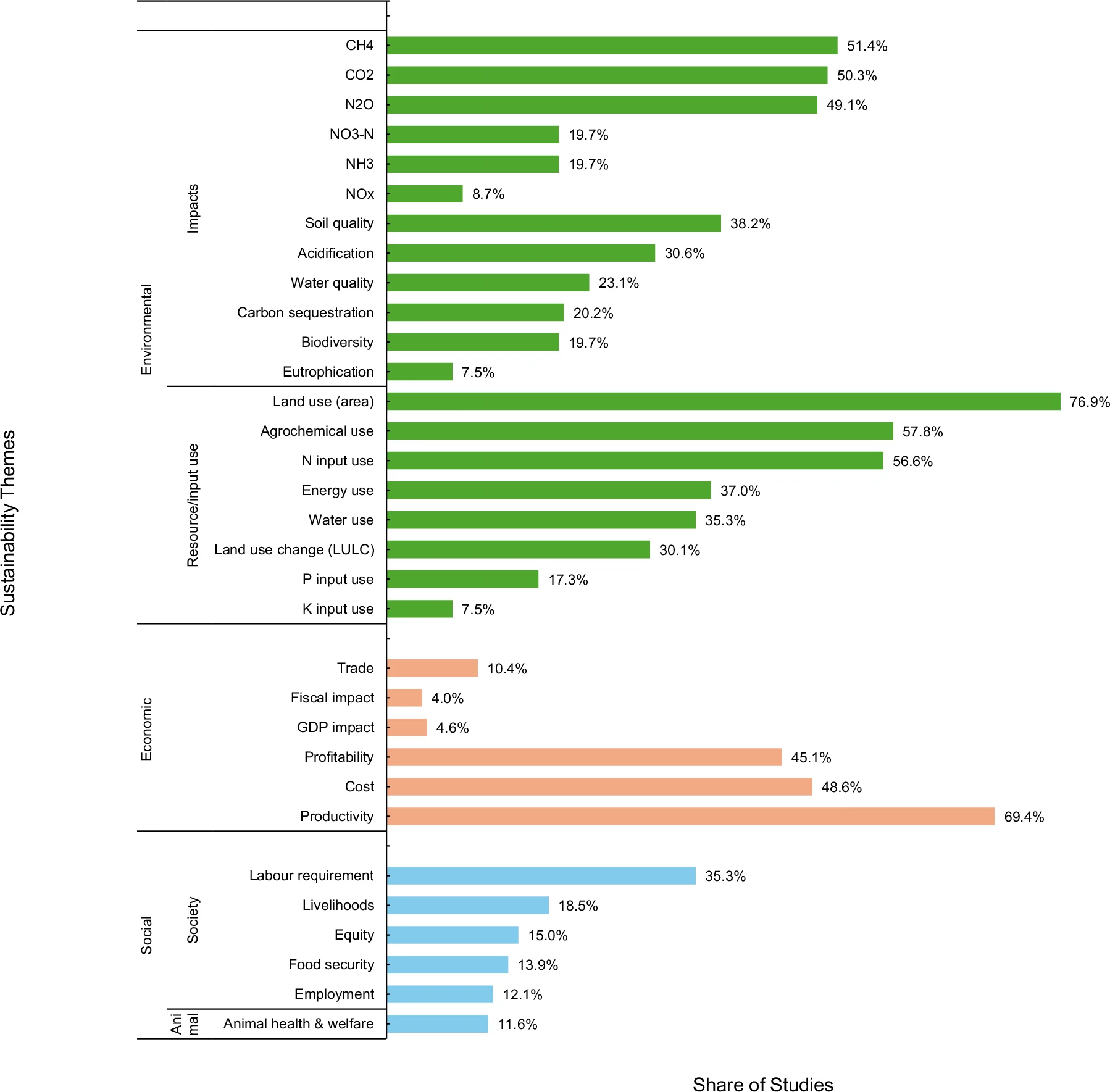
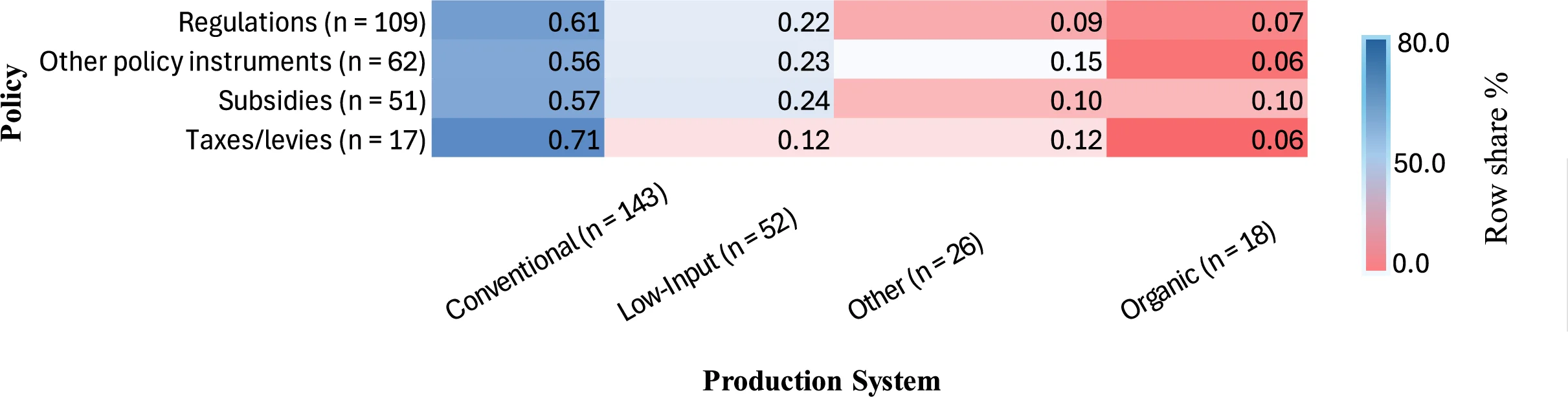
Figure 1. Conceptual framework of pasture-based agriculture.Figure 2. PRISMA Flow Diagram.Figure 3. Temporal distribution of modelling studies published Annually between 2000 - 2024.Figure 4. Geographical distribution of modelling studies (Panel A) and production system coverage by region (Panel B).Figure 5. Distribution of production system by geographical region.Figure 6. The drivers in modelling literature for economic and environmental impact analysis of pasture-based agriculture.Figure 7. Drivers that motivated modelling choice.Figure 8. The frequency of modelling approaches used in economic and environmental impact analysis of pasture-based agriculture.Figure 9. Shows the distribution of modelling approaches across geographical regions.Figure 10. Applications of modelling approaches across sustainability domains.Figure 11. Show the distribution of modelling approaches by unit of analysis.Figure 12. Data sources by modelling approach in sustainability assessments of pasture-based agriculture.Figure 13. Software by modelling approach.Figure 14. Modelling behaviour by scale of application: Panel A reports share of behaviour types across all studies; Panel B shows their distribution across spatial scales applied.Figure 15. Validation strategies adopted in the reviewed studies (share of studies, %).Figure 16. Distribution of impact domains across modelling approaches (row-normalised shares).Figure 17. The distribution of sustainability impacts assessed across reviewed studies.Figure 18. Shows the distribution of policy instruments modelled across production.
Tables
Table 1. Search strategy of the review showing databases, strings and exclusion criteria.
Database
Search Field(s)
Search String
Filters Applied
Scopus
TITLE-ABS-KEY
("livestock production systems" OR "pasture-based agriculture" OR "grass-based livestock" OR "ruminant farming") AND ("model*" OR "microsimulation" OR "bio-economic model*" OR "input-output model*" OR "CGE model*" OR "system dynamics model*" OR "stochastic model*" OR "simulation") AND ("economic impact*" OR "profitability" OR "economic sustainability" OR "farm income") AND ("environmental impact*" OR "GHG emissions" OR "biodiversity" OR "land use change")
TS=("livestock production systems" OR "pasture-based agriculture" OR "grass-based livestock" OR "ruminant farming") AND TS=("model*" OR "microsimulation" OR "bio-economic model*" OR "input-output model*" OR "CGE model*" OR "system dynamics model*" OR "stochastic model*" OR "simulation") AND TS=("economic impact*" OR "profitability" OR "economic sustainability" OR "farm income") AND TS=("environmental impact*" OR "GHG emissions" OR "biodiversity" OR "land use change")
("livestock production systems" OR "pasture-based agriculture" OR "grass-based livestock" OR "ruminant farming") AND ("model*" OR "microsimulation" OR "bio-economic model*" OR "input-output model*" OR "CGE model*" OR "system dynamics model*" OR "stochastic model*" OR "simulation") AND ("economic impact*" OR "profitability" OR "economic sustainability" OR "farm income") AND ("environmental impact*" OR "GHG emissions" OR "biodiversity" OR "land use change")
Manual screening; Sort by relevance; Year range; Exclude patents & citations
Table 2. Conceptual classification of economic and environmental modelling approaches applied to pasture-based agriculture.