Cite as: A. Decoster, J. Loughrey, C. O'Donoghue, D. Verwerft; 2011; Microsimulation of indirect taxes; International Journal of Microsimulation; 4(2); 41–56. doi: 10.34196/ijm.00052
Abstract
The goal of this paper is to simulate a tax shift from labour to consumption and perform a distributional analysis of the reform. Microsimulation programs are often uniquely focussed on the personal income tax system and on social security contributions and benefits. However, against a political background where income taxes are under increased pressure and alternative, less distortive forms of taxation come under consideration, microsimulation models enriched with expenditure data and consumption tax structures could play an important role in sharpening the (distributional) picture of such systemic changes. The current paper discusses an algorithm for this enrichment – mainly with VAT, excises and other consumption taxes – within the context of the EUROMOD-framework and applies the obtained program to the simulation of a decrease of social security contributions compensated by a rise in standard VAT rate to maintain government budget neutrality for four EU countries. The measure is found to have a (first order) regressive effect, pointing to the fact that keeping redistribution constant would require the remaining post-reform income taxation to become more progressive.
This article contains 4 figures and 8 tables.
Figures
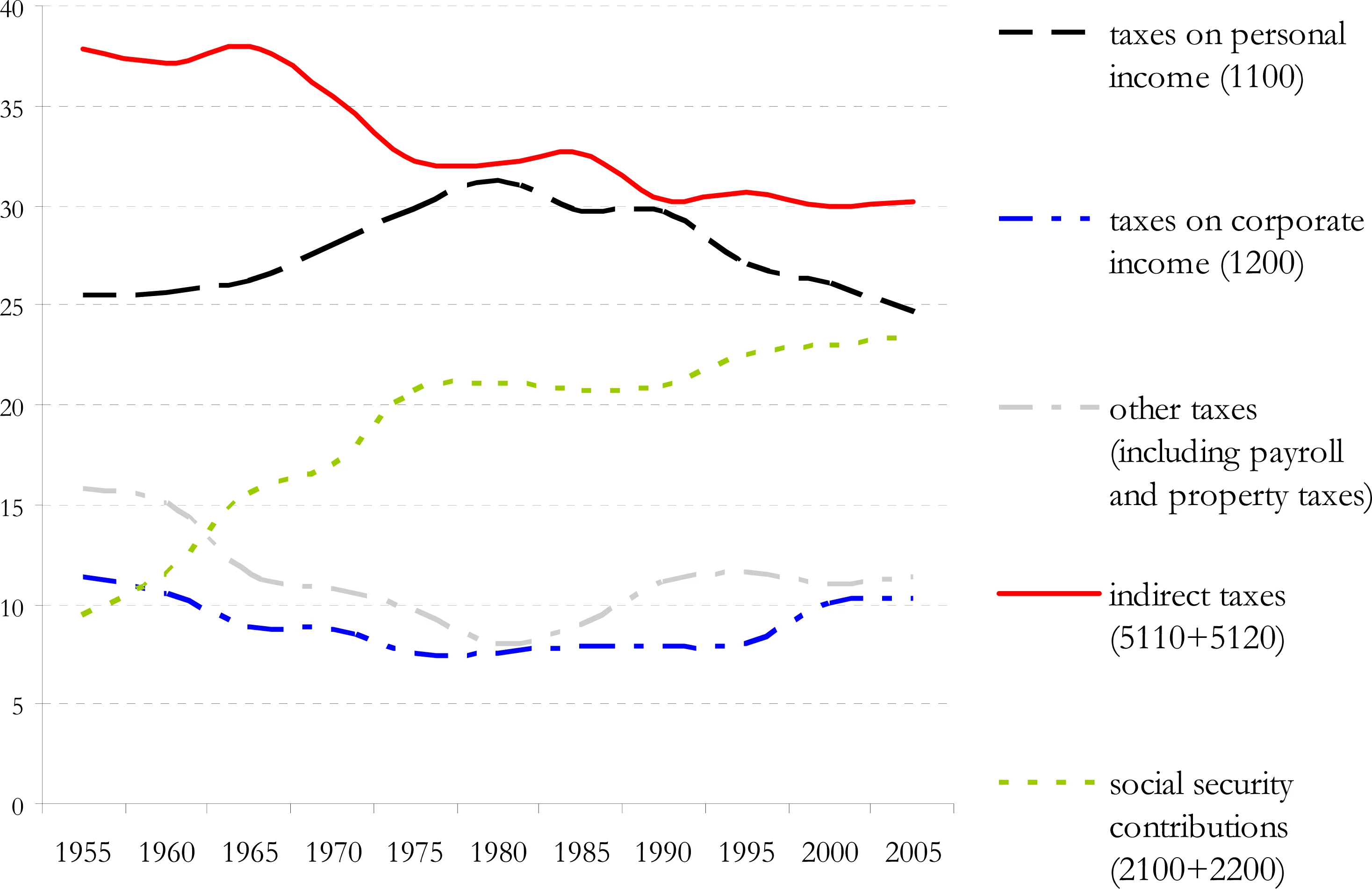
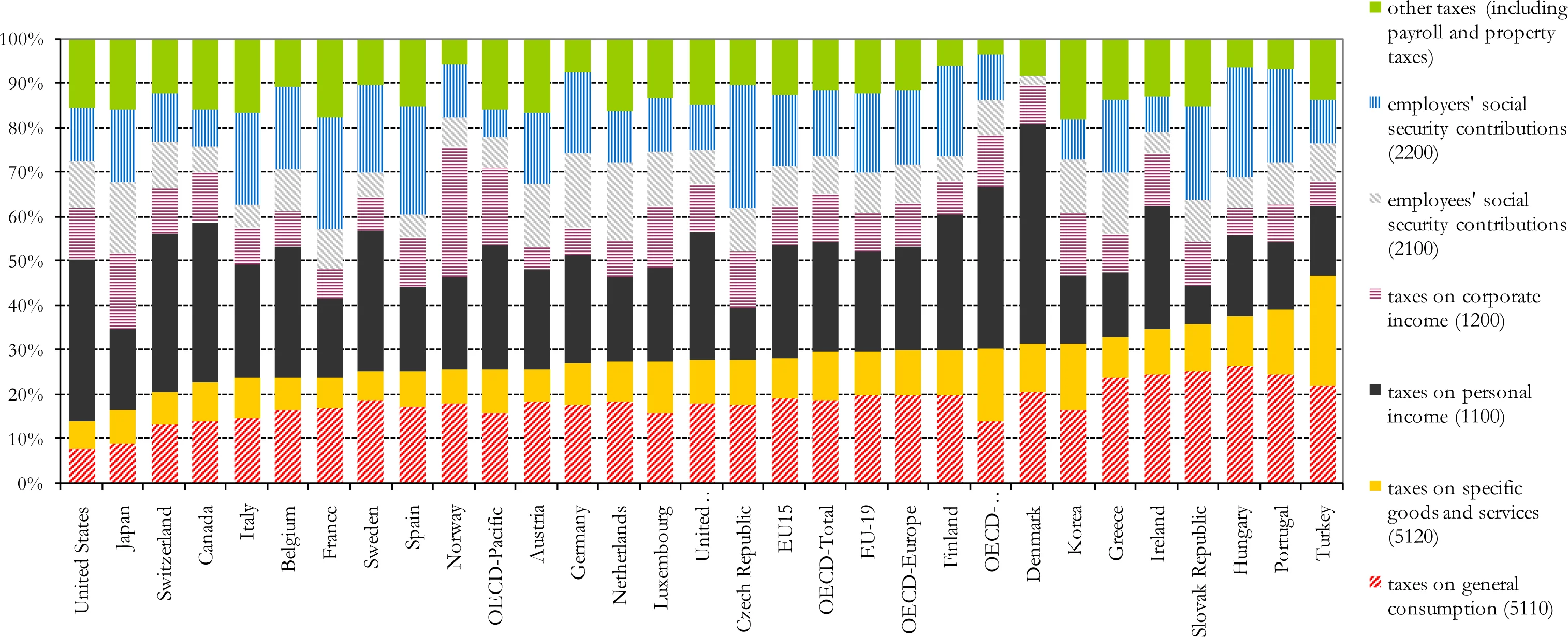
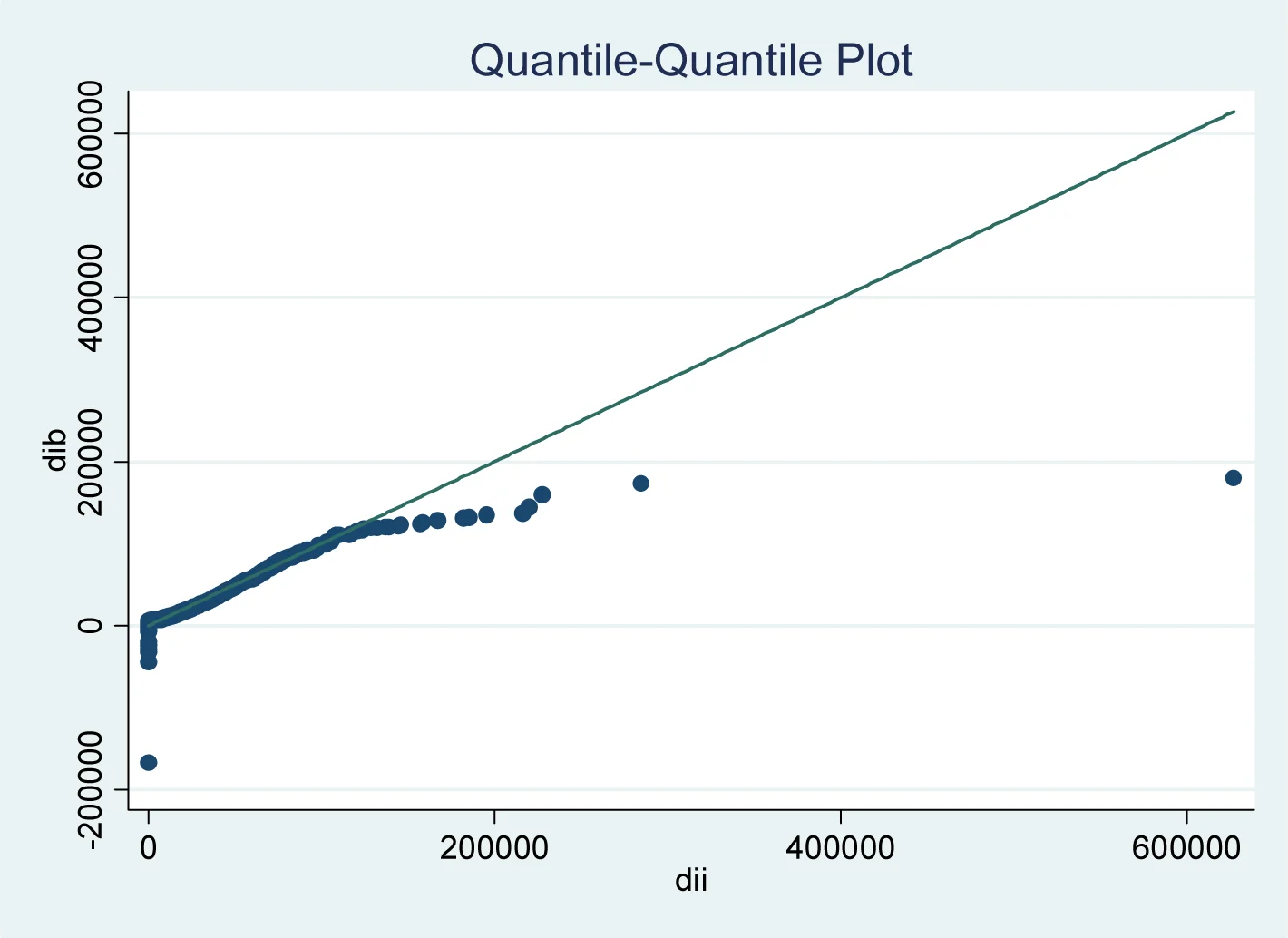
Figure 1. Share of different components of government revenue OECD 1955–2005.Figure 2. Share of different components of government revenue – oecd 2005.Figure 3. QQ-plot for disposable income quantiles in budget dataset (dib) versus quantiles in income dataset (dii), Belgium (Euros per year).
Tables
Table 1. Expenditure datasets and income datasets for the four countries.
Country
budget survey
# of households
income survey
# of households
policy year indirect taxes
BE
Household Budget Survey 2003
3,550
EU-SILC 2004
5,275
2003
HU
Household Budget Survey 2005
8,710
EU-SILC 2005
6,924
2005
IE
Household Budget Survey 1999
7,644
Living In Ireland 2000
3,644
2001
UK
Family Expenditures Survey 2003/2004
7,048
Family Resources Survey 2003/2004
28,768
2003
Table 2. VAT-structure and expenditure shares per vat-category; excise rates and shares for the 3 most important excise good categories.
Country and policy year
VAT
Excise
standar d rate 18–25%
not taxed or exempte d
reduced rate 1 4–6%
reduced rate 2 8–15%
Alcohol
Tobacco
Private transpor t
BE-2003
Rates
21
0
6
12
43.9
162.9
34.7
Shares
41.9
37.9
19.8
0.4
1.7
1.3
8.9
HU-2005
Rates
25
0
5
15
64.3
273.0
79.0
Shares
42.7
8.1
4.1
45.1
0.6
2.6
4.1
IE-2001
Rates
20
0
-
12.5
26.6
300.0
75.4
Shares
36.2
42.0
-
21.8
4.5
3.4
5.3
UK-2003
Rates
17.5
0
5
-
89.7
414.7
58.8
shares
57.7
36.3
6.1
-
1.9
2.2
8.0
Table 3. Average expenditures per consumption category in budget and EUROMOD dataset.
Commodity
expenditures in €, BE
expenditures in €, HU
expenditures in €, IE
expenditures in GBP, UK
Budget Survey
EUROMOD
Budget Survey
EUROMOD
Budget Survey
EUROMOD
Budget Survey
EUROMOD
food, non-alcoholic beverages
4,183
4,050
1,813
1,675
4,620
8,215
2,617
2,121
alcoholic beverages
466
400
82
36
1,663
1,513
325
296
tobacco
275
279
191
170
644
1,098
280
321
clothing and footwear
1,395
1,284
442
380
1,848
1,493
1,183
916
home fuels and electricity
1,321
1,284
831
844
1,128
1,987
623
590
rents
1,418
1,560
59
62
681
913
691
543
household services
1,268
1,157
666
685
1,230
1,365
999
818
health
1,608
1,507
245
323
582
391
174
144
private transport
2,660
2,214
590
325
1,394
1,808
1,814
1,413
public transport
161
158
185
148
513
534
292
242
communication
803
758
460
437
739
1,223
551
457
recreation and culture
2,058
1,752
390
384
1,931
2,171
1,760
1,472
education
207
141
76
76
405
368
529
248
restaurants and hotels
2344
1,972
246
153
1,695
1,652
2,105
1,746
other goods and services
2,491
2,175
471
466
4,869
3,917
1,408
1,210
Durables
2,671
2,372
656
658
5,306
3,384
3,405
3,212
All
25,330
23,062
7,645
7,056
29,248
32,032
18,754
15,748
Table 4. Revenue effects of the simulation.
BE
HU
IE
UK
baseline
simulation
baseline
simulation
baseline
simulation
baseline
simulation
SIC employee
17,490
-3,900
2,777
-693
168,875
-33,902
42,283
-9,713
PIT
35,500
+ 1,763
4,608
+0
1136,416
+0
164,813
+0
Indirect tax
14,400
+ 2,309
4,300
+ 731
443,139
34,791
71,717
+ 10,655
VAT rate
21%
26%
25%
34%
20%
23.5%
17.5%
21.5%
Table 5. Decomposition of welfare change into total expenditure effect and price change – by decile.
Decile equiv. non durable expend.
BE (EUR)
HU (EUR)
IR (EUR)
UK (EUR)
Change nondur. exp.
Price effect
WG
Change nondur. exp.
Price effect
WG
Change nondur. Exp.
Price effect
WG
Change nondur. Exp.
Price effect
WG
1
43
−193
−150
22
−70
−47
0
−59
−58
9
−50
−42
2
79
−262
−183
34
−90
−56
38
−152
−114
39
−99
−60
3
159
−308
−149
57
−105
−48
108
−202
−94
90
−134
−44
4
237
−366
−129
82
−124
−41
213
−277
−64
134
−168
−34
5
389
−417
−28
112
−139
−27
321
−313
8
196
−200
−4
6
482
−455
26
141
−157
−16
364
−328
36
278
−233
45
7
614
−509
105
192
−183
9
390
−338
52
360
−269
91
8
735
−557
178
231
−205
26
483
−403
80
473
−316
158
9
837
−607
230
310
−237
73
523
−399
124
620
−376
245
10
1162
−858
305
527
−339
188
722
−531
191
764
−570
194
Mean
473
−453
20
171
−165
6
316
−300
16
296
−241
55
Table 6. Decomposition of welfare change into total expenditure effect and price change – by group.
group
BE (EUR)
HU (EUR)
IE (EUR)
UK(GBP)
Change nondur. exp.
Price effect
WG
Change nondur. exp.
Price effect
WG
Change nondur. exp.
Price effect
WG
Change nondur. Exp.
Price effect
WG
poor
55
−367
−312
30
−90
−60
4
−22
−18
17
−177
−160
non poor
554
−470
84
197
−178
18
329
305
24
362
−257
106
on income support
0
−277
−277
0
−106
−106
0
−24
−24
0
−232
−232
retired
112
−289
−177
117
−120
−3
22
−46
24
35
−164
−130
un−employed
54
−323
−269
35
−107
−72
2
−7
−5
16
−148
−133
mean
473
−453
20
171
−165
6
316
−300
16
296
−241
55
Table 7. Savings rate per decile.
Deciles
BE
HU
IE
UK
1
−63.4
−50.4
−109.9
−37.1
2
−17.5
−14.3
−67.3
1.7
3
−8.1
−3.9
−38.8
10.4
4
−2.1
1.6
−25.0
16.3
5
3.8
6.4
−22.3
21.3
6
9.3
10.1
−11.2
24.2
7
13.3
12.1
−2.9
28.6
8
18.0
14.4
4.5
32.5
9
22.7
17.6
15.4
37.8
10
33.3
27.1
38.5
50.4
Table 8. Suits and Reynolds-Smolensky index for personal income and indirect taxes.
Country
Belgium
0.219
−0.079
0.113
0.057
−0.010
0.046
Greece
0.492
−0.101
0.094
0.035
−0.024
0.01
Hungary
0.424
−0.086
0.144
0.056
−0.015
0.041
Ireland
0.140
−0.143
0.044
0.043
−0.019
0.024
UK
0.200
−0.120
0.092
0.038
−0.011
0.026
Note: denotes the Suits index for tax component Y, the Reynolds-Smolensky index; the superscript PIT refers to Personal Income Taxes, IND to Indirect Taxation and TOT to Personal Income Taxes and Indirect taxation.