Cite as: L. Beyene, E. Engida; 2016; Public investment in irrigation and training, growth and poverty reduction in Ethiopia; International Journal of Microsimulation; 9(1); 86–108. doi: 10.34196/ijm.00129
Abstract
This paper analyzes the impacts of public investment in small-scale irrigation and farmer training on growth and agriculture-led development, on food security, and on poverty in Ethiopia. We use a dynamic Computable General Equilibrium (CGE) model linked to a microsimulation model based on the latest household income and expenditure survey, in a top-down approach. All public investments are assumed to increase total factor productivity through increased supply of skilled labor and/or irrigated land. We find that investing in farmer training alone has great potential to increase growth, food security and poverty reduction, given that the economy is labor-intensive. Investing in training combined with irrigation has even greater impacts. An irrigation only approach will not yield the expected results if agricultural labor does not have the required skills. The irrigated agriculture sector has great potential despite its small size. However, for the impact to be notable, important investments are required in the first place to increase the share of irrigated agriculture versus the rain-fed. An agriculture-led development is less likely to occur because: i) of weak forward and backward production linkages between agriculture and manufacturing sectors; ii) a significant share of manufacturing inputs is imported; iii) the resulting contraction in private investment which restrains expansion of the manufacturing and services sectors
This article contains 2 figures and 6 tables.
Figures
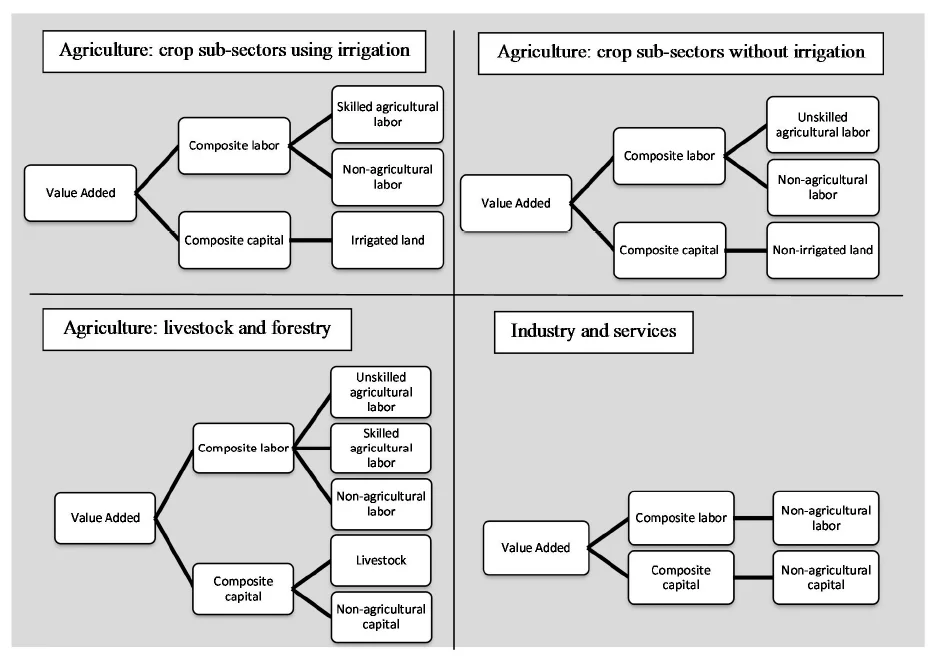
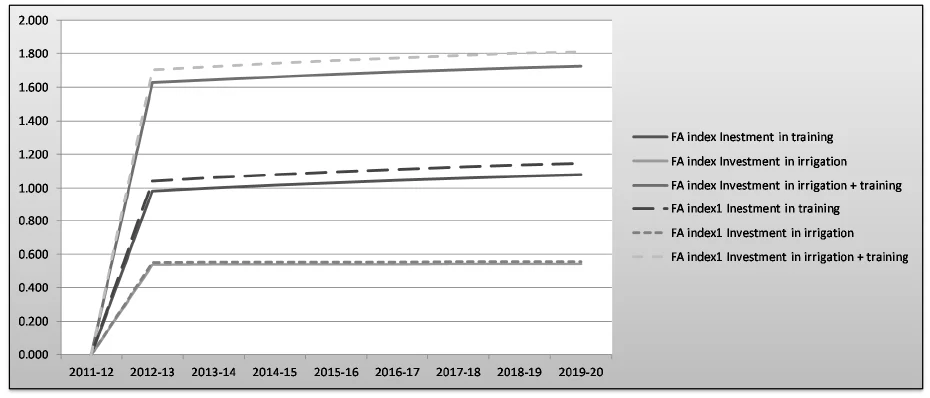
Figure 1. Nested structure of value added.Figure 2. Changes in food availability index: FAindex and FAindex1 (% change from reference scenario).
Tables
Table 1. Summary of scenarios.
Scenarios
Time frame
Simulation 1
10% increase in public investment for farmer training
2nd period
11.8% increase in skilled agricultural labor supply
3rd period
1.5% improvement in TFP in irrigated agriculture crop sectors
3rd period
Simulation 2
10% increase in public investment in irrigation uniformly across all agricultural sub-sectors
2nd period
10.5% increase in irrigated land
3rd period
2% improvement in TFP in irrigated agriculture crop sectors
3rd period
Simulation 3
Simulation 1 + Simulation 2 for public investment
2nd period
3.5% improvement in TFP in irrigated agriculture crop sectors
3rd period
Table 2. Macroeconomic results (% change from reference scenario).
Investment in training
Investment in irrigation
Investment in irrigation + training
2014–15
2019–20
2014–15
2019–20
2014–15
2019–20
GDP
Agriculture
0.16
0.16
0.21
0.21
0.41
0.41
Irrigated agriculture
16.63
16.62
3.91
3.90
20.91
20.89
Rain-fed agriculture
−2.78
−2.79
−0.43
−0.43
−3.22
−3.24
Manufacturing
−0.17
−0.48
−0.03
−0.06
−0.21
−0.55
Services
0.03
0.03
−0.01
−0.03
0.02
0.00
TOTAL
0.07
0.04
0.09
0.07
0.17
0.13
Investment
Private
−1.95
−2.26
−0.17
−0.20
−2.13
−2.46
Public
3.69
3.69
0.32
0.32
4.01
4.01
TOTAL
−0.03
−0.07
0.01
0.00
−0.02
−0.06
Agriculture
−0.37
−0.44
−0.28
−0.29
−0.71
−0.79
Consumer
Agricultural food crops
−0.62
−0.70
−0.32
−0.32
−0.99
−1.07
Price
Manufacturing
0.13
0.19
−0.02
−0.01
0.09
0.17
Index
Services
0.21
0.50
0.07
0.09
0.29
0.60
TOTAL
−0.08
−0.03
−0.12
−0.11
−0.23
−0.17
Exports
Agriculture
0.30
0.42
0.79
0.31
0.42
0.79
Industry
−0.23
−0.01
−0.23
−0.50
−0.04
−0.54
Services
−0.28
−0.05
−0.34
−0.68
−0.09
−0.77
TOTAL
−0.08
0.11
0.05
−0.33
0.09
−0.22
Imports
Agriculture
−0.46
−0.10
−0.58
−0.60
−0.11
−0.73
Industry
−0.06
0.00
−0.07
−0.18
−0.01
−0.19
Services
0.20
0.09
0.30
0.41
0.11
0.53
TOTAL
−0.03
0.01
−0.02
−0.09
0.01
−0.08
Output
Agriculture
0.17
0.17
0.21
0.21
0.42
0.42
Irrigated agriculture
16.98
16.96
3.68
3.68
21.01
20.99
Rain-fed agriculture
−2.82
−2.84
−0.38
−0.39
−3.22
−3.24
Manufacturing
−0.18
−0.48
−0.03
−0.06
−0.21
−0.55
Services
0.02
0.02
−0.01
−0.03
0.01
−0.01
TOTAL
0.03
−0.03
0.07
0.05
0.11
0.03
Table 3. Changes in agricultural factors income in real terms ((% change from reference scenario).
Investment in training
Investment in irrigation
Investment in irrigation + training
2014–15
2019–20
2014–15
2019–20
2014–15
2019–20
Skilled agricultural labor
11.78
11.59
−8.67
−8.51
11.72
11.53
Unskilled agricultural labor
−2.00
−2.16
1.60
1.75
−2.03
−2.19
Total agricultural labor
0.38
0.22
−0.38
−0.22
0.39
0.23
Irrigated land
8.80
8.58
1.11
1.06
8.28
8.06
Non-irrigated land
−3.49
−3.68
2.78
2.98
−3.57
−3.76
Livestock
0.00
−0.06
0.12
0.17
0.03
−0.02
Total agricultural capital
−1.51
−1.65
1.67
1.79
−1.50
−1.64
Total agricultural factors
−0.05
−0.23
0.08
0.25
−0.04
−0.22
Table 4. Changes in FGT indices (% change from reference scenario).
2014–15
2019–20
Investment in training
Investment in irrigation
Investment in irrigation + training
Investment in training
Investment in irrigation
Investment in irrigation + training
Poverty incidence
National
−0.47
−0.06
−0.75
−0.20
−0.06
−0.46
Rural
−0.51
−0.05
−0.82
−0.22
0.00
−0.46
Urban
−0.20
−0.14
−0.38
−0.07
−0.41
−0.43
Poverty gap
National
−0.58
−0.15
−0.78
−0.27
−0.14
−0.46
Rural
−0.63
−0.10
−0.77
−0.30
−0.08
−0.43
Urban
−0.28
−0.44
−0.82
−0.04
−0.51
−0.65
Poverty severity
National
−0.63
−0.16
−0.84
−0.28
−0.14
−0.48
Rural
−0.68
−0.10
−0.82
−0.32
−0.08
−0.44
Urban
−0.34
−0.52
−0.96
−0.05
−0.56
−0.72
Table 5. Changes in poverty incidence: national rural and urban (cumulative % change from reference scenario in 2010–11).
2014–15
2019–20
Investment in training
Investment in irrigation
Investment in irrigation + training
Investment in training
Investment in irrigation
Investment in irrigation + training
National
−1.50
−0.21
−2.42
−0.24
−0.07
−0.55
Rural
−1.50
−0.21
−2.42
−0.24
−0.07
−0.55
Urban
−0.67
−0.46
−1.25
−0.08
−0.50
−0.52
Table 6. Changes in the number of poor (cumulative % change from reference scenario in 2010–11).