Spatial microsimulation of osteoarthritis prevalence at the small area level in England – Constraint selection for a 2-stage microsimulation process
Onosi Sylvia Ifesemen, Thomas Bestwick-Stevenson, Kimberley L. Edwards
Centre for Sports, Exercise and Osteoarthritis, Versus Arthritis, Nottingham, United Kingdom; Academic Orthopaedics, Trauma and Sports medicine, School of Medicine, Queens Medical Centre, University of Nottingham, Nottingham, United Kingdom
Cite as: O. Ifesemen, T. Bestwick-Stevenson, K. Edwards; 2019; Spatial microsimulation of osteoarthritis prevalence at the small area level in England – Constraint selection for a 2-stage microsimulation process; International Journal of Microsimulation; 12(2); 37–51. doi: 10.34196/ijm.00200
Abstract
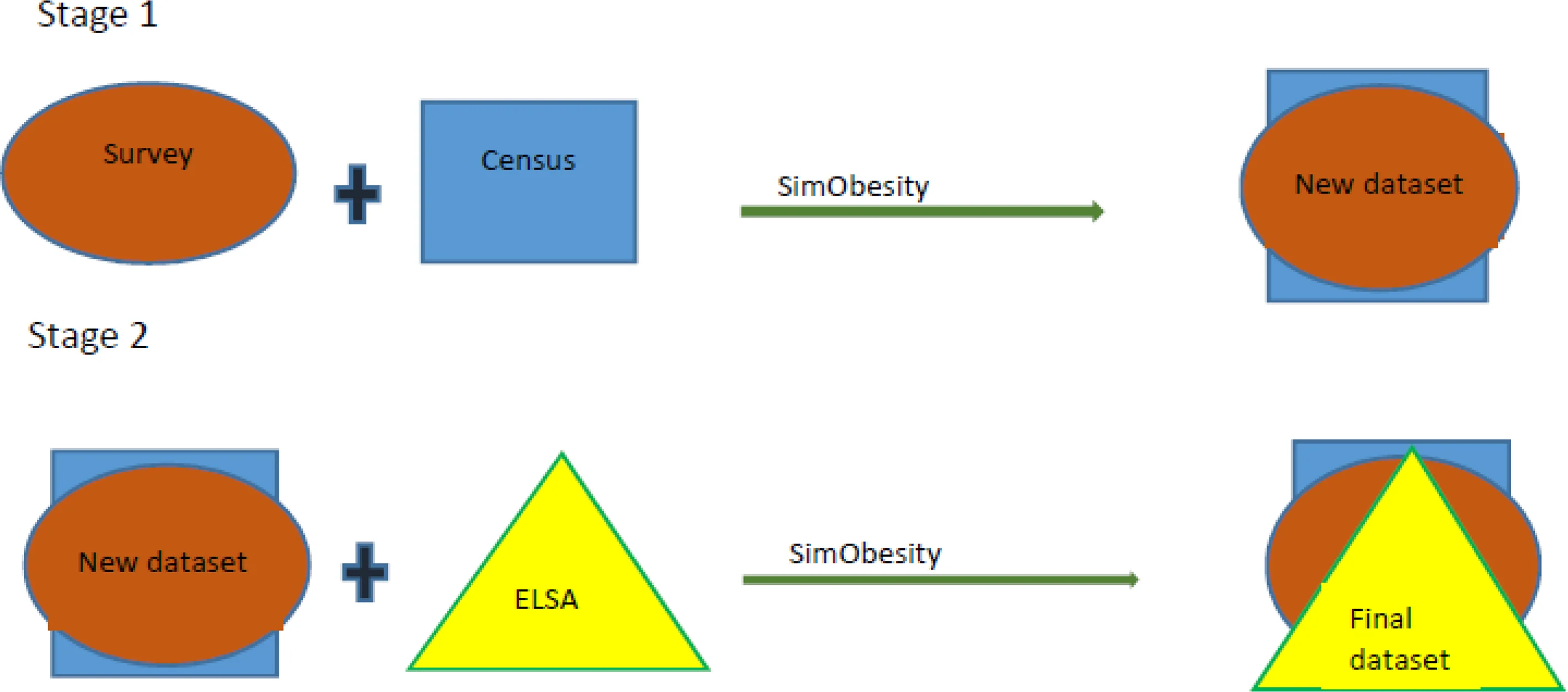
The presence of identical benchmark/constraint variables in both geographic and survey datasets is a principal requirement for static spatial microsimulation models, particularly in the field of medicine and health sciences. This is also a key limitation of static spatial models because geographical datasets rarely contain all variables required to realistically simulate an outcome. We believe this challenge can be overcome by a multilevel approach to spatial microsimulation using a case study of estimating the small area level prevalence of knee osteoarthritis in England. In the paper, we describe constraint selection and demonstrate a novel two–stage spatial microsimulation procedure using SimObesity, a static deterministic combinatorial spatial microsimulation model. We also present the validation parameters of our synthetic data, important areas for consideration and avenues for future research. Our findings demonstrate that important benchmark variables absent from the geographical dataset can be incorporated into spatial microsimulation models without compromising model robustness.
This article contains 4 figures and 7 tables.
Figures
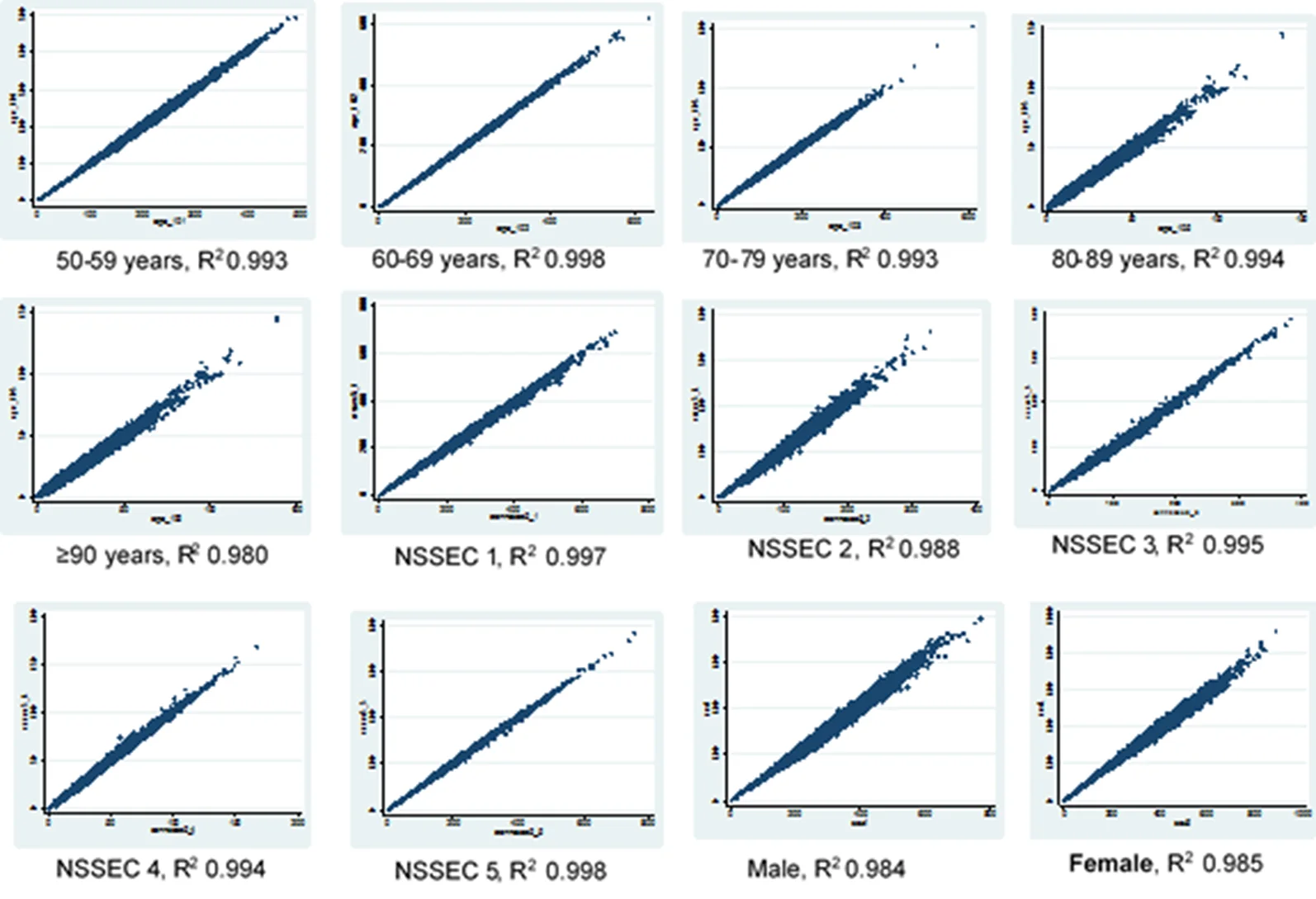
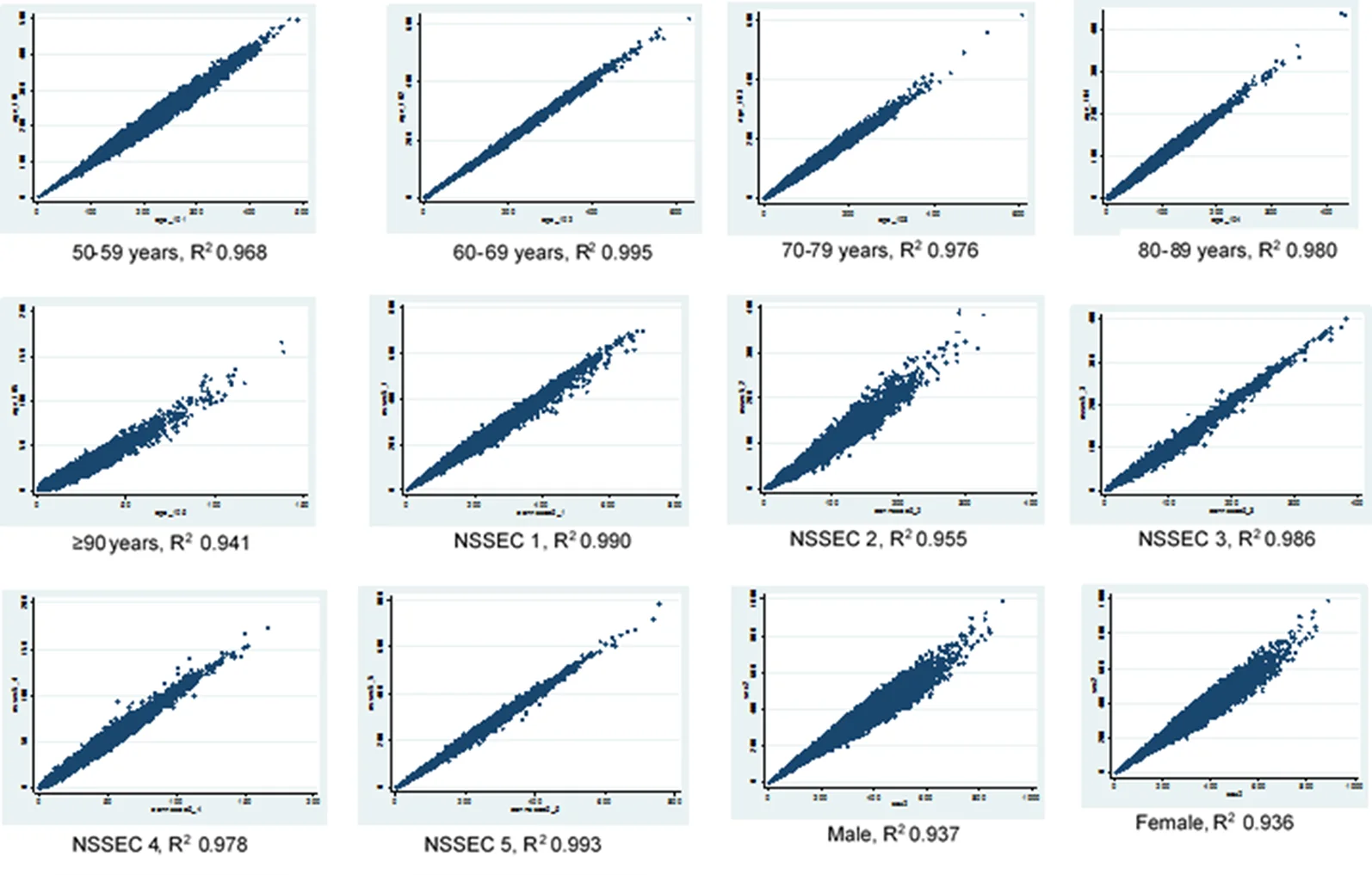
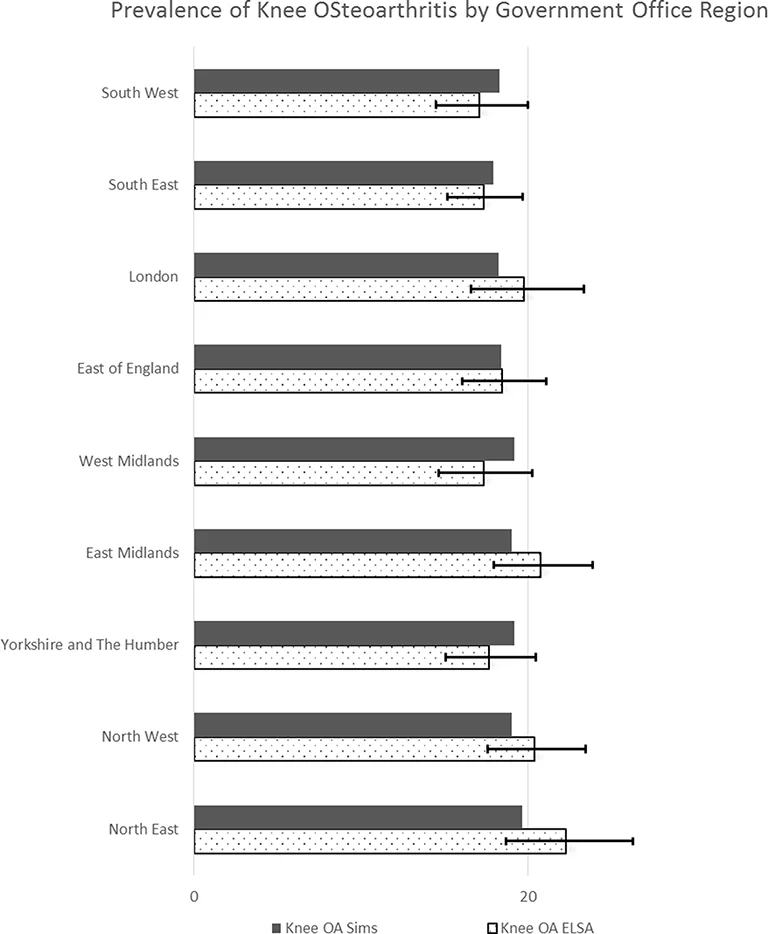
Figure 1. 2-stage Spatial MicrosimulationFigure 2. Scatter plots for age, sex and NSSEC categories, simulated counts from the hybrid dataset versus census totalsFigure 3. Scatter plots for age, sex and NSSEC categories, simulated counts from the final dataset versus censusFigure 4. Comparing regional aggregates of our simulated synthetic microdata data with ELSA data (grouped by regions)
Tables
Table 1. Names and categories of covariates used in our analyses
Variable
Categories
Age
50–59 years, 60–69 years, 70–79 years, 80–89 years, ≥90 years