A Spatially-explicit Microsimulation Analysis of a Proposed Sugar Tax in the Australian Capital Territory
Alice Richardson, Aparna Lal, Ben Phillips, Richard Webster
Statistical Consulting Unit, Canberra, Australia; Research School of Population Health, Canberra, Australia; Centre for Social Research and Methods, Canberra, Australia
Cite as: A. Richardson, A. Lal, B. Phillips, R. Webster; 2021; A Spatially-explicit Microsimulation Analysis of a Proposed Sugar Tax in the Australian Capital Territory; International Journal of Microsimulation; 14(3); 76–84. doi: 10.34196/ijm.00242
Abstract
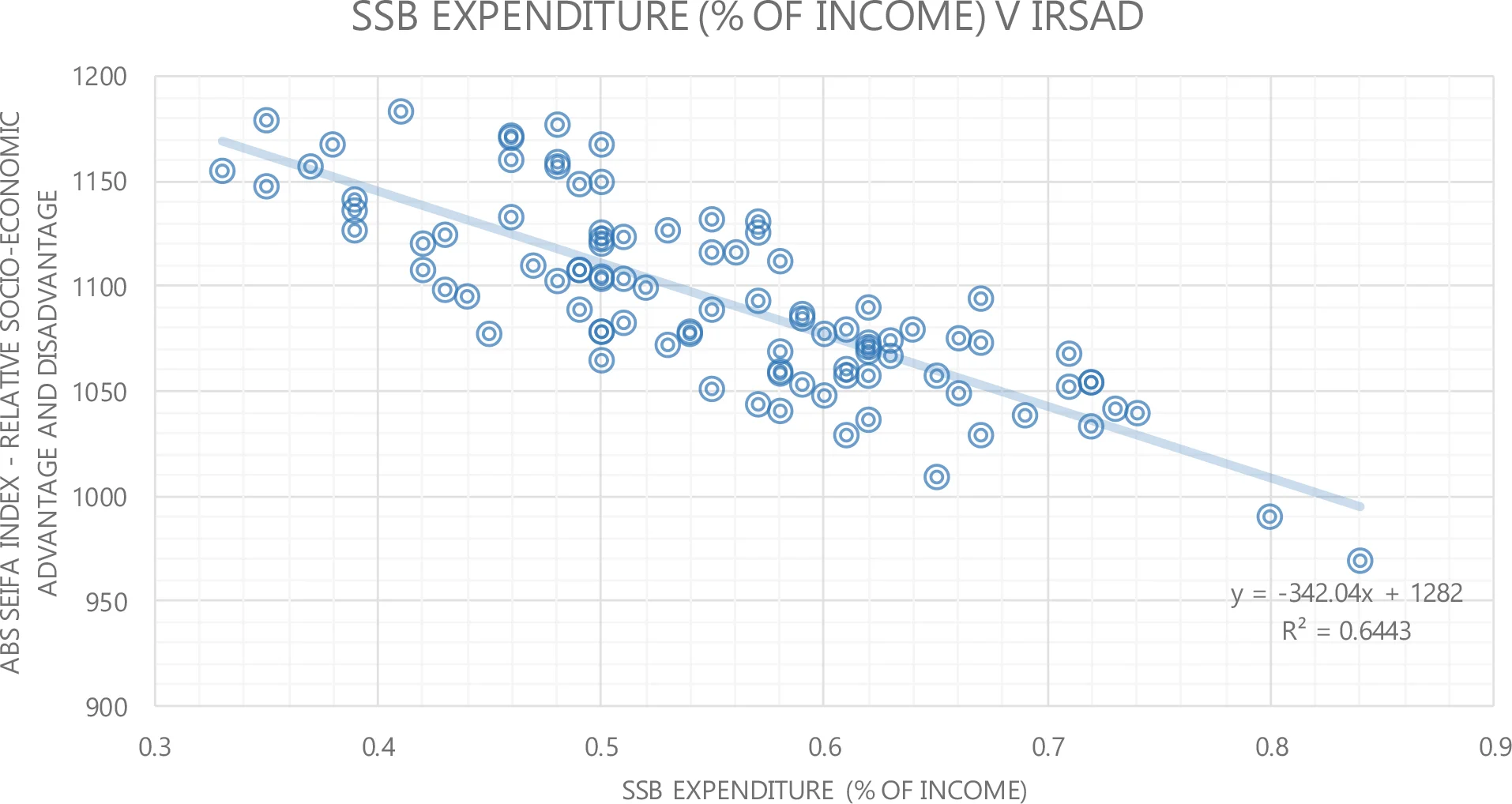
This study aimed to estimate the spatially explicit impact of a 20% proposed tax on sugar sweetened beverage (SSB) consumption across small areas within the Australian Capital Territory (ACT). The study is important in the context of informing ongoing debate around a proposal to introduce a 20% tax on the sugar content of SSBs. A microsimulation analysis was used to estimate current expenditure on SSBs and the impact of a tax at a small area level across the ACT. Population data from the Census was used to weight survey data from the Household Expenditure Survey. A microsimulation model was then applied to the data to estimate current expenditure on SSBs, and the tax impact of a 20% sugar tax on SSBs. The impact of a sugar tax falls unequally across regions of the ACT with the tax impact representing a higher proportion of income for areas with lower socioeconomic advantage. The current expenditure ($/household/annum) averaged around $300 and the tax impact of the proposed sugar tax as a percentage of income averaged around 0.12%/household/annum. The unequal distribution of tax impact estimated by the model suggests that coupling the tax with targeted exercise and nutrition programs as well as systemic change will both be required to reduce inequalities and increase the likelihood of positive health outcomes around overweight and obesity and related conditions.
This article contains 3 figures and 2 tables.
Figures
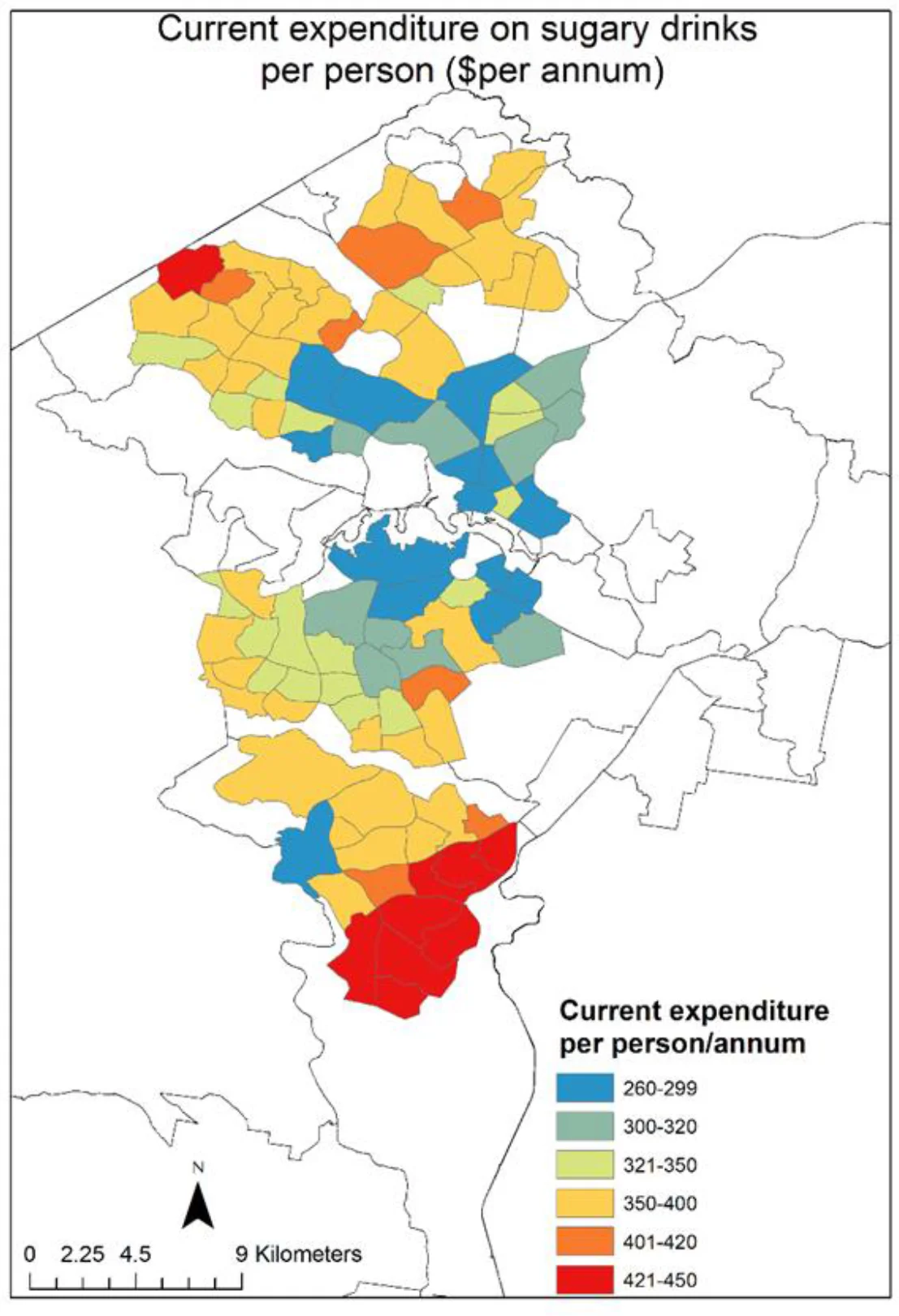
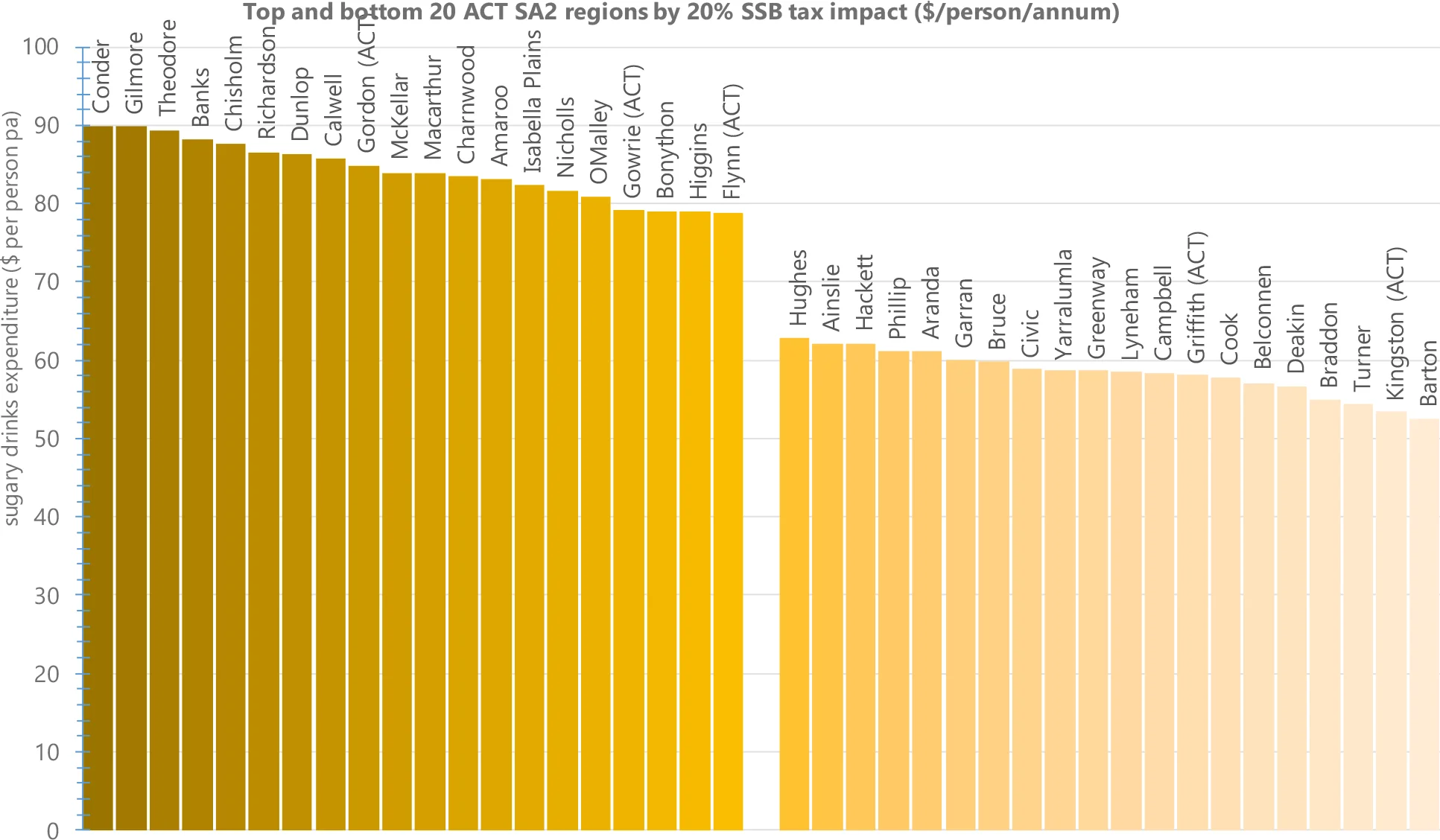
Figure 1. Expenditure on SSBs by SA2 in the ACT: current expenditure ($/person/annum). Source: Authors.Figure 2. Current expenditure on SSBs by SA2 in the ACT % income /annum) by relative socio-economic advantage and disadvantage (IRSAD). Source: Index of Relative Socio-economic Advantage and Disadvantage from ABS 2033.0.55.00 – Census of Population and Housing: Socio-Economic Indexes for Areas (SEIFA), Australia, 2016. SSB Tax impact from authors.Figure 3. Top and bottom 20 ACT SA2 regions by estimated SSB 20% tax impact ($/person/annum). Source: Authors.
Tables
Table 1. Benchmarking categories from Census.
Variable
Categories
Age
15-34, 35-54, 55+
Sex
m/f
Labour force status
Employed/not working
Education status
Higher degree/diploma/year 12 or less
Mortgage payments per month
Up to $1,200 $1,200 up to $1,800 $1,800 up to $2,600 Over $2,600
Rent payments per week
Up to $175 $175 up to $300 $300 up to $400 Over $400
Household income per week
Low income (up to $650 per week) Middle income ($650 to $1,000 per week) Upper middle income ($1,000 to $2,500 per week) High income (over $2,500 per week)
Occupation group
Professionals, tradespersons & labourers, admin and service workers
Family type
Couple with children, couple without children, single parent, lone person
People in household
1 to 5
Source: Authors.
Table 2. Descriptive summary of the Household Expenditure Data for the ACT.